Overview of Psalm 23: Meaning, Themes, and Application
Psalm 23 stands as a concise, powerful meditation on trust, guidance, and divine care. Its opening line, “The Lord is my shepherd, I shall not want”, sets a posture of intimate relationship with God and frames the entire psalm as a pastoral scene that translates into everyday life. This article offers a comprehensive, multi-angle explanation of Psalm 23, looking at its meaning, its enduring themes, and practical applications for individuals, families, and communities. By presenting variations of interpretation—literal, symbolic, liturgical, devotional, and scholarly—we aim to broaden understanding while remaining faithful to the text’s integrity.
The Psalm in Context: What It Is and What It Isn’t
Understanding Psalm 23 begins with recognizing its genre and purpose. As a biblical psalm of trust, it uses pastoral imagery to convey security amid danger, provision in scarcity, and guidance through uncertainty. Although traditionally attributed to David, the psalm’s timeless message transcends a single time or speaker. It functions in multiple settings—from personal quiet times to corporate liturgies, from funerals to moments of crisis—because its core assurances address the human longing for comfort, direction, and restoration.
Historical and Contextual Background
Authorship and Dating
Though the heading in some translations reads A Psalm of David, scholars debate the precise dating. What remains persuasive across viewpoints is the intimate voice and the shepherd imagery that reflect ancient Near Eastern life. The shepherd metaphor would have been readily understood by an audience familiar with rural life, making the psalm accessible to both shepherds and city dwellers who could imagine such a scene.
Literary Form and Structure
The structure of Psalm 23 is compact but layered. It unfolds through a sequence of images that build from personal security to communal reassurance and then to a hope beyond life. The progression—from pastures to still waters, through the valley of the shadow of death, to a banquet in the presence of enemies, and finally to an eternal dwelling place—offers a narrative arc that mirrors a journey of faith. This arc is not merely ornamental; it maps the movement of trust under pressure and the transitioning of fear into confidence.
Historico-Cultural Resonances
In the ancient world, kingship, hospitality, and sacred spaces intersected with concepts of protection and provision. Psalm 23 taps into those associations by portraying God as a benevolent ruler who prepares a table (an image of hospitality and blessing) even amidst threats. The setting of green pastures and still waters evokes a relational economy in which God cares for the whole person—physically, emotionally, and spiritually.
Meaning and Interpretation: How to Read Psalm 23
Literal and Personal Meaning
On the most immediate level, Psalm 23 can be read as a personal confession of trust. The opening statement asserts a foundational relationship: God as shepherd who provides sustenance and guides one through life’s terrain. The reader is invited to identify with the speaker, to say, “The Lord is my shepherd”, and to anchor daily life in that reality. In practice, this means translating the imagery into concrete actions—choosing peace over panic, seeking nourishment for body and soul, and resting in a presence that brings safety and healing.
Symbolic Imagery: The Shepherd and the Green Pastures
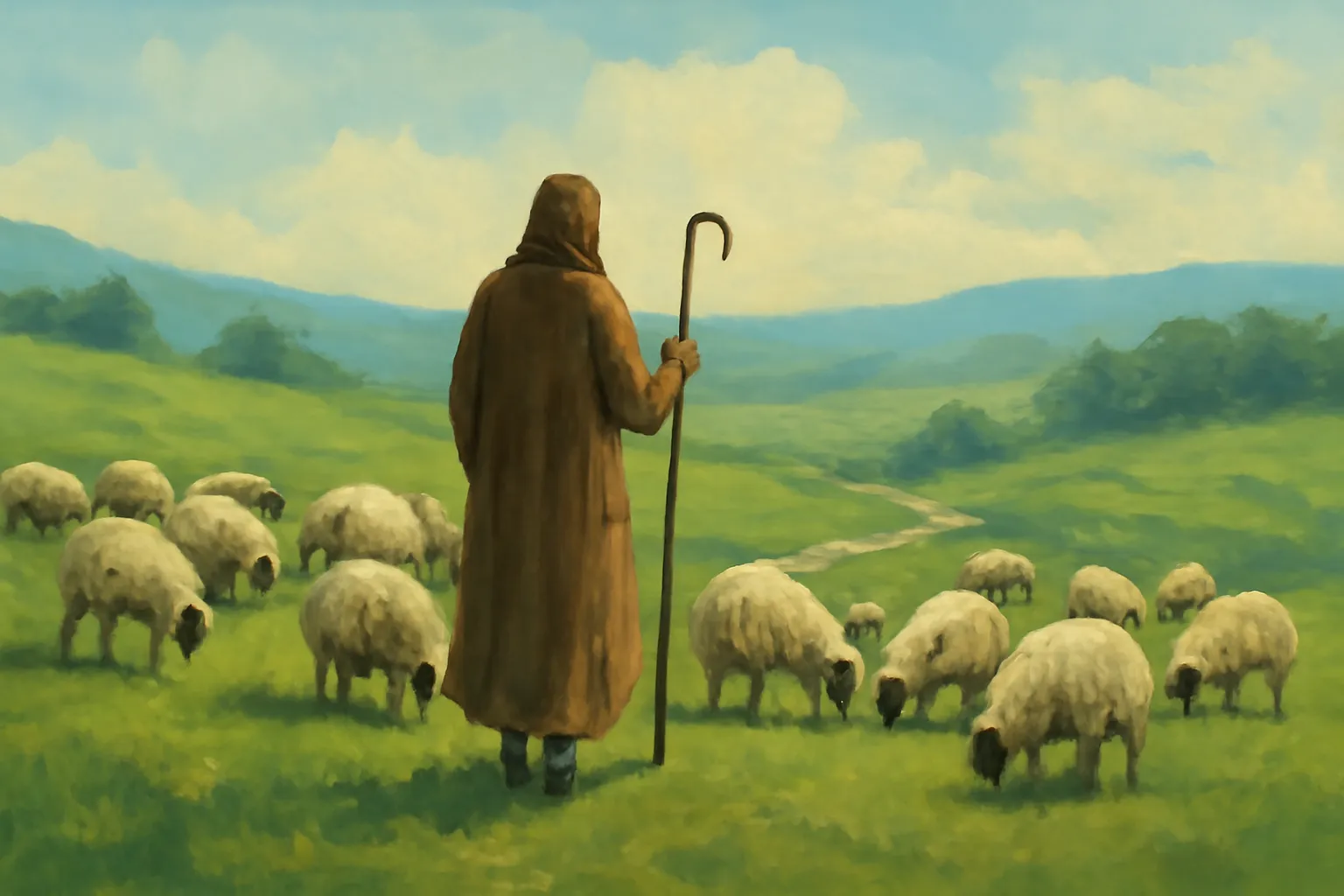
Shepherd imagery is central to the psalm’s meaning. The shepherd is present, attentive, and skilled in guiding livestock to green pastures and still waters. This symbolic frame communicates several layers of truth:
Provision: The shepherd ensures nourishment and care, reflecting God’s generous provision even in seasons of scarcity.
Guidance: The paths of righteousness indicate moral and ethical direction aligned with divine wisdom.
Restoration: The imagery of restoration (often linked to the Hebrew word for healing and renewal) emphasizes renewal of the soul.
The Table in the Presence of Enemies: Blessing Amid Adversity
Another striking image is the table that God sets «in the presence of my enemies.» This portrays a paradox of blessing and danger coexisting. The table is a sign of public abundance and divine favor, even when threats loom. Interpreters describe this moment as evidence that God’s goodness can be experienced in the midst of conflict, not merely after triumph. It speaks to a worldview in which divine solidarity transcends hostile circumstances and offers nourishment, companionship, and protection in danger.
Anointing with Oil and the Cup Running Over
The text’s imagery continues with anointing and the overflowing cup. Anointing with oil signals blessing, consecration, and welcome, typical in royal hospitality. The overflowing cup suggests abundance and generosity beyond what is strictly necessary. These lines invite readers to reflect on how God’s favor shapes identity and invites a response of gratitude and stewardship.
Paths of Righteousness and the Valley of the Shadow of Death
The psalm acknowledges that life includes dark valleys alongside green pastures. The phrase “the valley of the shadow of death” is not a morbid fixation but a candid acknowledgment of danger, grief, and vulnerability. The shepherd’s presence through this valley offers assurance, guiding toward a future where fear loses its grip. The final assurance, “I will fear no evil”, rests on companionship with the divine presence that comforts and protects.
Core Themes and Motifs
God as Shepherd: Care, Guidance, and Presence
The central metaphor—God as shepherd—frames the entire psalm as a relationship-based, trust-filled life. The shepherd’s roles include feeding, guiding, restoring, and protecting. This theme recurs in different biblical books, enabling readers to connect Psalm 23 with broader biblical motifs about God’s care for the vulnerable and dependent.
Provision and Rest: Food, Water, and Renewal
Provision is not merely about satiation; it encompasses physical rest, emotional healing, and spiritual refreshment. The imagery of green pastures and still waters underscores a holistic sense of wellbeing that integrates body, mind, and soul.
Guidance and Righteousness
The paths of righteousness point to a moral order embedded in God’s will. This theme invites readers to trust in divine guidance even when the route feels uncertain. It is less about flawless obedience and more about trust-filled alignment with God’s purposes in daily life.
Protection and Presence
Protection is not merely about safety from physical harm; it encompasses a broader sovereignty of care. The psalm’s confident statements about fearlessness arise from the sense that God accompanies the believer through danger, loneliness, and loss.
Communal Dimension: Blessing for the Community
While Psalm 23 centers on the individual, its imagery naturally extends to communal life. The table set in the presence of enemies signals hospitality, shared blessing, and a public witness of divine faithfulness. The psalm thus has both private comfort and public proclamation power.
Translations and Interpretive Variations
Differences Across English Translations
Translations of Psalm 23 can influence nuance and emphasis. For example:
The King James Version (KJV) emphasizes cadence and archaism, aligning with worship traditions that prize poetic form.
The NIV and other modern translations aim for natural, contemporary language while preserving theological sense.
The Message offers a paraphrase that foregrounds experience and practical application, which can aid devotional reading.
Key Variants in Phrasing and Their Implications
Several phrases carry interpretive weight. For instance, the line about “the valley of the shadow of death” can be read as a literal literal hazard or as a broader image of profound danger or sorrow. The phrase “I shall not want” has been read as a claim about contentment that arises from dependence on God, rather than a denial of ordinary human needs. Each phrasing choice helps readers connect with the psalm from different life situations—grief, pain, or gratitude.
Scholars note that the basic architecture of the psalm remains stable across textual variants, but certain words may shift in emphasis. Reading Psalm 23 alongside other psalms about God’s steadfast love or protective mercy can enrich understanding of how the psalm participates in a broader biblical witness about God’s character.
Applications for Personal Life
Devotional Practice: Turning Trust into Habit
Readers can integrate Psalm 23 into daily routines by memorizing a verse or reading it with a journal in hand. Consider a practice such as:
Morning reflection: Start the day with a line or two, meditating on what it means to follow God’s guidance.
Evening grace: End the day revisiting the psalm to express gratitude for provision and protection.
Guided imagery: Visualize the green pastures and still waters, inviting a sense of calm and renewal.
Processing Fear, Suffering, and Loss
Psalm 23 offers language for suffering without surrendering hope. In times of grief or fear, readers can echo the psalm’s refrain of fearlessness grounded in divine presence. Practical steps include prayer, seeking community support, and engaging in restorative practices that align with the idea of restoration and peace.
Decision-Making and Life Choices
The “paths of righteousness” imply that decision-making can be guided by divine wisdom. A practical approach is to pause before major choices, asking questions like:
Does this choice reflect care for others and stewardship of resources?
Does it promote peace, justice, and the flourishing of the heart?
Am I seeking guidance through prayer, counsel, and reflection?
Gratitude, Worship, and Charity
Psalm 23 can shape attitudes toward generosity and hospitality. The image of a gracious host at a table invites believers to extend welcome, provide for the needy, and practice hospitality as a tangible expression of God’s blessing in daily life.
Applications for Community Life and Liturgy
Corporate Worship and Liturgy
In churches and faith communities, Psalm 23 is often used in liturgical settings to evoke trust during worship and confession of faith. Its language provides a shared vocabulary for the congregation to declare God’s goodness and faithful presence. Communities may use the psalm in:
Opening prayers during gatherings
Funeral or memorial services to comfort mourners
Weeknight prayer meetings focused on trust and resilience
Pastoral Care and Counseling
Pastors, counselors, and caregivers may use Psalm 23 as a framework for conversations about healing, resilience, and hope. The imagery of restored soul can be offered as a hopeful lens for people navigating loss or trauma. The shepherd metaphor can translate into practical guidance about care, accompaniment, and the steady presence of a trusted guide in difficult seasons.
Education and Bible Study
In educational settings, Psalm 23 can be explored from multiple angles—literary analysis, thematic exploration, and cross-cultural comparison. Activities might include:
Comparative readings of Psalm 23 across different Bible translations
Artistic responses (poetry, painting, music) to the imagery
Group discussions about how the psalm’s imagery translates to modern life, including urban or rural contexts
Common Misunderstandings and Clarifications
Is Psalm 23 a Blank Check Against Hardship?
Some readers interpret Psalm 23 as a guarantee of easy life or unbroken prosperity. A careful reading shows that the psalm acknowledges danger and hardship (the valley, enemies) while privileging the divine presence that sustains through those experiences. The psalm does not erase pain; it reframes it within the broader reality of God’s care.
While the psalm culminates in a dwelling that lasts forever, the imagery emphasizes intimacy with God and ongoing guidance rather than a guarantee of uninterrupted earthly comfort. The final line, “I shall dwell in the house of the Lord forever,” points toward an eschatological hope rather than a temporary, purely earthly security.
Is the Table in the Presence of Enemies a Political Statement?
Though the image can be interpreted as a political statement of blessing amid conflict, at its core it expresses the sovereignty of divine hospitality and favor in the midst of life’s chaos. It signals that God’s goodness is publicly evident and accessible, even when external threats exist.
Variations of Application Across Faith Traditions
In Christian Traditions
Christians often read Psalm 23 as a portrait of Christ’s shepherding care, with Jesus described as the Good Shepherd who lays down his life for the sheep. The psalm’s themes of guidance, provision, and comfort align with Jesus’ teaching about life in the abundance of God’s reign.
In Jewish Readings
In Jewish tradition, the shepherd imagery resonates with God’s ongoing leadership of the people and with psalms that celebrate God’s protective providence. Psalm 23 is frequently used in moments of mourning, healing, and gratitude, serving as a bridge between personal faith and communal worship.
Scholars in literature, theology, psychology, and religious studies may analyze Psalm 23 for its narrative arc, its ethical implications, and its impact on human resilience. Its universality—trust in care, guidance, and presence—allows it to be discussed in interfaith settings, in comparative spirituality, and in therapeutic contexts as a symbol of hope and steadiness.
Psalm 23 remains relevant because it speaks to fundamental human experiences: fear, longing, hunger, grief, hope, and trust. Its enduring appeal lies in its ability to translate a profound religious conviction into everyday life. By viewing Psalm 23 through multiple lenses—literal, symbolic, liturgical, devotional, and scholarly—we gain a richer appreciation of its meaning, its themes, and its practical applications for personal growth and community life. Whether read aloud in a quiet morning routine, prayed at a funeral, or studied in a classroom, Psalm 23 invites readers to witness the steady presence of the divine shepherd who leads, restores, and sustains.
“The Lord is my shepherd, I shall not want.” – The foundational claim of dependence and trust that frames the entire psalm.
“He makes me lie down in green pastures. He leads me beside still waters.” – Provision, rest, and the restoration of the soul.
“He restores my soul.” – Renewal and healing of inner life.
“He leads me in paths of righteousness for his name’s sake.” – Guidance and ethical direction rooted in God’s character.
“Even though I walk through the valley of the shadow of death, I will fear no evil.” – Courage and divine companionship amid danger.
“Your rod and your staff, they comfort me.” – The shepherd’s tools as signs of protection and care.
“You prepare a table before me in the presence of my enemies.” – Blessing, hospitality, and divine favor in adversity.
“Surely goodness and mercy shall follow me all the days of my life, and I shall dwell in the house of the Lord forever.” – Assurance of ongoing divine benevolence and ultimate dwelling with God.








Publicar comentario