Find a God: A Practical Guide to Spiritual Discovery
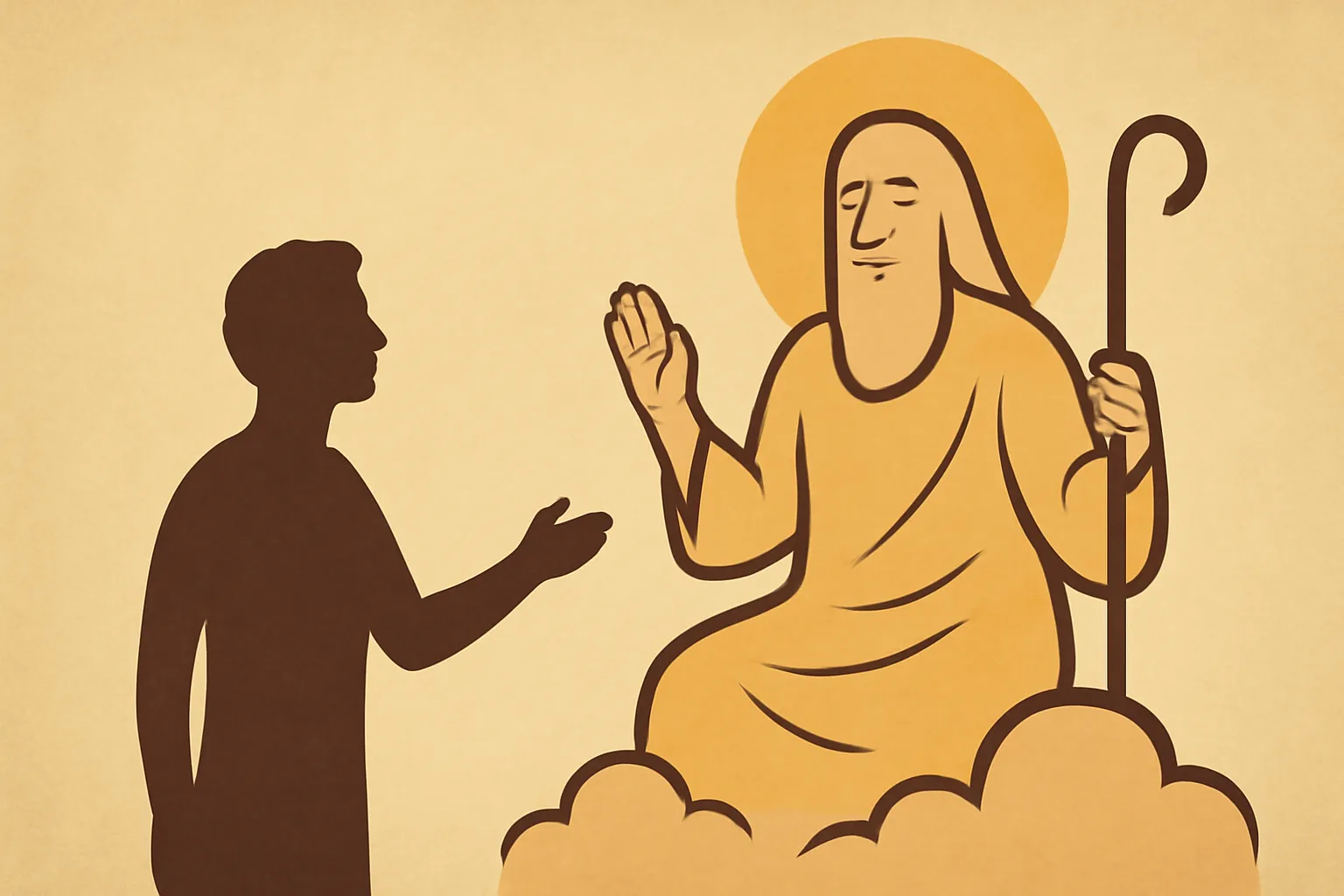
The quest to find a god is as old as humanity itself. It is not a single act but a
living process that unfolds in stages, through doubt and wonder, through quiet listening and bold
questioning. This guide is designed to be a practical companion for anyone who wishes to explore
the possibility of the divine, whether you come from a particular faith tradition, a secular background,
or somewhere in between. By offering diverse paths, reflective exercises, and concrete steps, we aim to
help you move from curiosity to sustained practice—without prescribing a single outcome.
The phrase finding a deity can be understood in several ways. Some people speak of discovering God as an encounter with a personal presence. Others talk about seeking the sacred as an experience of meaning that transcends ordinary explanations. Still
others describe gaining access to the divine through nature, community, or service.
Whatever your starting point, the core idea is to cultivate conditions—habits of mind, heart, and
body—where a sense of the transcendent can arise with clarity, humility, and responsibility.
What does it mean to seek the divine?
To seek the divine is not solely about answers; it is also about questions that transform you. In many traditions, the journey toward a god or the sacred
begins with posture: a willingness to listen, a recognition of limits, and a commitment to ethical
living. You may encounter mystery that resists labels, or you might feel resonances with stories,
symbols, or practices that align with your deepest sense of meaning. The goal is not to force a label
onto experience but to discern whether there is a reality that calls for altered ways of living.
Key distinctions that often come up
The personal versus the impersonal: a God who relates to you
in a personal way, or a sacred principle that undergirds reality.
Belief versus experience: what you feel or perceive versus what you
assent to as doctrine.
Dogma versus curiosity: staying open to new insights while
remaining faithful to your own integrity.
Preparing for the journey
A careful preparation reduces friction and increases your chances of meaningful encounters with
the divine. This section outlines practical foundations: setting intention, cultivating
receptivity, and building a sustainable rhythm. The aim is to support your inner landscape
so that you can recognize subtle promptings without forcing them to fit your preconceptions.
Clarify your intention
Before you embark on a program of spiritual exploration, name what you hope to discover.
Your intention could be to deepen a sense of peace, to understand your own life’s purpose,
to open to wisdom beyond everyday concerns, or to relate to a community with greater compassion.
Write a short statement about your aim: what you want to learn, and why it matters.
Identify any expectations you bring, and note which of them you’re willing to revise.
Create a simple ritual of commitment—an action you will return to weekly or daily.
Develop a daily practice
A consistent practice trains your being to sense the sacred in ordinary moments. The goal is not
to manufacture revelation but to become more attentive.
Use a short period of quiet, for example 5–10 minutes of breath awareness or
a breathing exercise that reduces mental noise.
Visit a natural setting, a shrine, or a quiet room to create a sacred space for
contemplation.
Keep a simple journal of your experiences, noting what moves you, what puzzles you,
and what feels grounded.
Assess your surroundings with discernment
Some seekers find the divine through community, others through silence, and
others through service. Consider which environment most conducive to honest reflection
and ethical growth.
Evaluate your daily routine and identify a window where spiritual practice can be integrated.
Experiment with different settings (home, nature, a temple, a library) to observe where
you feel most receptive.
Be mindful of the pace: rushing a sacred experience often dulls its resonance.
Paths to discovering the sacred
The search for the divine does not have a single path. Below are several broad avenues that have helped
many travelers—each can be pursued alone or in combination. This section uses terms like finding a god, discovering the divine, and seeking
the sacred to emphasize semantic richness while remaining mindful of your own
language and tradition.
Personal reflection and silence
Quiet reflection is often the first step toward spiritual discovery. It allows the mind to slow down
long enough to notice patterns, prompts, and feelings that otherwise stay obscured.
Contemplative reading: choose passages that invite inference rather than assertion,
and read slowly with pauses to reflect.
Listening in stillness: sit in silence for a few minutes without planning your next
thought; simply observe what arises.
Reflection prompts: ask yourself questions like “What does the idea of the sacred
require of me today?” or “Where do I sense a pull toward something greater than myself?”
Engaged practice: service and rituals
For many, the divine becomes tangible through acts that benefit others or connect to a
tradition’s rituals. Engagement can awaken a sense of belonging, purpose, and reverence.
Volunteer work aligned with your values can reveal a larger
horizon of care and responsibility.
Ritual participation—whether a formal liturgy or a simple daily practice—can
anchor the heart’s longing and give language to what you feel inside.
Symbolic acts like lighting a candle, offering a small gift, or walking a sacred
route can translate inner experiences into tangible expressions.
Study and dialogue
Intellectual inquiry and conversation can illuminate the terrain of belief and non-belief alike.
Reading different perspectives helps you understand the vocabulary of spirituality and your own
interpretive stance.
Compare traditions—learn how different communities speak about the divine and
how their practices shape daily life.
Ask questions in respectful settings, whether in study groups, online forums, or
with mentors.
Critical thinking remains vital: allow doubt to refine your understanding rather than
to close the inquiry.
The following exercises are designed to be accessible and sustainable.
They encourage you to document experiences, notice subtle shifts, and build a personal map of what
might be the divine for you. Feel free to adapt each exercise to your context and comfort level.
30-day listening project: each day, spend 10 minutes in quiet listening. Journal
any sounds, sensations, or thoughts that feel like “this is trying to tell me something.”
One question ritual: pick one open-ended question about the sacred (for example,
“What would it mean to live as if the divine is real in everyday decisions?”). Spend several days
returning to this question with different angles.
Acts of care: commit to a week of small, consistent acts of service—without
expectation of return—and observe any inner shifts.
Nature communion: spend time in nature, noting moments when you feel a sense of
awe, gratitude, or a pull toward something larger than yourself.
Creative expression: write, paint, sing, or sculpt as a way to translate
interior experiences into form—often the divine communicates through symbol and metaphor.
Tools and traditions: a survey of paths
People find resonance with different tools and traditions on the journey to find a god.
This section is not a rulebook but a map of commonly encountered instruments that have helped many
travelers describe and deepen their encounters with the sacred.
Prayer and meditation: two that often overlap
Prayer can be communicative, a dialogue with a divine presence, or a soft focus that invites guidance. Meditation often functions as a form of inner listening that clears mental clutter and increases receptivity.
Structured prayer (formulaic or liturgical) provides rhythm and language for
expressing devotion or longing.
Non-dual or mindfulness meditation trains awareness of present-moment experience
without clinging to concepts.
Rituals, symbols, and sacred space
Rituals and symbols help translate intangible experiences into tangible meaning. The sacred space
you create, whether a corner of a room or a physical shrine, can become a threshold
where the ordinary becomes meaningful.
Sacred texts and oral traditions
Reading can illuminate patterns, metaphors, and ethical guidance that have sustained communities
for generations. Some readers combine study of scripture with commentaries,
while others prefer living wisdom passed through stories and elders.
Scriptural exploration: approach texts with questions, not proof-only aims.
Oral tradition: listen for teachings passed down through generations, including songs,
legends, and parables.
Nature and the cosmos
For many, the natural world is a mirror and a teacher. The vastness of the sky, the order of
ecosystems, and the cycles of life can evoke a sense of belonging to something beyond the
individual self.
Natural observation: notice times of stillness, the changing seasons, and moments of
awe.
Cosmic perspective: contemplate your place in the larger story of existence.
The path to spiritual discovery is rarely linear. You may encounter doubt, fear, smog of digital
noise, or social pressures that discourage personal exploration. The following strategies can help
keep your journey honest, compassionate, and resilient.
Doubt as a teacher
Skepticism is not a failure of faith; it can be a brilliant instrument that sharpens
discernment. When doubt arises, you can reframe it as data: what specifically feels unclear, what evidence
would resolve it, and what living questions remain.
Document what provokes doubt and examine the assumptions behind it.
Seek guidance from trusted mentors or diverse perspectives to test the boundaries of your beliefs.
Noise and distraction
Modern life is full of noise. A practical remedy is to create temporal and spatial boundaries for
spiritual inquiry: scheduled quiet time, a device-free zone, and consistent routines that protect the inner
space needed for encounter.
Ethical integrity and humility
A genuine search for the sacred carries ethical responsibility. The experience of the divine is often
accompanied by a call to compassion, truth-telling, and care for others.
Practice humility—recognize that interpretation is fallible and that others may hold
valid experiences too.
Guard against coercive or manipulative behavior in the name of belief.
Integrating the discovery into daily life
If you are on a path to spiritual growth, the ultimate test is integration: can
what you experience be translated into a more ethical, generous, and coherent life? Below are ways
to translate inner discoveries into outward action.
From insight to action
Let insight inform daily decisions, such as how you treat others, how you spend
time, and how you use your resources.
Offer your gifts to the world in concrete ways—whether through artwork, teaching, service, or
advocacy aligned with your values.
Sustaining the journey over time
The search for the sacred is not a sprint but a long arc. Consistency, community, and flexibility are
essential. Reinforce your practice by revisiting your initial intention, reviewing your journal notes,
and adjusting your routine as needed.
Assessing progress without pressure
Progress in this domain is not always measurable by guarantees of experience. Instead, look for
subtle signs: a deepened sense of peace, a shift toward greater empathy, or a more coherent
frame for making difficult choices.
Track shifts in your inner life: resilience, openness, gratitude, and ethical steadiness.
Notice changes in relationships: do you listen more deeply, respond with more compassion, and
hold disagreement with less defensiveness?
Variations on the question: how to contextualize your journey
People use many expressions to describe the same inner experience. Here are some common reframings that can help
you articulate your journey, while remaining respectful of others’ paths.
Some prefer to speak of finding a presence rather than a personified deity. This language can
be helpful when your experience feels more transcendent than personal, or when you wish to remain open to
multiple cultural expressions of the divine.
From orthodoxy to authenticity
You may encounter expectations about what one ought to believe. Reframing as authentic living
emphasizes alignment between your inner sense of truth and outward behavior, rather than strict adherence
to a dogmatic system.
From doctrine to discernment
Discernment invites you to weigh beliefs against lived experience and ethical outcomes. This approach values
personal conscience alongside communal insight.
From devotion to service
Some people experience the divine most clearly through acts of care and service. In this orientation, service as worship becomes a bridge between inner conviction and outward compassion.
Putting it all together: a practical roadmap
This roadmap blends intention, practice, and reflection into a coherent season of exploration. It is not a
fixed plan but a framework you can adapt as your understanding grows.
Phase 1: Grounding — establish a routine, define your intention, and create a small sacred space.
Phase 2: Exploration — engage with diverse practices (silence, prayer, service, study, nature).
Phase 3: Encounter — notice moments of resonance, or felt encounters, and record them with honesty.
Phase 4: Integration — translate insights into daily choices and relationships.
Sample week for a focused inquiry
If you want a concrete plan, try this sample week. It is designed to be gentle yet meaningful for beginners
and adaptable for experienced seekers alike.
Day 1: 10 minutes of quiet breathing, followed by a 5-minute reflection on the question,
“What would it mean to live as though a divine presence guides my actions?”
Day 2: Read a short passage from a tradition unfamiliar to you, then write a paragraph about what
resonates and what challenges your assumptions.
Day 3: Do a service-minded activity (even a small one) with awareness of gratitude for the possibility
of giving.
Day 4: Spend 15 minutes in nature, then sketch or describe what you sense beyond ordinary explanation.
Day 5: Dialogue with a friend or mentor about your observations, focusing on listening rather than
persuading.
Day 6: Create a personal ritual drawing on what you’ve learned so far, and perform it with
intention.
Day 7: Review your journal and adjust the intention for the next week based on what felt true.
The search for the divine is a living practice, not a one-time event. You may experience moments that
feel revelatory, quiet reverberations that gradually reshape your inner life, or questions that
expand your horizon rather than resolve it. Whatever you encounter, approach it with curiosity, care,
and responsibility. The process of finding a god, whether you call it discovering
the divine or seeking the sacred, remains a personal adventure that can
enrich your life and the lives of others.
If you want to continue this exploration, revisit the sections on preparation, pathways, and practical
exercises. Remember that every seeker travels at a different pace, and that there is no single
endpoint that fits everyone. The ultimate aim is growth—not certainty—for the sake of deeper
connection, broader compassion, and a more thoughtful way of living.
May your journey be patient and brave, may your questions be honest, and may your discoveries
illuminate not only your own path but also the paths of those around you. Whether you experience a
direct encounter with a deity, a felt sense of the sacred, or a steady deepening of moral and$
spiritual clarity, the work of finding a god is a courageous and meaningful
undertaking.












Publicar comentario