Disciples Names: A Complete List of Jesus’ Apostles
The terms disciple and apostle are closely related in the New Testament, but they are not interchangeable. A disciple is a follower or student of Jesus, while an apostle is a person commissioned to carry a specific mission, often with a formal assignment and authority. Among the early followers, there is a core group known as the Twelve Apostles, whose names appear in multiple Gospel accounts and Acts. This article provides a thorough, cross-referenced guide to the disciples’ names—with variants, alternate forms, and important linguistic nuances—to give readers a complete and nuanced picture of Jesus’ closest companions.
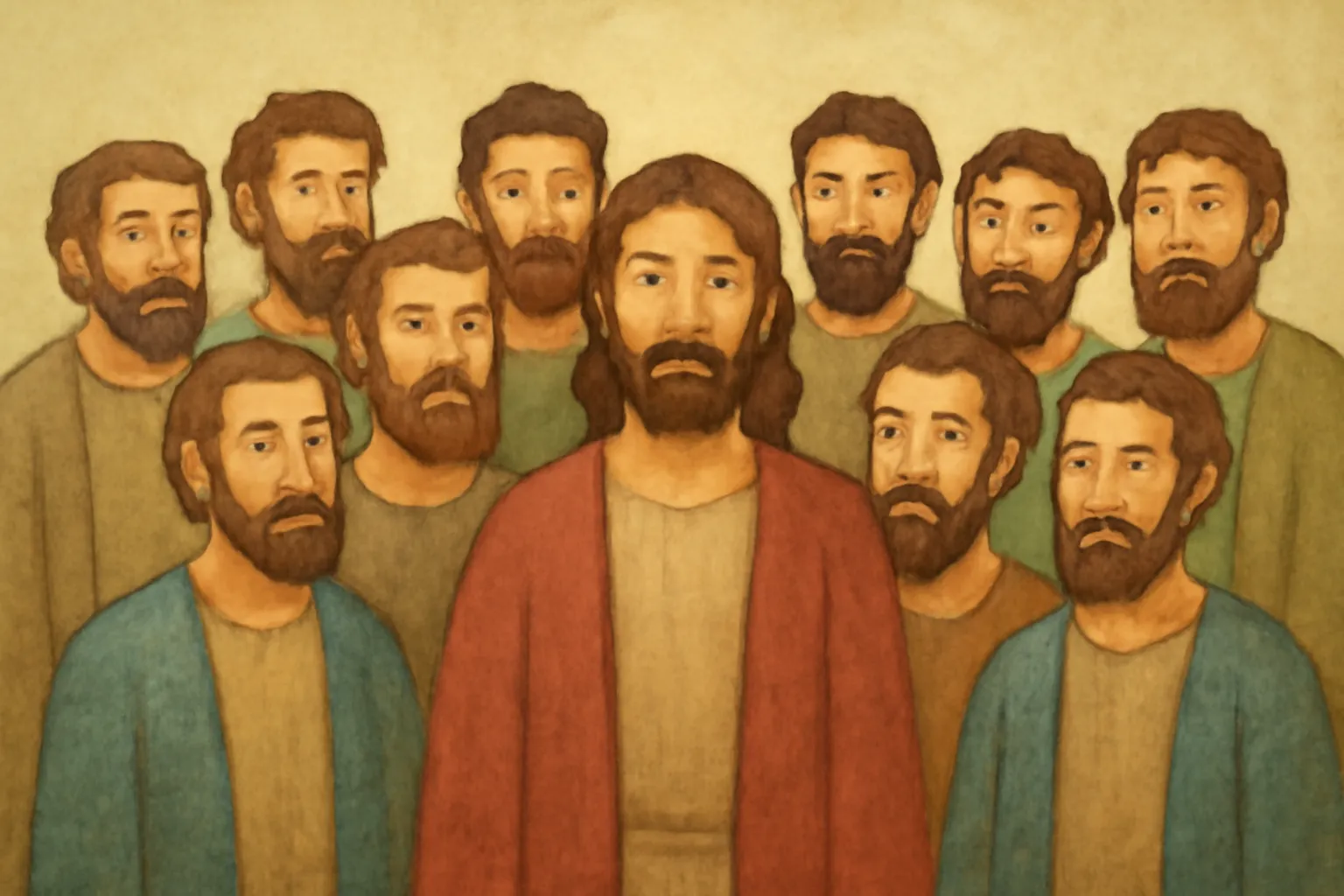
The Original Twelve Apostles
The Original Twelve were chosen by Jesus to be his closest witnesses and to carry his message after his crucifixion and resurrection. Across the Gospel narratives, these twelve are listed with minor order differences, and several of them are known by more than one name. Below is a consolidated, comprehensive list with the most common variants in brackets for clarity.
Simon Peter — also known as Simon, Peter (the Rock), and in Aramaic as Cephas.
Andrew — Peter’s brother, often identified simply as Andrew the Apostle.
James, son of Zebedee — sometimes called James the Greater to distinguish him from James the Less.
John — brother of James, frequently identified by the epithet the Apostle John; traditionally the author of the Gospel of John and the Johannine letters.
Philip — sometimes paired with Nathanael in the early missionary stories, reflecting his role in early evangelism.
Bartholomew — often identified with Nathanael in the Gospel accounts; Bartholomew is the common surname for this apostle in lists.
Thomas — also known as Didymus, meaning “twin.”
Matthew — also known as Levi, the tax collector who became the author of the Gospel of Matthew in some traditions.
James, son of Alphaeus — sometimes referred to as James the Less (or the Minor) to distinguish him from James, son of Zebedee.
Judas Thaddaeus — also called Judas, son of James, and sometimes Lebbaeus in some manuscripts; not to be confused with Judas Iscariot.
Simon the Zealot — also described as Simon Cananean (the Cananite) in some lists to indicate origin or association.
Judas Iscariot — the betrayer who later died and was replaced in the apostolic circle.
Note a few important linguistic and historical points about this list:
Several apostles have alternate names that reflect their backgrounds, occupations, or language families. For example, Simon Peter is also known by the Aramaic Cephas (meaning “rock”).
Thomas being called Didymus highlights the Greek name equivalent to “twin.”
Bartholomew is commonly linked with Nathanael, suggesting he may have been known by two different names in different communities or traditions.
Although many lists begin with Peter, the order of the names can vary in Matthew, Mark, Luke, and John; the essential identity and roles are consistent across accounts.
Across the New Testament, the same person is sometimes referred to by more than one name. This has several practical explanations: translation from Aramaic or Hebrew into Greek, Midrashic or cultural naming practices, and the use of pet forms or titles. Below is a structured guide to the most common name variants you will see for each of the original Twelve, along with brief notes on what those variants emphasize.
Peter — the principal name used in Matthew 16:18; Simon Peter acknowledges his birth name and his role as leader.
Simon — sometimes used alone, especially in lists where the other name is implied.
Cephas — the Aramaic nickname meaning rock, used by Jesus to designate Peter (as in John 1:42).
Andrew — often presented simply by his given name; as Peter’s brother, he is a familiar fixture in early call narratives.
James, son of Zebedee — sometimes James the Greater to distinguish from James the Less.
John — frequently paired with James; tradition ascribes to him the Gospel bearing his name and related writings.
Philip — often connected with narratives involving Nathanael; he plays a key role in the early chapters of John’s Gospel.
Nathanael — often identified with Bartholomew in the synoptic tradition; this dual naming appears in some early lists as Nathanael Bartholomew.
Bartholomew — a surname-like designation in several lists; the tradition often links him to Nathanael.
Thomas — the Greek Didymus is frequently attached to his name to emphasize his twin-like identity.
Levi — the original surname for Matthew as a tax collector; sometimes rendered as Matthew the tax collector.
Matthew — the canonical name used in Matthew, Mark, and Luke for the apostolic figure who authored the Gospel of Matthew in some traditions.
James, son of Alphaeus — often called James the Less or the Minor.
Thaddaeus — also called Judas, son of James and often associated with Lebbaeus in certain manuscripts.
Judas Thaddaeus — the same person as Judas, son of James, not to be confused with Judas Iscariot.
Simon the Zealot — sometimes described as Simon Cananean, linking him to a geographic or sectarian designation.
Judas Iscariot — the traitor among the original twelve named in all four Gospels; his later replacement by Matthias is described in Acts 1.
Matthias: The Replacement of Judas Iscariot
After the betrayal and death of Judas Iscariot, the early Christian community faced the question of how to preserve the integrity of the Twelve Apostles. The Book of Acts records a formal process to select a replacement. In Acts 1:15–26, the apostles proposed adding someone who had “accompanied us during all the time that the Lord Jesus went in and out among us” from the baptism of John until the day Jesus was taken up into heaven, to become a witness with us of his resurrection. They proposed a candidate, and then they prayed and cast lots to determine who would take the place. The man chosen was Matthias, who thus joined the group to restore the number to twelve. This event is significant for several reasons:
Continuity of the Twelve: Matthias’ selection emphasizes the symbolic and communal importance of a fixed cadre of apostolic witnesses.
Apostolic authority: Even in the absence of Judas, the apostles affirmed a public, prayerful process to select a successor, underscoring the seriousness with which authority was exercised.
Limited biographical detail: Unlike the other apostles, Matthias is scarcely described in the New Testament outside of this appointment, which leaves most of his life in the realm of tradition rather than canonical narrative.
In many contemporary summaries of Jesus’ closest followers, the list of the Twelve will either include Matthias as the twelfth after Judas’s replacement or present the original twelve excluding Judas and including Matthias as the canonical twelfth. For readers who seek a consistent “complete list,” it is helpful to present both perspectives with clear notation:
Original twelve (before Judas’s fall): Simon Peter, Andrew, James (son of Zebedee), John, Philip, Bartholomew, Thomas, Matthew, James (son of Alphaeus), Judas Thaddaeus, Simon the Zealot, Judas Iscariot.
After replacement (the canonical twelve in Acts and later lists): Peter, Andrew, James, John, Philip, Bartholomew, Thomas, Matthias, James (the Less), Simon (the Zealot), Judas Thaddaeus, Judas Iscariot (replaced in effect by Matthias).
Beyond the Twelve: The Broad Circle of Jesus’ Early Followers
While the Twelve Apostles hold a central, formal role in the Gospel narratives, the early Christian movement included a broader circle of disciples and followers who learned from Jesus and carried the mission forward. In some Gospel passages, a larger group of about seventy (or seventy-two) disciples is mentioned as being sent out to preach and heal. These figures are distinct from the official Twelve but are part of the same early movement. Distinguishing these groups helps readers appreciate the breadth of early Christian outreach and the range of names and identifiers that appear in the sources.
The Seventy (or Seventy-Two) disciples are described in Luke 10 as emissaries sent to every city and place where Jesus was about to go.
In some traditions, the broader group of followers includes women who supported Jesus’ ministry, as outlined in Luke 8 and other passages, though their names are less prominent in the formal lists.
Among the early Christians, certain individuals bore multiple identities—for example, a person might be known by a formal Jewish name in one context and a more Hellenized name in another—illustrating the multilingual world of early Christian communities.
Titles, Epithets, and Symbolic Names: Why Names Matter
Names in biblical literature are rarely mere identifiers; they carry theological significance, historic memory, and missionary identity. Here are a few examples of how the names and epithets connected to the apostles illuminate their roles and legacies:
Peter as “rock” suggests a foundational role in building the church; the name Cephas emphasizes this same foundational identity in Aramaic.
John is often associated with a unique intimate relationship with Jesus and with the Gospel that bears his name, as well as with the Book of Revelation in later tradition.
Thomas (Didymus) is remembered for his initial doubt and subsequent confession of faith; his twin-like epithet hints at a nuanced personality in the Gospel narratives.
Bartholomew and Nathanael reflect a potential pairing of traditions—one name associated with a patronym and the other with a personal name—as the community moved through diverse linguistic environments.
James the Less highlights how early communities distinguished between two Jams—one the son of Zebedee, the other the son of Alphaeus—through descriptive qualifiers.
Judas Iscariot carries a cautionary note about responsibility and betrayal, a theme that frames the later events of Holy Week in the Gospels.
Simon the Zealot suggests his possible political or religious associations, inviting readers to consider how political contexts intersect with spiritual vocations.
Names in Practice: How Readers Encounter the Apostles in Scripture
For readers exploring the New Testament, the appearance of a name often signals a narrative function—whether as a teacher, a witness, a healer, or a missionary. Names may appear in different forms depending on the Gospel or the audience. Here are some practical notes on how readers can encounter these characters across the canonical texts:
In Matthew, Mark, Luke, and John, the Twelve often appear as a unified circle in the opening sections of Jesus’ ministry, then branch into itinerant teaching and witnessing.
The Gospel of John emphasizes a more intimate dialogue with individuals (including the beloved disciple), and this sometimes leads to a different ordering of names or emphasis on certain figures in the Johannine narrative.
In the Acts of the Apostles, the apostles function as witnesses, leaders, and organizers of the early church, with Matthias representing the continuity of the Twelve in the post-resurrection era.
Names associated with occupations (for example, Levi the tax collector who becomes Matthew) highlight how Jesus called people from diverse social strata to participate in the mission.
Complete Reference: Quick List of the Apostles and Key Variants
For readers who want a compact reference, the following list consolidates the major names, including common variants. This list is designed to be handy for cross-checking the different Gospel accounts and helps learners remember who is who when encountering multiple name forms in Scripture studies.
Peter — also known as Simon, Cephas (the Rock).
Andrew — Peter’s brother.
James (son of Zebedee) — James the Greater.
John — brother of James; traditionally the author of the Gospel of John.
Philip
Bartholomew — often equated with Nathanael in tradition.
Thomas — Didymus, the Twin.
Matthew — also known as Levi, the tax collector.
James (son of Alphaeus) — James the Less.
Judas Thaddaeus — Judas, son of James, sometimes Lebbaeus.
Simon the Zealot — sometimes Simon Cananean.
Judas Iscariot — the betrayer; his replacement is Matthias.
Matthias — replacement for Judas Iscariot, chosen to restore the Twelve.
Understanding the full range of names and their variations is more than a matters of vocabulary. It helps scholars and readers appreciate:
Historical context: Names reflect linguistic transitions from Aramaic to Greek to Latin, mirroring the cultural milieu of 1st-century Judea, Galilee, and the wider Mediterranean world.
Literary technique: The repetition and variation of names across Gospels demonstrate the communal memory and oral transmission practices of early communities.
Theological purpose: Epithets such as the Rock, the Zealot, or the Twin are not decorative; they convey identity, mission, and sometimes the expected leadership qualities of these figures.
Historical identity: Distinctions like James the Greater and James the Less help preserve memory of distinct individuals who contributed to the early church in different ways.
To assist with quick memorization and cross-referencing, here is a compact reference that pairs each apostle with a distinctive tag or alias:
Peter — “the Rock”; Cephas.
Andrew — Peter’s brother.
James (Zebedee) — the Greater.
John — the Beloved; Gospel author.
Philip — evangelist among the early followers.
Bartholomew — associated with Nathanael.
Thomas — Didymus, the Twin.
Matthew — Levi, the tax collector.
James (Alphaeus) — the Less.
Judas Thaddaeus — Judas, son of James, sometimes Lebbaeus.
Simon (the Zealot) — Cananean.
Judas Iscariot — the betrayer (replaced by Matthias).
Matthias — the apostle chosen to replace Judas Iscariot.
Because early Christian tradition contains several divergent lists and because the same individual may be referred to by different names in different texts, new readers sometimes encounter apparent inconsistencies. The following notes may help:
Do not assume that a single figure with multiple names is two different people; many times, the different names refer to the same person in various sources or contexts.
When a list seems to omit a name, check the source’s purpose: some lists emphasize Peter’s leadership, others emphasize geographical origin or family lineage.
Judas Iscariot’s fate (his betrayal and death) is the crisis that leads to Matthias’s selection, which can be interpreted as a symbolic restoration of the apostolic community rather than a mere administrative change.
The study of the disciples’ names is more than an exercise in memorization. It is an entry into the world of early Christian communities, their languages, and their hopes. The multiplicity of names reveals a dynamic, multilingual milieu in which Jesus’ followers learned, taught, and carried forward a mission that would reshape religious history. Whether one encounters the Twelve in a narrative of call, a scene of miracle, or a description of missionary outreach, the names carry destinies: leadership, witness, sacrifice, and faithfulness. By tracing the variants, epithets, and genealogies of these figures, readers gain not only a richer comprehension of biblical text but also a deeper appreciation for the enduring legacy of Jesus’ earliest followers.









Publicar comentario