Names for God in Scripture: A Guide to Biblical Names
Names for God in Scripture function as more than labels. They are windows into revelation, character, and relationship. Across the biblical witness, diverse names and titles express who God is, how He acts, and how He relates to humanity. This guide surveys the major divine names found in Scripture, explains their meanings, their contexts, and how readers can understand them in both the Old and New Testaments. By tracing the names for God in Scripture, readers can better grasp the theological grammar of the Bible and the way worship, prayer, and faith are oriented toward the biblical God.
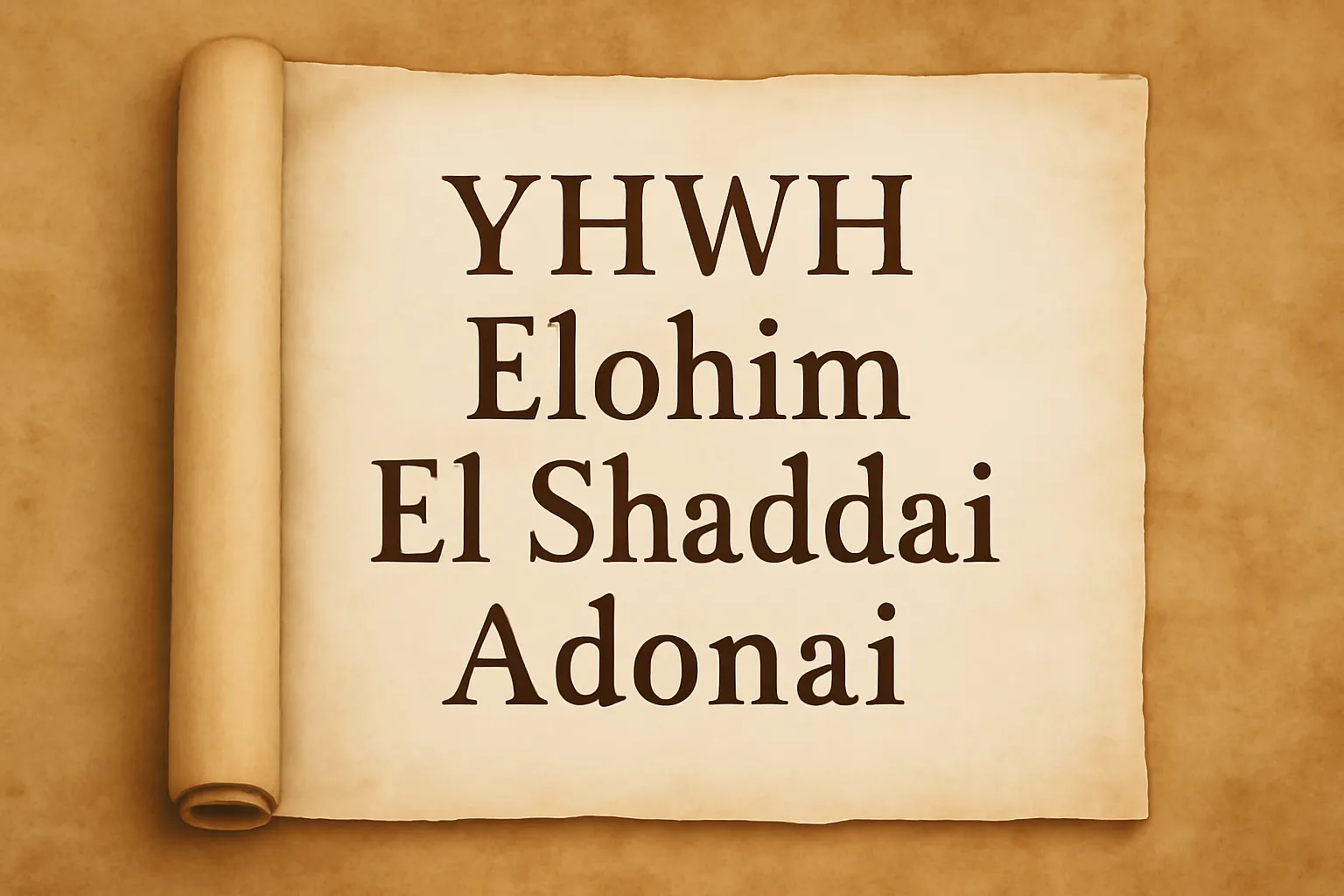
The most distinctive and debated label for God in the Hebrew Bible is the Tetragrammaton, the four-letter name YHWH. This personal name sets God apart from generic titles and signals a special covenant relationship with Israel. In English translations, this name is usually rendered as LORD (often in small capitals) rather than with a direct transliteration of the original letters.
The Name and Covenant
The divine name appears in contexts of covenant fidelity, presence, and promise. It is closely tied to God’s self-revelation and to the history of Israel as a people chosen by God. When readers encounter YHWH in the text, they are not merely hearing a label; they are being invited into a relationship in which God proves Himself to be faithful to His promises.
Pronunciation, Vocalization, and English renderings
The exact pronunciation of YHWH was traditionally considered sacred and not spoken aloud by observant Jews. The vowels of the word Adonai (the word meaning “the Lord”) were used to guide readers’ pronunciation in the synagogue, leading to the blended form Jehovah in some historical traditions and to the common Yahweh in scholarly usage.
Most modern Hebrew pronunciations favor Yahweh as a scholarly, widely used approximation, while many English readers simply encounter LORD in the text.
In theological writing, the name is treated as a revelation of the self-existent, eternally faithful God, who “I AM WHO I AM” and who exists independent of creation yet actively engages it.
Elohim and El: The General and the Personal Names for God
The Bible employs several other foundational names that carry broad theological weight. The word Elohim is the common Hebrew term for God and appears with singular verbs in many places, signaling a unique, supreme being rather than a composite deity. By contrast, El functions as a more general term for deity or power and forms the basis of several compound names.
Elohim: The Creator and Judge
Elohim introduces the biblical Creator in Genesis and recurs throughout Scripture in creation, judgment, and redemptive action. The form is plural in its root, but its verb agreement in many contexts is singular, pointing to a single sovereign God who is the source of all being. The name underscores God’s authority, transcendence, and relatedness to creation.
El: The Mighty One, the God prefix
From El come personal and relational derivatives, such as El Shaddai and El Elyon. While El by itself signals God, the compound forms foreground specific attributes of deity—care, sufficiency, rulership, and transcendence—within the scriptural narrative.
El Shaddai and El Elyon: Names Emphasizing Power and Sovereignty
Two of the most enduring compound forms feature God’s might and exalted kingship. These names are especially prominent in the patriarchal and prophetic books and connect God’s power to human experience and trust.
El Shaddai is traditionally translated as “God Almighty”. It communicates sufficiency, protection, and an all-sufficient provision for His people. The term may invite imagery of nourishment and strength, though there is scholarly debate about possible etymological nuances (including associations with “breast” or “mountain”). In Genesis, this name anchors promises of blessing to Abraham, Isaac, and Jacob, casting God as the one who makes a people great through divine action.
El Elyon: The Most High God
El Elyon translates as “the Most High God” or “God Most High.” It emphasizes sovereignty over all powers, earthly kingdoms, and cosmic reality. In narrative contexts, the title invites trust that God holds ultimate authority and that human schemes are subject to divine judgment and blessing alike.
Adonai and the Reading Tradition: Sacred Titles for God
The name Adonai is a key title and is used in anticipation of reverence and worship. Its function in the Hebrew canon reflects both reverence toward God’s lordship and a methodological practice in Scripture reading.
Adonai: Lord, Master
Adonai means “Lord” in the sense of master or sovereign. In the text, Jewish readers traditionally replace the divine name YHWH with Adonai when reading aloud. This practice shaped English Bible translations as well, with the form LORD (in small capitals) used regarding the divine name. The title indicates a personal, governing relationship between God and His people, including guidance, discipline, and blessing.
Adonai and the Substitution Principle
The substitution of Adonai for YHWH reflects reverence within the text. Christian readers often retain Yahweh or render the name as Jehovah in certain translations, while many modern translations use “the LORD” to maintain the traditional reading practice. The effect is to remind readers that God is not a generic power but a personal, relational God who governs creation and history.
Compound Jehovah-Names: The Lord Reveals Himself in Action
In the Old Testament, the combination of Jehovah (the Lord) with various functional descriptors gives a dynamic portrait of God’s saving activity. These compound names connect divine action to human need and history, highlighting how God intervenes in real time with provision, protection, healing, victory, and peace.
Representative examples
Jehovah-Jireh — The Lord will provide (Genesis 22:14). This name arises in the story of Abraham and Isaac and has become a paradigm for God’s provision in crisis.
Jehovah-Rapha — The Lord who heals (Exodus 15:26; common devotional form). It proclaims God’s healing presence and redemptive restoration.
Jehovah-Nissi — The Lord is my Banner (Exodus 17:15). The image of a banner invokes victory, protection, and allegiance under God’s leadership.
Jehovah-Shalom — The Lord is Peace (Judges 6:24). It signals restoration, harmony, and the cessation of hostility in God’s purposes.
Jehovah-Tsidkenu — The Lord our Righteousness (Jeremiah 23:6). It’s a messianic emblem in the prophecy that points forward to justice accomplished in God’s way.
Jehovah-Rohi — The Lord is my Shepherd (Psalm 23; also a licensed title in some Christian traditions). It emphasizes guidance, care, and intimate relationship with the divine pastor.
Jehovah-Shammah — The Lord is There (Ezekiel 48:35). It proclaims God’s presence in the midst of the new temple and faithful community.
Jehovah-Mekaddesh — The Lord who sanctifies (Exodus 31:13, 33:12–13). It links divine holiness to the people’s calling and ritual life.
The New Testament Names for God: Theos, Kyrios, and the Pater
In the New Testament era, Greek terms take center stage. The primary word for God is Theos, while the title Kyrios (Lord) serves both for God the Father and for Jesus in ways that underscore divine authority and worship. The relationships among the Father, the Son, and the Spirit are reflected time and again in the language of Scripture, with names and titles shaping early Christian theology and devotion.
Theos and Kyrios: Gods and Lords in the Greco-Roman World
Theos is used to refer to the one true God of Israel and, in the New Testament, to Jesus as divine in nature or as the revealed God. Kyrios is a versatile title indicating lordship, ownership, authority, and divine status. Christians proclaim Jesus as Kyrios to affirm his divinity and his central place in salvation history. Early Christian worship often centers around this double claim: God the Father is the Creator, and Jesus is the Lord who rules and saves.
Abba, Pater, and the relational dimension
Beyond Theos and Kyrios, the New Testament presents a remarkably intimate vocabulary for relating to God. The Aramaic Abba meaning “Father” appears in a few key passages (notably in the Gospels and Paul), signaling a deep familial relationship with God through faith in Christ. The Greek Pater functions similarly in Paul’s writings, emphasizing trust, prayer, and dependence on God as a loving Father. The combination of exalted sovereignty and intimate nearness characterizes the Christian claim about God’s nature and action in the world.
Lodestar titles: Logos, Theos, and the worshipful response
The Logos (Word) in John’s Gospel identifies Jesus as the divine Logos through whom creation and revelation come. While “Logos” is not a direct name in the same way as Theos, it functions as a self-disclosing title of Jesus that anchors the Christian interpretation of God’s self-revelation in Jesus Christ. Together, these terms shape a Christian understanding of God that emphasizes both transcendence and intimate presence in salvation history.
Names That Reflect Character: Mighty Warrior, Holy One, Rock
Beyond the primary divine names, Scripture offers a vocabulary of titles that frame God’s character in concrete, experiential terms. These images deepen readers’ sense of who God is and how He acts in history, worship, and personal life.
El Gibbor: The Mighty God
El Gibbor translates as Mighty God and appears in prophetic passages such as Isaiah 9:6, where the Messiah is described with this exalted title. The phrase invites contemplation of God’s strength, justice, and salvific power that surpasses human ability.
Qadosh: The Holy One
Qadosh (Hebrew for “holy”) is often used in combination with Israel’s covenantal language as the Holy One of Israel or simply to denote God’s sacredness. The holiness of God is a foundational theme in Scripture, shaping moral exhortation, worship, and the expectations of a holy community.
Titles like Tzur (Rock) and related imagery frame God as a steadfast foundation, protection, and source of stability in the midst of life’s storms. Machseh (refuge) and similar terms appear in prayers and songs as expressions of trust in God’s durable faithfulness.
Immanuel: God with Us
Immanuel — meaning “God with us” — appears in prophetic context and is cited in the Gospel narratives as a fulfillment in Jesus Christ. Although not the primary name for God, it is a powerful designation that shapes Christian interpretation of God’s presence in world history and human experience.
Theological Echoes in Translation and Practice
Names for God in Scripture do not exist in a vacuum. They shape theological interpretation, prayer practices, and liturgical usage across traditions. Different Bible translations make deliberate choices about how to render God’s name, what to emphasize in preaching, and how to teach readers to recognize the divine presence in Scripture.
Rendering YHWH as LORD in English Bibles preserves the reverence and reading tradition. Some study editions annotate the original name or propose an alternative reading, such as Yahweh, to aid understanding.
The usage of Adonai as a spoken substitute in the Hebrew text guides English translations toward a sense of reverence for God’s lordship.
In the New Testament, Greek renderings of God’s name (Theos, Kyrios) reflect a transition from Hebrew to Hellenistic cultural and linguistic contexts, while still aiming to preserve distinct reverence for God and Jesus as Lord.
Doctrinal and devotional implications
Names convey both identity and action. For example, Jehovah-Jireh pairs the knowing presence of God with a concrete moment of provision, shaping how readers understand divine care in crisis.
Names like Immanuel reveal the Christian claim about God’s incarnation—God with us in Jesus Christ—affecting worship, evangelism, and ecclesial life.
The distinction between the One God in Theos and the worshipful acknowledgment of Jesus as Kyrios anchors Christology and baptismal confession in Christian tradition.
Practical Ways to Read and Use Names for God in Scripture
For students, pastors, and lay readers, engaging with divine names can deepen study and prayer. Here are practical approaches to using these names in a thoughtful, faithful manner.
Map names to contexts: Keep a running mental or physical map of where a name appears (e.g., YHWH in covenant history, Elohim in creation and law, Theos/Kyrios in the New Testament) to understand its function in a given book or passage.
Note the attribute emphasis: When a name emphasizes a particular attribute (power, faithfulness, healing, holiness), read surrounding verses to see how the narrative or exhortation frames that attribute in terms of action or promise.
Compare translations: Use parallel translations or study Bibles to see how different traditions render the same divine name; reflect on why a translation chose a particular form and what it conveys to readers today.
Teach readers about reverence: Explain why the divine name is treated with reverence in ancient reading practices and how modern readers might approach prayer and reverent address in light of that history.
Names as a Theological Compass: What They Teach About God
Across Scripture, the names and titles of God function as a theological compass: they point readers toward God’s essence, His relationship with creation, and His redemptive purposes in history. The breadth of names—from the intimate Abba to the exalted Theos, from YHWH’s personal revelation to Jesus’ lordship—maps a complex, cohesive portrait of the biblical God. As readers move through the Bible, these names invite confession, worship, trust, and obedience, inviting one to know God more deeply through His self-revelation.
Variation Across Traditions and Texts
Readers should be aware that how God’s names are presented can vary with doctrinal tradition, manuscript evidence, and language. Some communities emphasize the continuity of God’s “Names” as expression of His attributes, while others stress the unity of God behind many titles. How a community teaches and prays with God’s names can reflect its broader hermeneutical approach to Scripture. Regardless of the tradition, the core conviction remains: God’s self-revelation in the names found in Scripture is meant to draw people to trust Him, worship Him, and live in fidelity to His covenants.
Conclusion: A Guide for Reflection and Study
Names for God in Scripture are not merely words; they are invitations to encounter the living God who reveals Himself in history, law, prophecy, and gospel. From the sacred YHWH of the covenant to the high Christology of Theos and Kyrios, from the intimate cry of Abba to the prophetic assurance of Immanuel, the biblical witness presents a God who is both transcendent and near. By exploring these names, readers gain language for prayer, language for praise, and language for reflection on the God who speaks and acts in human history. In this way, the study of Names for God in Scripture becomes a guide to deeper faith and a richer understanding of the gospel narrative.







Publicar comentario