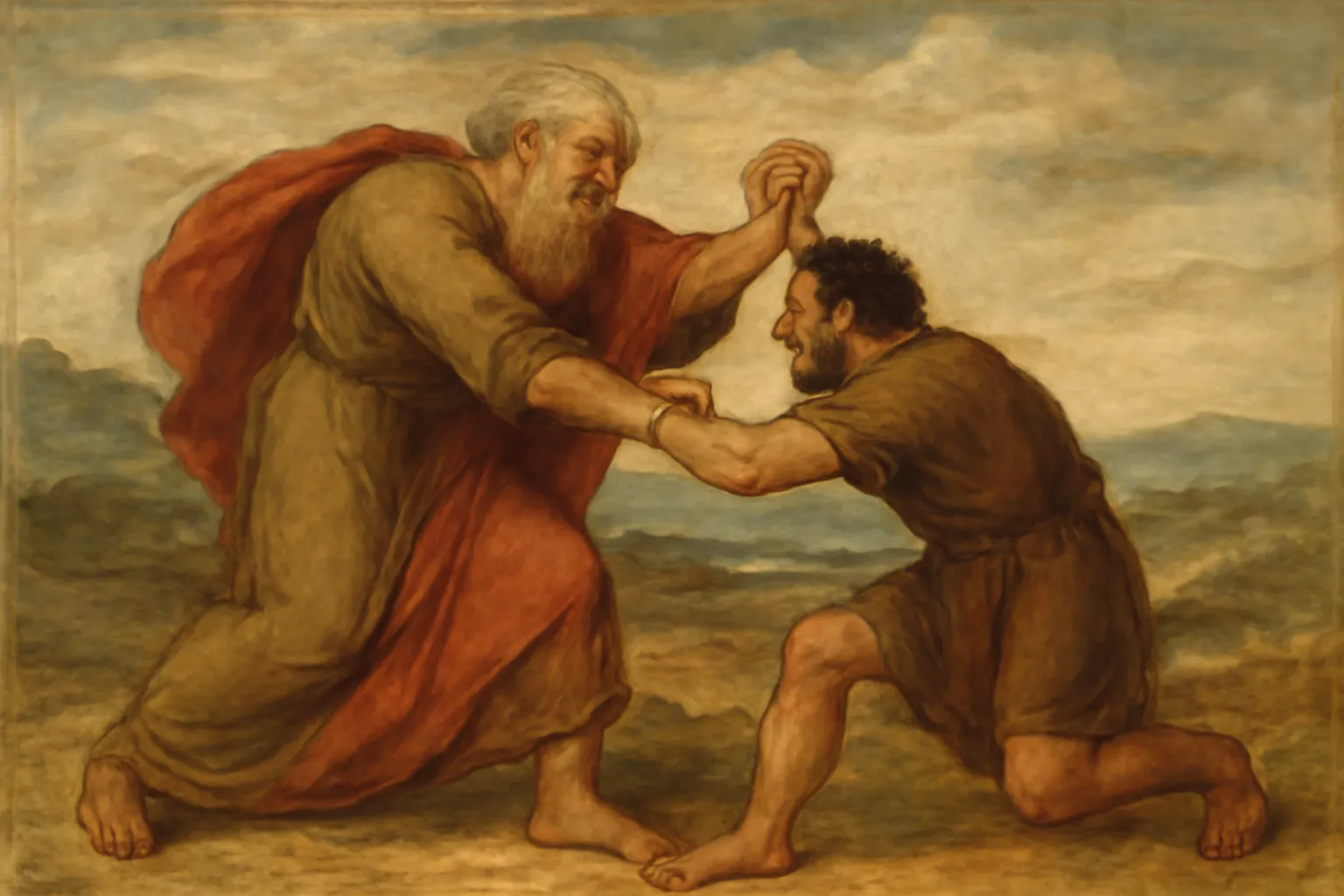
The story commonly titled God Wrestling Jacob sits at a crossroads of narrative, theology, and personal transformation in Genesis 32. In this account, a mysterious divine encounter unfolds in the darkness: a figure wrestling with Jacob until dawn, a struggle that leaves Jacob changed in name, blessing, and understanding. This article explores the episode often described as the theophany at Peniel—a moment when the boundary between human striving and divine purpose becomes sharply visible. By examining the text, its historical context, and its lasting lessons, we can gain a richer sense of what it means to wrestle with God, to be blessed through struggle, and to emerge with a new identity.
The encounter is not merely a dramatic narrative about a single night. It is a compact meditation on faith, perseverance, and discernment. It invites readers to consider how divine-human encounters shape character, reorder priorities, and reframe the meaning of blessing. The phrase god wrestling jacob appears in many discussions, but the deeper aim here is to attend to what the text reveals about the nature of God, the character of Jacob, and the ongoing relevance of the story for readers today.
Genesis Context: Setting and Significance
The narrative sits in a pivotal portion of Genesis, where the patriarch Jacob is moving toward a defining moment in his life and in the history of God’s covenant with his people. Within the larger arc of Genesis, Jacob’s experiences—his early deception, his flight from Esau, his years of labor, and his eventual return—prepare the reader for a turning point. The scene of God wrestling with Jacob sits amid that arc as a dramatic device that reveals both divine purpose and human response.
To understand the event, it helps to keep in view a few background elements:
Jacob’s name and identity: Jacob’s name itself, meaning “supplanter” or “holder of the heel,” carries a sense of struggle and initiative. The wrestling episode intensifies this theme, reframing Jacob’s life as a contest between his own ambitions and the divine call on his life.
The covenant context: Abrahamic and Isaacic promises are now tested, clarified, and extended through Jacob. The blessing bestowed at the end of the encounter is not merely personal gain; it reaffirms a covenantal trajectory for the lineage and for the people who will arise from Jacob’s line.
Peniel as a theological locus: The name the text assigns to the place—Peniel, “the face of God”—highlights the paradox of perceiving God “face to face” while remaining alive. This paradox frames the entire episode as a theophany in which divine self-revelation becomes personal transformation.
Scholars and readers alike note that the account is elliptical rather than exhaustive. The text stresses impact over process: what changes in Jacob, not every minute of the struggle. This emphasis invites readers to consider not just what happened in the night, but what it means for what follows—the new name, the limp, and the renewed purpose.
The Night of Wrestling: The Encounter Itself
The core of the episode is the dramatic confrontation that unfolds as Jacob is left alone at night, a circumstance that makes him more vulnerable and more available to revelation. The man with whom Jacob wrestles is described in martial, almost liturgical terms: someone who will not give way until daybreak, someone with whom Jacob must contend to receive blessing.
The details—though sparse—are rich in meaning. Jacob’s refusal to release the opponent until a blessing is granted frames the entire scene as a contest of wills, a test of endurance, and a decisive turning point in a life already marked by struggle. The moment when the opponent proclaims blessing is the moment when Jacob’s identity begins to shift in earnest.
Who Is the Opponent?
A central question in the interpretive conversation is the identity of the figure with whom Jacob wrestles. The text refers to a person, yet the description and the divine outcome invite readings that identify the opponent as a manifestation of God, possibly a pre-incarnate appearance of Jesus in Christian readings or an angel of the Lord in Jewish and some Christian traditions. The phrase “the man” who wrestles is deliberately ambiguous, preserving the sense that the divine may appear in a form that is accessible to a human. Across centuries, readers have varied between seeing this encounter as:
Theophany, a visible manifestation of God in a form that a human can perceive.
Angelophany, a manifestation of God through a high-ranking angel who represents the divine presence.
A symbolic drama in which Jacob’s own persistence and faith are the agents of transformation, with God’s presence implied through the blessing and the naming.
Regardless of the interpretive stance, the encounter remains a decisive encounter with the divine that destabilizes old patterns of life and invites a new sense of vocation.
Why the Struggle Lasts Until Daybreak?
The long duration of the struggle is not accidental. Nighttime intensifies vulnerability and forces reckoning. In biblical narrative, the length of an encounter often signals its importance and depth. A few key motifs emerge:
Persistence under pressure: Jacob’s refusal to release the opponent embodies perseverance in faith; the stubbornness that once led him to deception now becomes a conduit for blessing.
Transformation through ordeal: The prolonged struggle signals that a genuine transformation cannot be hurried; it requires time, encounter, and surrender.
Recognition of divine presence: The dawning light that follows the wrestling culminates in a moment of divine recognition—Jacob’s new awareness of who God is and how God acts in history.
Names, Identity, and Theological Significance
The outcome of this nocturnal encounter is dramatic: Jacob’s name is changed, his understanding of blessing is deepened, and the way forward for his family becomes a matter of covenantal vocation rather than mere personal gain.
Name change: The divine renaming from Jacob (the deceiver) to Israel (one who struggles with God) reframes the entire life narrative. The title “Israel” carries communal and theological weight, signaling a people formed through contest, endurance, and faithfulness.
Identity and vocation: The shift from a name associated with deception to a name associated with struggle and obedience aligns with a broader sense of calling. The newly named patriarch becomes the father of a nation that will prevail not by sheer force but by fidelity amid challenge.
Blessing redefined: The blessing Jacob seeks—and receives—not only secures material well-being but also confirms a spiritual vocation: to bear the responsibilities of covenant fidelity and to be a conduit of divine promise to future generations.
The Peniel Moment
The place where the encounter occurs is named Peniel, often translated as “face of God.” This naming carries theological significance beyond the physical location. It underscores the paradox of encountering the divine in human life and surviving that encounter intact. The blessing and the new name emerge out of the very pressure of the moment, suggesting that true encounter with the sacred often involves an unshielded confrontation with one’s own limits.
The Theological Significance: Theological Themes in the Wrestling Narrative
The account of god wrestling jacob resonates through multiple theological themes that scholars and pastors draw on to illuminate God’s character and God’s dealings with humanity.
The mystery and accessibility of God: The wrestling match presents God in a form approachable by a human being, inviting readers to think about how the divine can be present in ordinary, even strenuous, human experience.
Blessing through struggle: The blessing granted after the fight is inseparable from the struggle itself; the two are mutually constitutive. The narrative implies that blessing is not the absence of conflict but its proper channeling under God’s guidance.
Identity formation: The transition from Jacob to Israel marks a shift not only in personal self-understanding but in the identity of a people who will bear the name Israel and claim a land and a vocation.
Interpersonal and divine encounter: The wrestle is a drama of relationship—between a human and the divine, and within Jacob himself as he moves from manipulation to surrender, from flight to restoration of purpose.
The text’s compactness encourages a wide range of interpretive angles, yet the through-line remains consistent: genuine encounter with God can be strenuous, transformative, and foundational for future obedience.
Interpretive Perspectives: Reading the Wrestling Episode from Different Angles
Across the centuries, interpreters have approached this narrative from diverse theological and literary angles. Here are a few representative strands, each offering a distinct lens on the same event.
Traditional Jewish and Christian Exegesis
In many Jewish and Christian readings, the opponent is seen as a manifestation of God or an angel acting on God’s behalf. The blessing and name change are interpreted as God’s reaffirmation of the covenant with Abraham and Isaac continuing through Jacob. The nocturnal struggle is often read as a symbolic confrontation with personal sin, weakness, and fear—a drama by which Jacob grows into the role of patriarch and patriarchal leader.
Patristic and Medieval Perspectives
Church Fathers and medieval interpreters frequently enriched the scene with typological readings. For example, the encounter is sometimes tied to Christological patterns, with Jacob as a figure pointing forward to Israel’s vocation and to Jesus, who bears a form of divine weakness and weakness in human nature while wrestling with sin and death so that blessing might be offered to humanity.
Modern Scholarly Approaches
Contemporary scholarship often emphasizes the literary craft of the narrative: its compact plot, the deliberate ambiguity around the opponent’s identity, and the theological purpose of the blessing. Some scholars locate the scene within a broader ancient Near Eastern milieu, where divine-human encounters frequently carry political and social overtones. Others highlight the psychological dimension—Jacob’s inner struggle, fear and faith, risk and risked trust—portraying the account as a deep study in moral psychology and spiritual formation.
Lessons and Practical Applications: What the Wrestling Event Teaches Today
The narrative’s enduring appeal lies in its capacity to translate a distant ancient event into material for personal and communal formation. Here are some of the most widely drawn lessons, presented with practical emphasis.
Durability in the face of fear: The night struggle models how perseverance in the face of fear can lead to new vitality and purpose. It does not erase anxiety, but it reframes it within the confidence that God is present and active.
Humility as a doorway to blessing: Jacob’s insistence on blessing is not a prideful demand; it becomes a humbling disclosure of need—and a turning toward a deeper relationship with God.
Transformation over triumphalism: The blessing is not purely about success in human terms; it is about a reoriented life that participates in God’s covenant and purposes for others.
Identity formation through encounter: The change from Jacob to Israel signals that identity is formed through confrontations with the divine, and through accepting roles and responsibilities that align with God’s plan.
To anchor the discussion, here are a few terms and ideas frequently invoked in the study of this episode. Bolded terms signal recurrent themes across interpretations.
Theophany — a visible manifestation of God to a person, often accompanied by divine speech or blessing.
Peniel — the place named by Jacob, meaning “face of God,” highlighting the paradox of meeting God and surviving.
Israel — the new name conferred on Jacob, signifying one who wrestles with God and prevails.
Blessing — a multi-layered outcome that includes personal restoration, covenantal reaffirmation, and a broader vocation for the people who will descend from Jacob’s line.
Limps and limits — Jacob’s limp after the encounter signals the lasting impact of the divine-human encounter on human life and behavior.
Below are common questions readers ask about the God wrestling Jacob episode, with concise answers that reflect the range of traditional and scholarly insights.
Is the opponent in Genesis 32 God or an angel?
The text is ambiguous, presenting the figure as a divinely authorized presence—either God or an angel acting on God’s behalf. Many readers find it helpful to consider both possibilities as meaningful interpretations rather than mutually exclusive options.
Why did Jacob need to be renamed Israel?
The name change marks a shift from a personal life defined by cunning and maneuvering to a national and spiritual vocation centered on faithfulness to the covenantal God.
What does the blessing entail in practical terms?
The blessing includes blessing with prosperity and protection, but more deeply it involves a call to distinct mission, leadership, and responsibility within God’s unfolding plan for a people.
How does this narrative connect to the broader biblical story?
It bridges the patriarchal era with the formation of Israel as a people, linking personal transformation with national vocation and the ongoing drama of God’s promises to the ancestors.







Publicar comentario