Painting About Jesus: Inspiring Art Ideas, History & Techniques
Art about Jesus has a long and diverse history, spanning early worship in catacombs to contemporary interpretations on canvas and digital surfaces. This article explores the many ways artists have approached the figure of Jesus, from traditional iconography to experimental contemporary forms. It combines historical context, thematic ideas, technical guidance, and practical projects to help painters at all levels engage with this rich subject in respectful, meaningful, and visually compelling ways. Whether you are seeking devotional inspiration, classroom projects, or fresh ideas for a gallery series, you will find practical strategies and thoughtful perspectives on how to depict Jesus with clarity, humanity, and spiritual resonance.
Historical Threads: From Early Christian Imagery to Modern Expression
Early Christian Art and the Emergence of Symbolic Imagery
In the earliest centuries, Christian art emerged in private catacombs and house churches as a form of quiet, enduring worship. Rather than naturalistic portraits, early depictions favored symbols and narratives that could be recognized by believers even in the face of persecution. The figure of Jesus often appeared as the Good Shepherd, a compassionate guide who protects and feeds his flock, or as a stylized Christogram. In these works, symbolism—such as the lamb, the fish, or the circle of eternity—carried theological meaning more than strict likeness. If you are studying or teaching this period, consider how mood, gesture, and setting convey reverence and theological truth without relying on photo-realistic depiction.
Byzantine Iconography: Discipline, Hierarchy, and the Halo
From the 6th century onward, the Byzantine tradition established a highly codified language for depicting Jesus. In icons and iconostases, Jesus was most commonly shown as Christ Pantocrator—the Almighty Ruler—often with a stern, luminous gaze, a blessing gesture, and a mandorla or halo. The rules of proportion, frontal presentation, and a solemn, timeless gaze created a sense of otherworldly authority. For painters, studying these conventions—gravity of gesture, restrained color palettes, and the sacred geometry of composition—offers a disciplined foundation for rendering Jesus with dignity and spiritual gravity, whether for devotional objects or gallery pieces inspired by icon traditions.
Renaissance Humanism: Lived Experience and Devotional Realism
The Renaissance brought a shift toward naturalism and psychological depth. Masters such as Leonardo da Vinci, Raphael, and Michelangelo explored Jesus within complex narratives—participating in scenes like the Last Supper, The Transfiguration, and the Crucifixion—with observational painting, sfumato, and balanced composition. These works emphasize human emotion, anatomical plausibility, and dramatic lighting. If you are recreating a historical approach, study how light falls on faces, how hands convey intention, and how spatial organization leads the viewer to the focal moment of the story.
Baroque to Romanticism: Drama, Intimacy, and Spiritual Encounter
During the Baroque era, artists like Caravaggio used dramatic chiaroscuro to pull the viewer into sacred scenes—Jesus appears in everyday spaces with heightened emotional intensity. In the Romantic period, painters experimented with devotional ardor and sublime atmospheres, making Jesus a focal point of inner experience, longing, and transcendence. For a painting project, you can explore intense light and shadow to conjure a moment of revelation or compassion, while maintaining clear narrative meaning.
Modern and Contemporary Revisions: Multiplicity, Reception, and Dialogue
From the 19th century to today, many artists have reimagined Jesus in modern iconography—abstracted forms, symbolic color fields, or cross-cultural reinterpretations that speak to present-day concerns. Some artists foreground social justice, community, or spiritual yearning, while others experiment with form and material to express personal or communal devotion. Contemporary painters might combine traditional motifs with new media, such as mixed media or digital collage, to broaden the visual language available for portraying Jesus.
Painting about Jesus covers a wide range of subjects. The following ideas can be pursued in traditional media, mixed media, or digital formats. They can be approached as direct narrative scenes, portrait studies, or symbolic, atmosphere-driven works. Below are distinct themes and formats to spark your imagination.
Portraits of Jesus in various moods: serene teacher, compassionate healer, radiant triumph, or humble carpenter.
Biblical scenes such as the Nativity, Baptism, Sermon on the Mount, Miracles, Transfiguration, Crucifixion, and Resurrection.
Icon-style works exploring Christ Pantocrator, the Sacred Heart, or the Ascension with flat, reverent planes and symbolic color.
Parables in action that place Jesus among everyday settings—fields, markets, or streets—to emphasize teaching through story.
Modern life parables where Jesus appears in contemporary contexts—urban streets, refugee camps, clinics, or classrooms—to highlight ongoing relevance.
Nativity and infancy scenes that explore maternal tenderness and divine mystery, often with luminous halos and dawn light.
Resurrection andascension imagery focusing on light, victory over death, and transformative hope.
Cross-cultural interpretations where Jesus is depicted in traditional dress from different cultures or in landscapes that reflect local contexts.
Symbolic programs that pair Jesus with compassionate acts, such as feeding the hungry or comforting the afflicted, to convey values and ethics.
When planning a painting, consider the audience, the setting, and the intended emotional register. A devotional icon has different aims from a gallery work that invites contemplation or critique. Nonetheless, every successful image of Jesus communicates a clear narrative or emotional center supported by composition, light, and color.
Techniques and Modes: How to Render Jesus with Skill and Sensitivity
Traditional Media: Icon, Panel, Fresco, and Oil
Historically, painters used a range of media to depict Jesus, each with its own technique and texture. Here are some practical paths you may explore:
Icon painting (tempera on wooden panel): flat planes, gold leaf, hallowed line work, and careful proportions. This method fosters a formal, timeless presence in sacred imagery.
Fresco (buon or fresco secco): painting on damp plaster to create durable walls or murals, ideal for altarpieces or church walls.
Oil on panel or canvas: rich color, glazing, and subtle modeling allow for luminous flesh tones and atmospheric backgrounds. This is well-suited for narrative scenes and intimate portraits.
Tempera on panel: quick-drying and crisp edge control, often yielding crisp lines and a delicate painterly approach that recalls early Renaissance technique.
Techniques for Realistic and Expressive Rendering
Whether you aim for realism, idealized beauty, or symbolic abstraction, certain techniques help you achieve convincing and resonant depictions of Jesus:
Underpainting and grisaille to map tonal values and structure before applying color, helping to preserve form and mood.
Chiaroscuro and sfumato to model faces and hands with subtle light transitions, revealing inner life and emotion.
Glazing to build luminous skin tones, halo radiance, and ambient glow—especially effective for spiritual or divine aspects.
Palette construction with symbolic color: blues for heaven, reds for sacrifice, gold for holiness, greens for renewal, and earth tones for humanity.
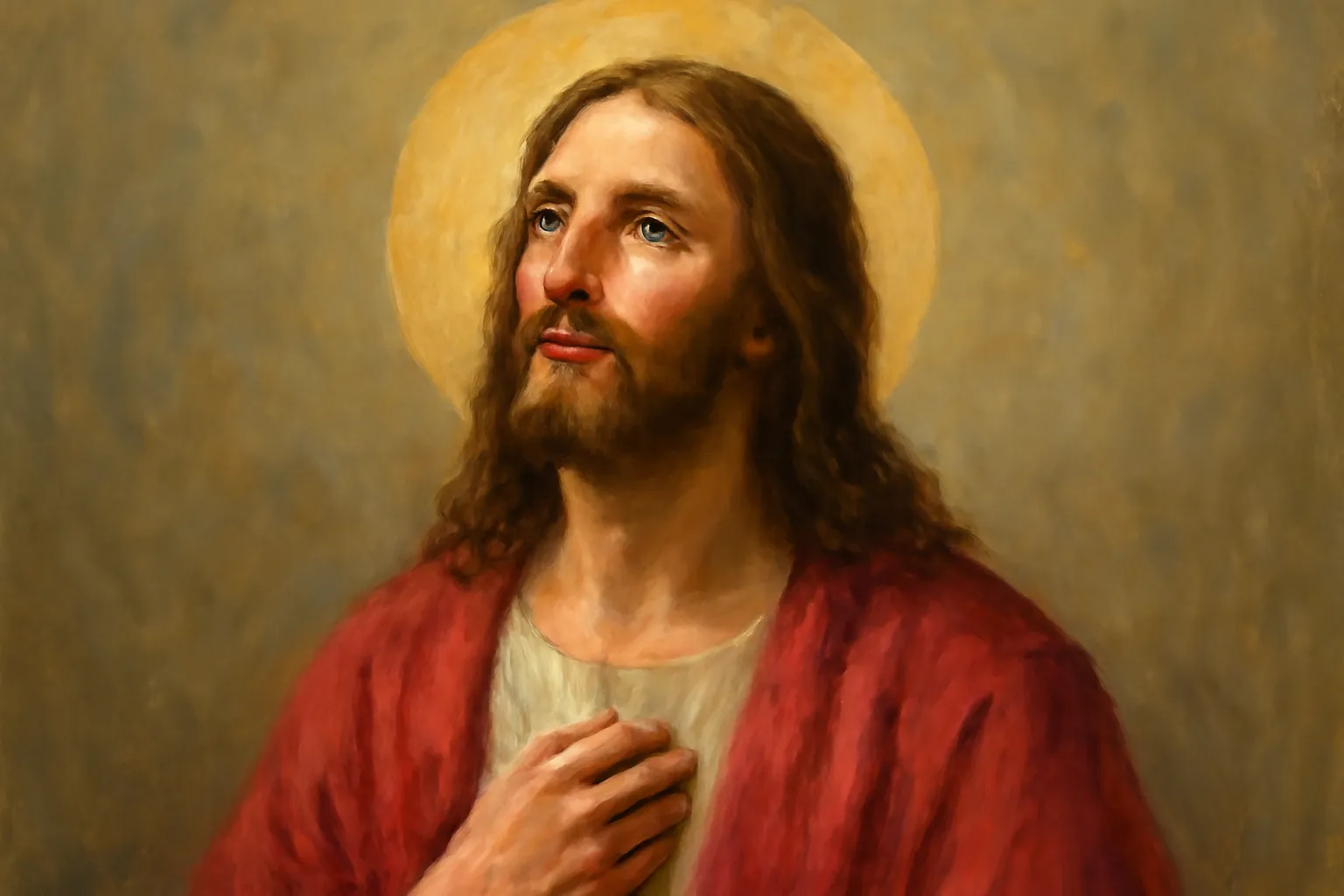
Halo and light language as visual cues to sanctity: carefully placed halos, aureoles, or radiant surrounds around Jesus’s head or body.
Gaze direction and facial expression to guide the viewer’s emotional engagement—an open, inviting gaze can communicate teaching, mercy, or blessing.
Gesture that conveys meaning: a blessing hand, a teaching gesture, or a reaching hand to the marginalized can convey narrative intent without words.
Spatial clarity—decide whether Jesus is the central focus, the apex of a narrative arc, or a figure within a larger scene that carries moral or theological implication.
Atmosphere and setting—modes of light, weather, or interior spaces that reinforce the emotional tone of the work.
Color can carry symbolism, set a mood, and structure the viewer’s experience. Here are considerations for choosing a palette that supports your painting about Jesus:
Haloes and aureoles often glow with golds, yellows, or pale whites to signify divinity and sanctity.
Warm tones (ochres, siennas, reds) can evoke compassion, vitality, and human warmth when depicting Jesus in scenes of solace or mercy.
Cool tones (blues, greens, purples) may foreground heavenly realms, contemplation, or the mystery of divinity.
Monochrome or limited palettes for icon-like works that emphasize form, line, and symbol over naturalistic color.
Color harmony to maintain unity across a scene or series—consider complementary schemes that draw the eye to the central figure of Jesus.
Experiment with color temperature and light direction to create a focal moment. For example, a soft backlight behind Jesus can suggest a miraculous or transcendent quality, while a direct, warm light on the face can convey compassion, authority, or revelation.
Practical Studio Guide: Materials, Setup, and Process
Whether in a classroom, a studio, or a community space, a thoughtful workflow helps you manage projects about Jesus with discipline and creativity.
Materials vary by medium, but common essentials include brushes of different sizes, a selection of palette knives, quality brushes for fine lines, a range of brushes for glazing, and appropriate supports (wood panels, canvas, or plaster walls). For icon-like work, prepare a wooden panel with a ground suitable for tempera or acrylic; for fresco, choose a plaster surface; for oil or acrylic, canvas or prepared panel works well.
Surfaces: traditionally prepared panels, canvas primed with gesso, lime plaster for fresco, or modern acrylic/gesso-coated boards for hybrids.
Tools: mahl sticks, solvent-safe palettes, mediums for glazing, and varnishes to protect finished work.
Layout and planning: sketch the composition, decide the focal point, and consider how to anchor the figure of Jesus within the scene.
Study and reference: work from life studies of the hands and faces to capture humanity, and consult historical references for proportion and posture.
Workflow example for a traditional oil painting about Jesus:
Prepare the ground and draw the composition on the panel or canvas.
Block in the large shapes with an underpainting to establish values.
Apply a grisaille layer to model light and shadow in monochrome before adding color.
Build up color with glazes, allowing each layer to dry before applying the next.
Refine details—hands, gaze, and gesture—while preserving the overall harmony of the piece.
Finish with a protective varnish to unify the surface and deepen color depth.
Project Ideas: Inspiring Painting Proposals for Classes and Studios
Use these project prompts to structure assignments that explore both historical traditions and contemporary interpretations of Jesus. They can be adapted for different skill levels, media, and time frames.
Icon-inspired study: Create an icon-style portrait of Jesus using tempera on a rigid panel, incorporating a halo, symbolic colors, and a carefully measured composition.
Last Supper reinterpretation: Reimagine the Last Supper in a modern setting—perhaps a community table in a neighborhood or a symbolic moment of sharing with neighbors in need.
Nativity in a contemporary landscape: Depict the nativity with contemporary surroundings while preserving the sense of mystery and sacredness.
Christ Pantocrator in a digital form: Create a digital painting or mixed-media piece that treats the Pantocrator theme with modern textures and light effects.
Parable in action: Choose a parable told by Jesus and illustrate the moment of teaching in a scene that emphasizes gesture and expression.
Portrait study: Develop a series of three portraits showing Jesus at different ages or moments, focusing on facial expression, gaze, and character.
Crucifixion with symbolic light: A crucifixion scene that uses color and light to convey meaning without explicit gore—focus on serenity and spiritual significance.
Resurrection as light: Explore a composition where the moment of resurrection radiates light and invites renewal, using soft gradients and atmosphere.
Cross-cultural encounter: Represent Jesus in a cultural setting that reflects another tradition, emphasizing universal message and local resonance.
Miracles in context: Paint a series showing Jesus performing miracles within a social or natural landscape to highlight compassion and power.
Tips for guiding projects: start with thumbnail sketches, define a clear focal point, and keep a consistent visual language across a series to create coherence. Encourage learners to explain their intent in a short artist’s statement to deepen understanding of symbolism, narrative, and technique.
Ethical Considerations and Cultural Sensitivity in Religious Art
Depicting religious figures carries responsibilities. Artists should aim for respectful representation, accuracy in cultural contexts, and sensitivity to diverse beliefs. Some practical guidelines:
Acknowledge the historical contexts of Jesus’s depictions and how different cultures have engaged with imagery of him over centuries.
Explain symbolic choices (colors, gestures, halos) to audiences so that viewers understand the intended meaning rather than misinterpretation.
Choose titles and captions that reflect intention without exoticizing or misrepresenting communities that revere Jesus in their own traditions.
When teaching or displaying, provide context about different artistic traditions—icon painting, Renaissance sacred art, and contemporary reinterpretations—and how each serves different devotional or cultural purposes.
Engaging with religious art respectfully often strengthens dialogue among viewers, encourages inquiry, and invites multiple readings of an artwork. It also invites artists to explore universal themes such as compassion, forgiveness, hope, and justice through a lens that speaks to both tradition and personal experience.
Glossary of Key Terms for Painting About Jesus
Christ Pantocrator: A depiction of Christ as ruler of the universe, often shown in a frontal, authoritative pose with blessing gesture.
Icon: A sacred image used in devotion, typically with a standardized form and strong symbolic language.
Grisaille: An underpainting technique in monochrome used to define form before color layers.
Glazing: Thin, translucent layers of color built up to create depth and luminosity.
Chiaroscuro: The use of strong light and shadow to model volume and drama.
Sfumato: A smoke-like graduation of tone that softens edges and blends colors, famously used by Leonardo da Vinci.
Iconostasis: A screen or wall with icons in Orthodox churches, separating the nave from the sanctuary.
Ground/Primer: Preparatory layer on a panel or canvas to ensure proper adhesion of paint.
Altarpiece: A work of art placed behind an altar, often featuring sacred scenes or figures, including Jesus.
Further Reading and Resources
To deepen your understanding of painting about Jesus, consult a range of sources that cover history, technique, theology, and artistic practice. The following are representative starting points:
Historical surveys of Christian art, such as surveys of Byzantine iconography, Renaissance sacred painting, and Baroque devotion.
Technique manuals for tempera, fresco, and oil painting that explain ground preparation, layering, glazing, and finishing.
Icon studies focusing on the theology, symbolism, and training of iconographers in different Christian traditions.
Museum collections that offer annotated examples of Jesus imagery from varied periods and regions—consult gallery catalogs for contextual notes.
Closing Thoughts: Making Your Own Meaningful Jesus-Inspired Art
Painting about Jesus invites a sustained conversation between tradition and personal expression. By studying historical approaches—from the solemn authority of Christ Pantocrator to the humane depiction of Jesus among people in everyday life—you can develop a robust visual language that communicates belief, hope, mercy, or challenge. Whether your goal is devotional artwork, a classroom project, or a contemporary series, you can craft work that engages viewers on intellectual, emotional, and spiritual levels. Remember to plan with clarity, study your subject with empathy and curiosity, and choose techniques that honor both the story you tell and the audience you invite to share in it.
As you move forward, keep in mind these guiding principles: clarity of narrative, truthful depiction of human emotion, and thoughtful use of symbolism to convey deeper meanings without reducing the figure of Jesus to a single symbol. With practice, patience, and an openness to cross-cultural dialogue, painting about Jesus can become a powerful vehicle for beauty, reflection, and connection across time and communities.







Publicar comentario