In contemporary Christian art, the figure of Jesus is continually reimagined through the lens of current cultures, media, and debates about faith and society. This article surveys modern representations of Jesus in a wide range of media, from traditional painting and sculpture to digital imagery, street art, performance, and installation. It traces how the idea of the Christ figure is transformed when confronted with new artistic autonomy, global audiences, and evolving theological conversations. Rather than offering a single canonical vision, today’s artistic Jesus serves as a versatile emblem—one that can incarnate sacred memory, social critique, personal devotion, or political commentary, depending on the artist’s intent and the viewer’s context.
Throughout history, artists have used the figure of Christ to explore questions about sacrifice, mercy, judgment, and mystery. In the present era, the reach of art extends beyond church walls and museums to the internet, public spaces, and urban culture. This expansion prompts a shifting set of expectations: How should a contemporary viewer receive a portrait of Jesus? What counts as reverent representation, and what counts as courageous risk? How do gender, race, class, and sexuality enter into the visual language of the sacred? The dialogue surrounding the modern Jesus is therefore not only aesthetic but deeply ethical and theological.
In the sections that follow, we will examine the engines of change—what motivates artists to redefine Jesus, how audiences respond, and what this means for Christian faith communities. We will consider the roles of tradition and innovation, symbolism and iconography, and the ways in which artistic approaches interact with doctrinal concerns, ecclesial life, and secular reception.
Historical context and the shift toward contemporary imagery
To understand modern representations of Jesus, it helps to situate them within a broader arc of Christian art. Before the 20th century, depictions of Christ were governed by established iconographies: the Good Shepherd, the Salvator Mundi, the crucified Risen Lord, and other canonical motifs. These images carried shared meanings across regions and languages, and they were often embedded in liturgical spaces or devotional practices. The artistic Jesus at that time spoke in a reverent vocabulary, balancing overt doctrinal content with the beauty of form.
The modern period begins to loosen some of these constraints. Secularization, scientific advances, and the rise of global media created new audiences and new ways to encounter religious imagery. In the late 19th and early 20th centuries, artists experimented with expressive realism, symbolism, and abstraction, often infusing their depictions with social discomfort or spiritual longing. The modern Jesus could no longer be assumed to fit a single template; instead, the figure became a site where personal interpretation and communal memory intersect.
In the postwar era, artists across continents engaged with questions about representation, authority, and the role of religion in public life. The emergence of liberation theology, postcolonial critiques, and feminist theological reflection opened additional avenues for reimagining Jesus in ways that speak to lived experience and systemic injustice. The result is a heterogeneous panorama in which the image of Christ is constantly renegotiated to address present concerns—be they racial justice, gender equality, migrant experiences, or ecological responsibility.
Modern artists work with an expansive toolkit. The artistic Jesus in contemporary practice appears in traditional forms as well as experimental formats, each offering different advantages for communication and reception.
Painting and drawing
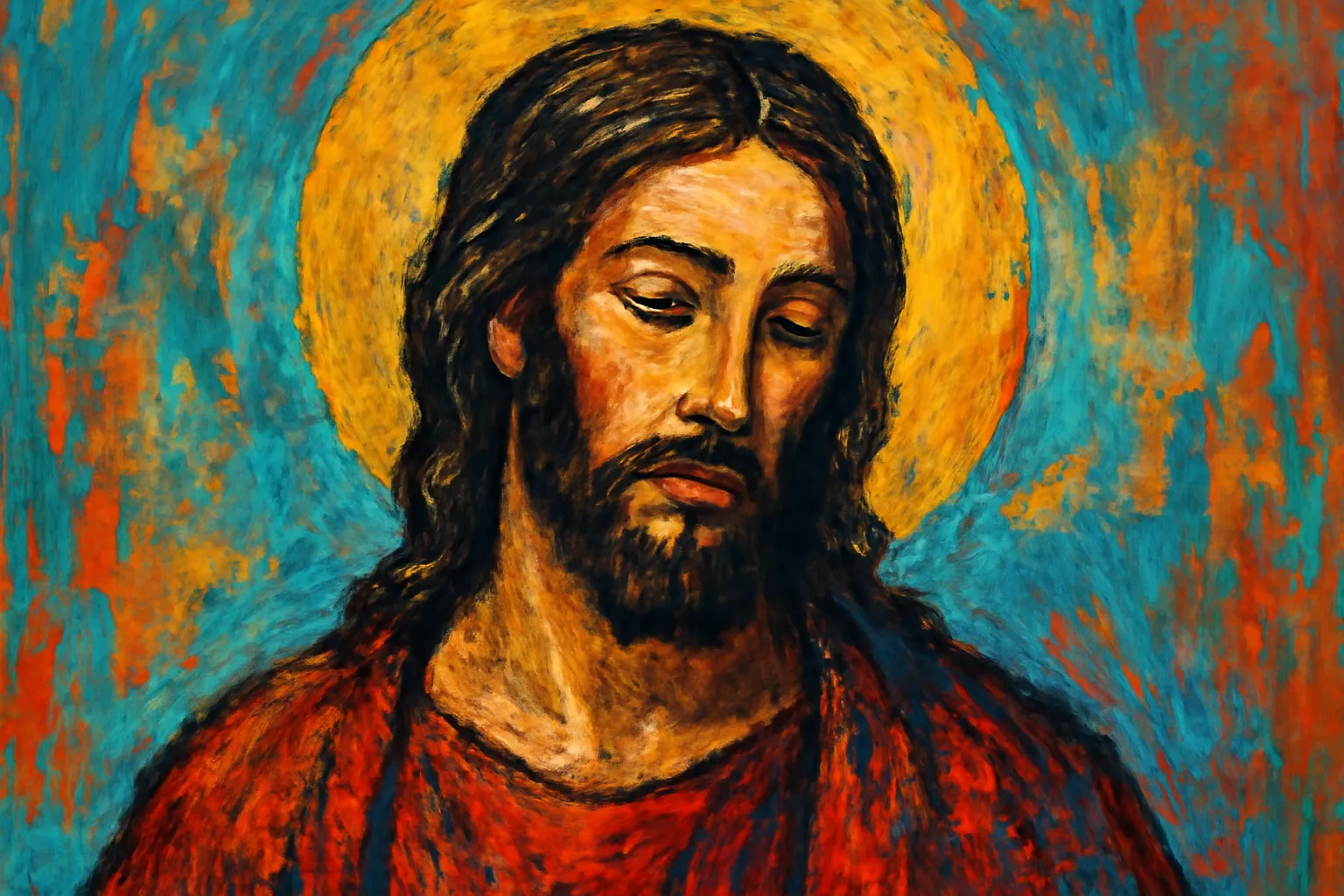
In painting and drawing, artists harness both legacy techniques and new stylistic vocabularies to render Jesus in fresh light. Some painters lean into realism to evoke intimate devotion or contemplative awe, while others pursue abstraction to foreground universal themes like light, suffering, or redemption. The result can be an arrestingly contemporary portrait that nonetheless evokes sacred memory, or a more ambiguous image that invites personal interpretation.
Hyperrealist portraits of Jesus in everyday settings, inviting viewers to imagine the sacred in ordinary life.
Symbolic compositions that juxtapose traditional Christian iconography with modern elements (neon halos, industrial textures, urban backdrops).
Abstract or non-figurative studies that foreground existential experiences such as longing, doubt, or grace.
Sculpture and installation
Three-dimensional works—sculpture and installation—offer immersive encounters with the figure of Jesus. In some cases, the sculpture emphasizes physical endurance, sacrificial imagery, or liturgical presence; in others, installation art situates Christ within social spaces to prompt engagement with current issues.
Interactive installations that invite viewers to participate in compassion or healing rituals.
Site-specific works that place Jesus within urban or public contexts, encouraging dialogue about who “the sacred” belongs to.
Ambient sculptures that use materials associated with labor, poverty, or care to highlight themes of mercy and social responsibility.
Digital art, multimedia, and virtual representations
Digital media democratize access to images of Christ and enable dynamic, participatory experiences. Through digital painting, 3D modeling, animation, augmented reality, and generative art, the modern Jesus can be experienced in novel dimensions—often prompting viewers to question the boundaries between art, devotion, and entertainment.
Generative portraits that shift with audience interaction, creating a sense of living memory.
Video installations that pair the figure of Jesus with music, spoken word, or documentary footage to tell contemporary stories.
Augmented reality experiences that place the Holy Child or the risen Christ in diverse cultural landscapes.
Street art, muralism, and public space
Street art reframes the sacred by bringing the figure of Jesus into public visibility and social dialogue. Graffiti, muralism, and stencil work can democratize access to religious imagery, while also provoking critique of religious institutions or societal norms. In the urban commons, the street Jesus can become a catalyst for conversation about justice, mercy, and community resilience.
Murals that blend Christ with local cultural symbols, highlighting regional experiences of faith.
Public art projects that address immigration, poverty, or violence through the lens of Christian compassion.
Collaborative street works that invite residents to contribute to a larger narrative about healing and reconciliation.
Key themes in contemporary depictions of Jesus
The spectrum of modern representations often centers on recurring themes that reflect current concerns while maintaining ties to tradition. These themes help readers and viewers recognize why artists choose particular approaches to depicting Jesus.
Relational and incarnational imagery
A common thread in present-day portrayals is the emphasis on Jesus as friend, healer, companion, and neighbor. Rather than distant majesty alone, new images often convey warmth, vulnerability, and relational depth. This can be seen in gentle portraits of Christ among families, Jesus in intimate conversations with vulnerable communities, or scenes of shared meals that echo biblical hospitality.
Across continents, artists have used the figure of Christ to address injustice and emancipation. The political Jesus motif appears in works that align mercy with public action, where Jesus’ teachings about liberation, care for the poor, and solidarity with the marginalized are foregrounded. Viewers encounter images that connect the gospel message to contemporary movements for human rights, climate justice, and social reform.
Inclusive and contested iconography
Modern artists frequently challenge traditional exclusivity around Christ’s physiognomy, ethnicity, and gender. Inclusive depictions of Jesus may present him as a person of color, a woman, or a nonbinary figure, provoking thoughtful conversations about the universality of the gospel and the integrity of biblical narratives in diverse communities.
Religious sincerity and secular scrutiny
Some representations seek to preserve a sense of reverence while engaging secular audiences who may be distant from church life. Others push back against secularization by foregrounding mystery, sacrament, and theological depth. The tension between sacred devotion and secular inquiry often becomes a fertile ground for artistic experimentation.
Global perspectives on the artistic Jesus
Because Christianity is a global faith, contemporary depictions of Jesus reveal regional preoccupations and local aesthetics. The way Christ imagery travels and transforms across cultures is a rich field of study for art historians, theologians, and parish communities alike.
Latin America and the Caribbean
In many Latin American contexts, depictions of Jesus may align with themes of liberation, social justice, and divine mercy. Artists often integrate regional symbolism—such as indigenous motifs, popular religious imagery, and neighborhood murals—to express a Christ who is present in everyday life and collective memory.
Africa
Across African nations, contemporary Christ imagery can reflect postcolonial experiences, spiritual revival, and interfaith dialogue. Jesus is depicted in ways that honor local artistic traditions while exploring issues of leadership, healing, and reconciliation within communities facing modern challenges.
Asia and the Pacific
In Asian contexts, images of Jesus may be blended with traditional spiritual aesthetics, integrating local calligraphy, painting styles, and cultural symbolism. The resulting representations can emphasize harmony, contemplation, and the universal reach of grace across diverse civilizations.
Europe and North America
In European and North American settings, contemporary Jesus art often negotiates secular pluralism, religious revival, and ecumenical dialogue. Works may examine the memory of faith in a postmodern age, address questions of authority and tradition, or reinterpret canonical narratives through modern storytelling and media.
As artistic Jesus images proliferate in public, private, and digital spaces, several considerations arise for believers, artists, and institutions. These questions shape reception, stewardship, and the ongoing life of Christian communities.
Authenticity and reverence
How does one balance artistic innovation with a sense of reverence for sacred figures? Some communities emphasize catechetical clarity and doctrinal alignment, while others privilege imaginative engagement and personal encounter. The central question is not merely about style but about whether the work fosters contemplation, moral reflection, and transformative encounter with the gospel.
Risk and provocation
Modern representations can provoke discomfort, especially when they challenge longstanding iconographic conventions or institutional authority. This risk-taking is often a sign of vitality in religious art, but it invites careful dialogue with communities about imagination, respect, and shared values.
With broad global circulation, imagery of Jesus travels into unfamiliar contexts. Debates arise about cultural appropriation, misrepresentation, and the ethics of using sacred subjects in popular culture. Thoughtful curators and artists engage with these concerns by collaborating with local communities, including theologians, historians, and practitioners, to ensure responsible and meaningful presentation.
Case studies: notable directions in modern Jesus art
While many artists contribute to the evolving portrait of the Christ figure in the modern era, several trajectories stand out for their influence, accessibility, or controversy. The following examples illustrate different modalities of modern representations of Jesus and how they resonate with contemporary audiences.
Relational Christ in communal spaces — Works that place Jesus in intimate, everyday settings (kitchens, living rooms, classrooms) to emphasize hospitality, care, and mutual healing.
Public-facing Christ — Murals and installations in urban neighborhoods that invite passersby to encounter the sacred in public life, often connected to social programs or charitable actions.
Digital Christ — Online galleries, virtual reality experiences, and AI-generated imagery that expand the reach of Christian imagery beyond traditional venues.
Intersectional Christ — Artistically framed portrayals that explore race, gender, sexuality, and class, presenting a Jesus who speaks to the experiences of marginalized communities.
Experimental liturgy — Installations and performance pieces that integrate music, movement, and ritual to evoke a sense of sanctity and communal devotion.
Practical considerations for viewers and congregations
As modern artists continue to reinterpret Jesus, viewers—whether churchgoers, educators, students, or casual observers—can engage with these works in ways that deepen understanding and empathy. Below are practical guidelines for encountering modern Jesus imagery in various settings.
Approach with curiosity: Allow a work to speak in its own voice, even if it deviates from familiar depictions.
Identify the artist’s intention: Consider what perspective or issue the piece is foregrounding and how it relates to biblical narratives.
Reflect on emotional and spiritual impact: Notice whether the image invites contemplation, challenge, solace, or action.
Consider cultural and historical context: Recognize that interpretations are shaped by time, place, and audience.
Engage in dialogue: Discuss responses with others to explore multiple meanings and avoid oversimplification.
Concluding reflections: what the artistic Jesus offers today
The project of representing Jesus in modern art is not merely about updating aesthetics; it is about keeping faith conversational, resonant, and responsive to human longing. By embracing a broad spectrum of media and approach, artists invite viewers into a perpetual re-negotiation of what the Christ event means in the twenty-first (and twenty-second) century. The modern Christ can appear as a healer in a clinic, a neighbor in a shelter, a revolutionary voice in the face of injustice, or a silent figure within a dark gallery waiting to be encountered with reverence.
For Christian communities, the dialogue around artistic Jesus is also an invitation to hospitality: to welcome diverse expressions of faith, to listen to diverse stories, and to reflect the love of Christ through both beauty and justice. In classrooms, museums, chapels, and public squares, contemporary depictions of Jesus remind us that faith is not static but living, not bound to a single iconography but enriched by the creativity and courage of artists who refuse to let sacred memory stagnate.










Publicar comentario