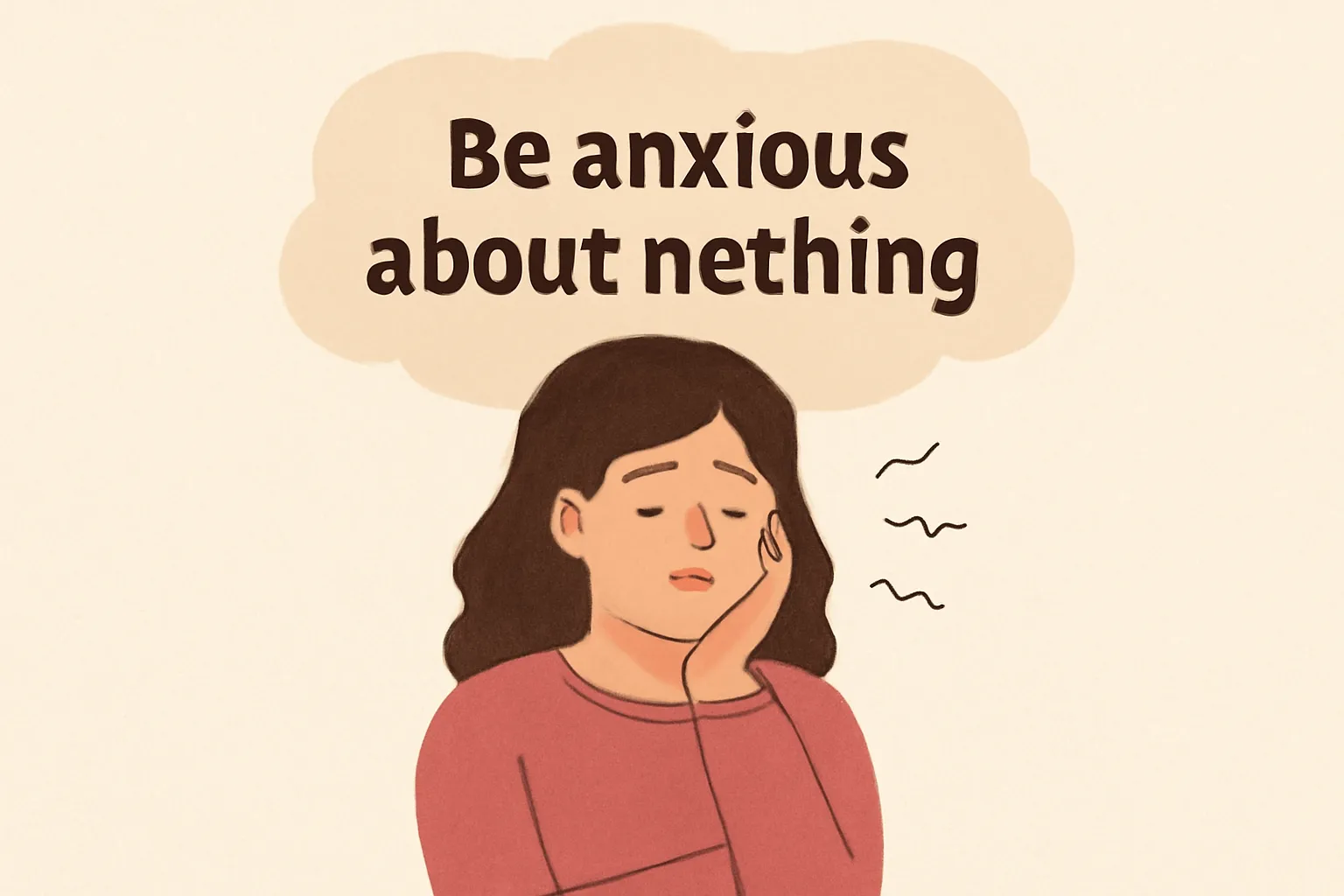
Be Anxious About Nothing Bible Verse: Philippians 4:6-7 Explained for Peace
The phrase “be anxious about nothing” has become a familiar shorthand for a profound biblical
invitation to replace worry with prayer and trust. In Philippians 4:6-7, the apostle Paul offers more than a
simple directive; he presents a practical pathway to peace that remains relevant across centuries and cultures.
In this article, we explore the be anxious about nothing bible verse in depth, unpack its meaning, and
translate its wisdom into everyday life. Whether you search for be anxious about nothing bible verse, be anxious for nothing, or do not be anxious about anything, you’ll find in these pages a careful
explanation, historical backdrop, and concrete steps to experience the peace of God that guards
hearts and minds.
The intention here is not to minimize real stress or deny the realities of life difficulties. Instead, this study
invites readers to distinguish between appropriate concern and counterproductive worry. When we turn to God in
prayer with gratitude and specific requests, Paul promises a divine response: the peace of God,
which surpasses human understanding, will actively guard our inner life. This is not a surface-level calm; it is a
robust, transcendent security that holds steady even when circumstances are unsettled.
Historical and Literary Context
To grasp Philippians 4:6-7, it helps to situate the letter within its first-century Christian
context and its author’s purpose. The letter to the Philippians is often described as a letter of
encouragement and joy, written by Paul while he faced imprisonment. In this setting, the apostle speaks not from a place
of privilege but from a perspective of tested faith.
The key term behind the familiar phrase merimna (often translated as “anxiety,” “care,” or
“worries”) carries the sense of dividing thoughts or being pulled in many directions. It is not merely
a fleeting feeling but a weighty concern that can overwhelm judgment and rob peace. In the Philippian passage, Paul calls
his readers to a deliberate posture: replace enabling worry with disciplined prayer, petition, and a heart of thanksgiving.
Several English translations capture the core idea with subtle nuance. For example:
The New International Version often renders it as “do not be anxious about anything” and then grounds that
command in a practice: practical prayer with thanksgiving.
The King James Version emphasizes a similar command but frames it in classic idiomatic language: “be careful for nothing”.
More contemporary translations might say “do not worry about anything” or “do not be anxious about anything, instead pray about everything.”
The essential message remains stable across translations: when worry threatens to dominate, respond with an intentional
rhythm of prayer, supplication, and thanksgiving, and trust God to supply what is needed for peace to prevail.
The Greek word merimna lies at the heart of the command. It denotes a kind of persistent, distracting
concern that unsettles the mind. Understanding this term helps readers recognize how worry operates: it tends to magnify
problems, distort priorities, and erode trust. The verse invites a substitution: instead of lingering in merimna, adopt a
practice that aligns life with divine order.
The invitation to prayer is not generic it is specific: prayer and supplication (often rendered as petitions)
with thanksgiving. This combination signals not only speaking to God about needs but doing so with a grateful
posture that acknowledges God’s goodness in the middle of circumstances.
The Promise: Peace of God
The result of this spiritual practice is not a vague feeling; it is the peace of God, a divine
tranquility that transcends human logic. This peace is described as guarding your hearts and your minds in
Christ Jesus, a protective action that stabilizes inner life and steadies thought processes.
What the Verse Teaches About Anxiety and Modern Life
In today’s fast-paced world, many readers encounter a version of the same dilemma Paul addressed. Anxiety can arise from
finances, health concerns, family pressures, work demands, or global events. A common question is how to apply a
directive like “be anxious about nothing” when real risks demand prudent planning and emotional honesty.
The answer in Philippians 4:6-7 is not a prohibition against appropriate concern. It is a challenge to prioritize prayer as the first response and to let gratitude recalibrate the heart. In practice, this can
look like acknowledging a worry, naming it to God, and then intentionally shifting to a posture of trust, petition, and
gratitude.
Be honest about fears without letting fear define your decisions. Naming concerns is the first step of a
constructive response.
Bring concerns to God through prayer—this is the “prayer and supplication” element. The aim is to
recruit heavenly perspective for earthly problems.
Include thanksgiving as a daily practice. Gratitude reminds the heart of God’s past faithfulness and the
possibility of present provision.
Trust the outcome to God even when the situation remains difficult. The peace that follows is not
dependent on outcomes but on a relationship rooted in divine care.
Because life often feels uncertain, readers may benefit from considering a few practical habits that align with the
verse’s rhythm. For example, establishing a short daily prayer time focused on gratitude, or keeping a simple
“worry journal” to name concerns before handing them over in prayer, can be meaningful anchors in a busy life.
Practical Applications: How to Apply “Be Anxious About Nothing” Today
If you are seeking the be anxious about nothing bible verse in practice, here is a practical roadmap that
can be adapted to various life situations.
Identify the worry: Acknowledge what is causing distress. Write it down in a sentence or two to give it
a concrete shape.
Move to prayer: Turn the concern into a prayerful request. Be specific about what you need, whether it is
wisdom, strength, provision, or peace.
Offer thanksgiving: Pause to thank God for past mercies and for his ongoing care, even when the outcome is not
yet clear.
Release the burden: Then intentionally release the concern to God, trusting him with the next steps you
cannot control.
Seek practical action: While you rest in God, take wise, prudent steps within your control. Action and
trust can work together without forcing outcomes.
In addition to the steps above, you may encounter be anxious about nothing bible verse variations
in sermons, devotionals, or study guides. Some people find it helpful to memorize the verse or to create a small
ritual that signals the turning point from worry to prayer. The goal is not to pretend there is nothing to fear but to
align fear with faith and to let peace steady the mind.
Creative Ways to Keep the Verse Alive in Daily Life
Create a %your-name%-Philippians 4:6-7 reminder card and place it where you notice anxiety most often.
Develop a brief two-minute breathing prayer that combines prayer, supplication, and gratitude, especially during
stressful moments.
Keep a gratitude journal that explicitly connects daily provisions with God’s faithfulness.
Common Questions and Clarifications
Does this mean I should never be concerned about anything?
Not at all. The instruction addresses the control that worry can exert over life. It invites believers to
redirect persistent, unproductive worry toward prayerful dependence on God. Realistic concern can be a catalyst for
thoughtful planning, but it should not become a dominating, immobilizing force.
Is this verse a call to emotional suppression?
The intention is not to suppress true feelings but to reorient them. The text advocates an active trust that
God cares, listens, and responds, even if the answer is not immediately visible. It invites a durable peace that outlasts
temporary emotional storms.
How does this relate to mental health today?
The counsel to replace anxiety with prayer and supplication can complement mental health strategies. For some,
professional support and community care are essential. The biblical principle does not substitute for appropriate
medical or therapeutic treatment but can provide a spiritual framework for resilience, hope, and cooperation with
healing processes.
What about difficult circumstances that don’t resolve quickly?
The promise of the peace of God is not a guarantee of immediate relief from pain or hardship, but a
steady, divine presence that sustains the soul. Trust in God’s character and purposes can coexist with ongoing trials,
offering steadiness when life feels unpredictable.
The Bible contains several verses that echo the same invitation to cast anxiety aside and to rely on God’s care. These
passages form a network of encouragement for readers who want to cultivate peace amid pressure.
1 Peter 5:7 — Cast all your anxiety on him because he cares for you. A complementary call to hand over
concerns to a faithful caretaker.
Matthew 6:25-34 — A broader teaching about not worrying about daily needs, urging trust in God’s provision.
Isaiah 26:3 — You will keep in perfect peace those whose minds are steadfast because they trust in you. An Old
Testament correlate to the same logic of deep trust producing inner peace.
These cross-references reinforce a single theme: concern exists, but it should not govern life. Prayer, trust, and
gratitude create an atmosphere in which peace can flourish, even when circumstances are challenging.
Reflection Questions for Personal or Group Study
What are the top three sources of worry in your life right now, and how might you name them before God?
How could you incorporate thanksgiving into your daily routine as you bring requests to God?
What practical steps can you take this week to practice turning worry into prayer rather than letting it dominate your thoughts?
In what ways might community support help you carry anxiety more effectively?
Using these questions in a study group or personal devotions can deepen understanding of Philippians 4:6-7
and its relevance for modern life. The goal is not to perform a ritual but to cultivate a posture of dependent trust that
translates into calmer decisions and a more peaceful day-to-day experience.
What you can take away
The essential takeaway is simple but transformative: when anxiety arises, respond with prayer, make your needs known to
God, cultivate gratitude, and allow God’s peace to guard your heart and mind in Christ Jesus. This process may look
different in different seasons, but the rhythm remains the same.
Final Thoughts: A Pathway to Peace
The phrase Be Anxious About Nothing is not a magic formula that cancels all trouble. It is an invitation to
a deeper reliance on God that steadies the inner life, even when the outer life remains unsettled. In this sense, Philippians 4:6-7 functions as a spiritual tool for peace: a practical instruction, a theological promise, and a
hopeful vision of what life can be when worry gives way to trust.
If you have found this exploration helpful, you may wish to revisit the verse in different translations, study its
surrounding context in Philippians, or try the suggested practical steps in a focused period of time. Some readers keep
a small card with the verse, others set a daily reminder to pause, pray, and give thanks. The beauty of this passage is
that it is not limited to any one tradition or setting; it speaks to the universal human experience of fear, longing,
and the desire for peace. In the end, the journey toward peace with God and peace within is
less about denying danger and more about embracing a resilient, hopeful response that centers the heart on divine care.







Publicar comentario