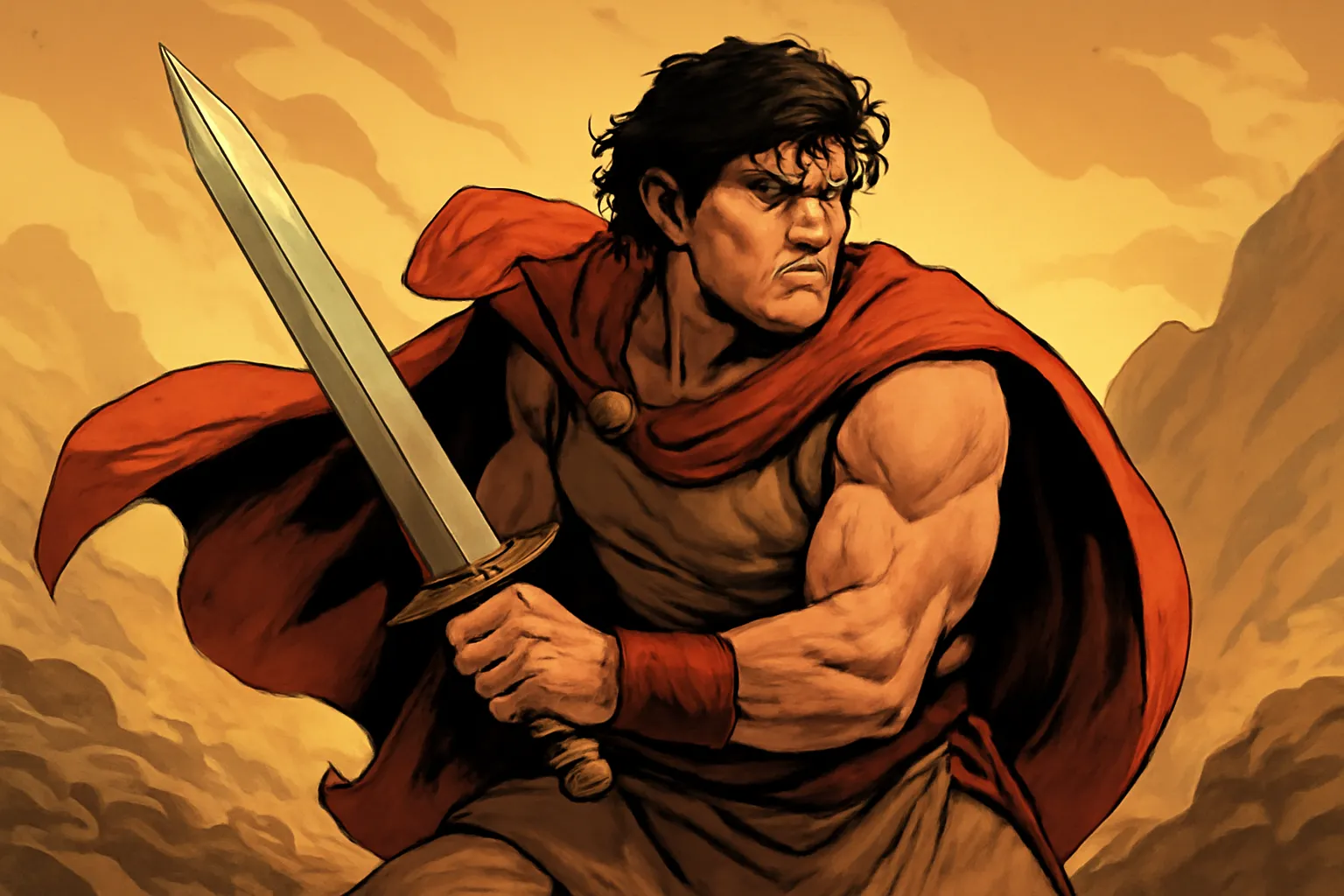
The Action Bible is a kid-friendly text and visual interpretation of Scripture designed to engage young readers through dynamic storytelling, vivid illustrations, and accessible language. Often produced as a graphic-novel style Bible or as a companion storybook, this resource emphasizes narrative momentum and scene-by-scene action to help children connect with biblical events in a way that feels immediate and relevant. For families, educators, and ministries, the Action Bible is more than a collection of Bible verses; it’s a multisensory learning tool that blends storytelling with art, context, and reflection prompts.
In practice, the Action Bible invites kids to move through stories as if they were watching a movie or reading a fast-paced graphic novel. The approach is designed to:
Make biblical narrative accessible to readers who prefer visual and action-driven content.
Provide a compact retelling of long stories without sacrificing core messages or theological accuracy.
Offer discussion gateways for parents and teachers to explore values, choices, and consequences with children.
Encourage memory verse retention through repetition and visual cues tied to scenes.
Because the Action Bible came from a need to present sacred stories in a format aligned with contemporary media, it has expanded into several editions and companion materials. This article uses the phrase Action Bible as the umbrella term and will reference Action Bible for kids, Action Bible series, and related versions as variations that share the same core purpose: to illuminate Scripture through action, clarity, and child-centered design.
Why It’s a Great Resource for Kids
There are many reasons families and classrooms gravitate toward the Action Bible. Its pedagogical strengths lie in blending storytelling with visual storytelling techniques, which can bolster comprehension, retention, and enthusiasm for reading Scripture. Consider these advantages:
Engagement: Bold artwork, cinematic pacing, and concise narratives keep young readers hooked without overwhelming them with dense prose.
Accessibility: Language is tailored to be age-appropriate, with explanations that clarify difficult concepts and cultural contexts.
Retention: Visual cues and recurring motifs reinforce memory of names, places, and events.
Discussion fuel: Each story fragment often invites questions about motives, ethics, and divine guidance, supporting family and classroom conversations.
Curricular alignment: The material can complement Sunday school lessons, vacation Bible school, or home devotions by providing ready-to-use stories and activities.
Beyond mere storytelling, the Action Bible fosters a habit of seeing the Bible as a dynamic story about relationships, faith, courage, and justice. This perspective can help children transition from viewing the Bible as distant or abstract to seeing it as a living document that speaks to daily life and choices.
Key Features of the Action Bible
When you open an Action Bible designed for children, you’ll notice a consistent set of features that distinguish it from traditional text Bibles. While specific editions may vary, the core elements commonly found include:
Animated or dynamic artwork that conveys motion, tension, and emotion in key moments.
Concise retellings of long stories, often broken into scenes or panels that resemble a comic-book layout.
Kid-friendly language and explanatory notes that clarify historical context and theological themes.
Character snapshots that introduce central figures, their motivations, and outcomes.
Maps, timelines, and glossaries to situate events in history and geography.
Memory verses or key lines highlighted for memorization and reflection.
Devotional prompts and family discussion questions that encourage guided conversation.
Activity ideas such as drawing scenes, reenacting moments, or crafting discussion prompts for youth groups.
Because the Action Bible is designed to be both entertaining and instructional, it often emphasizes moral lessons and the character of biblical figures, not just the events they lived through. The goal is to help readers recognize themes like courage, mercy, obedience, and faith in practical, comprehensible terms.
Most Action Bible editions target children in the elementary and early middle-school years, typically ages 6–12, though many families and churches adapt the material for broader audiences. The beauty of this resource is that it can be scaled to fit different reading levels and learning styles. Consider the following points when selecting an edition for your child or classroom:
Reading level: Many versions use simple sentences and present tense to maintain pacing and excitement.
Illustration density: Some editions favor denser imagery with more panels, while others are more text-light and visually bold.
Supplementary materials: Activity sheets, teacher guides, and family devotion books expand the core content and provide structured learning paths.
Content sensitivity: Certain stories involve violence or difficult themes; most publishers provide guidance or alternative framing for sensitive topics, ensuring a safe learning environment for kids.
Parents and educators should assess a child’s maturity, curiosity, and spiritual formation goals when choosing an edition or companion materials. The Action Bible is flexible enough to be used as a standalone reader, a guided reading companion, or a curriculum anchor for a unit on a biblical book or theme.
How the Action Bible Tareas to Different Learning Styles
One of the strongest design principles of the Action Bible is its alignment with diverse learning modalities. Here are some ways the material supports various learners:
Visual learners: Rich illustrations, color coding, and panel layouts help these readers interpret scenes and recall details.
Auditory learners: Storytelling rhythm, dialogue, and suggested read-aloud formats support listening comprehension and oral language development.
Kinesthetic learners: Activity ideas, role-playing, and hands-on crafts connect the narrative to physical engagement and memory.
Reading learners: Short chapters or episodes provide achievable targets, which helps build confidence and habit formation around reading.
For families and classrooms, this means you can tailor sessions to fit your group’s needs. For example, you might pair a reading segment with a quick reenactment for kinesthetic learners or invite kids to illustrate their own version of a scene for visual learners. The result is a more inclusive and effective learning environment where every child has an entry point to the story.
Home use is one of the most practical and impactful ways to leverage the Action Bible’s strengths. A well-structured family routine can transform how children see Scripture and how families discuss faith, character, and everyday choices. Here are practical strategies for home-based engagement with the Action Bible:
Weekly reading plan: Choose a target number of pages or scenes per week and build a predictable rhythm around it, such as a few pages after dinner or before bed.
Guided discussions: Use the discussion questions included with stories (or create your own) to explore motives, consequences, and the moral lessons presented.
Reflection journaling: Encourage kids to write or draw a short reflection after each session, focusing on what actions they would take if they were the characters.
Memorization practice: Pick a key verse each week and practice it through repetition, quoting it in different settings and with family members.
Creative response activities: Have children recreate a scene using crafts, shadow puppets, or storytelling to reinforce understanding.
When using the Action Bible at home, balance is key. It should be a bridge to deeper Bible study, not a replacement for in-depth study. Parents can model curiosity, ask open-ended questions, and connect biblical themes to daily life, such as demonstrating trust, compassion, or honesty in practical situations.
Using the Action Bible in School and Sunday School
Educators and volunteers often turn to the Action Bible as a bridge between classroom instruction and faith formation. It offers a format that is friendly for group activities, read-aloud sessions, and cross-disciplinary connections (art, history, literature). Here are some ways to integrate the Action Bible into teaching and ministry:
Group read-aloud sessions: A teacher or student can narrate a scene while others follow the illustrations, promoting listening skills and collective comprehension.
Story mapping: Use maps and timelines to plot the journeys of key figures, such as prophets or apostles, and discuss cause-and-effect relationships.
Character studies: Assign students to examine the decisions of a particular character, then debate outcomes and alternative choices in a respectful, faith-informed way.
Cross-curricular connections: Link stories to geography (locations of biblical events), art (illustration styles), and language arts (dialogue and narrative structure).
Prayer and worship moments: Incorporate short, reflective prayers or worship responses tied to themes like courage, mercy, or faithfulness.
For program planners, the Action Bible can be a cornerstone of a thematic unit—such as a month focused on trust in God, or a study of leadership and humility across both testaments. It’s also a versatile resource for VBS (Vacation Bible School) tracks, where action-oriented storytelling can lead into crafts, games, and service projects that reinforce the message.
Thematic Guides: Stories and Characters
To help families and educators navigate the material, most Action Bible editions organize content around recognizable narratives and leading figures. Below are some representative examples of how the content might be organized and explored. Note that specific editions may vary, but the themes and characters tend to be consistent across the series.
Old Testament Highlights
Creation and the Fall: Scenes that introduce the world, humanity, and the choice between obedience and independence.
Protector and Deliverer stories: Accounts of leaders like Moses and Joshua, emphasizing faith in God’s provision and guidance.
Faith and risk: Figures such as David confronting Goliath, or Daniel in the lions’ den, offering models of courage under pressure.
Prophetic voices: Messages from prophets who call for repentance, justice, and hope, often with dramatic imagery and symbolism.
Jesus as Teacher and Healer: Parables, miracles, and encounters that reveal God’s Kingdom and love in practical terms.
Disciples and Mission: The spread of the Gospel, the dynamics of faith, and the formation of early Christian communities.
Compassion and Courage: Stories about mercy, inclusion, and steadfast faith under pressure from hostile environments.
Apostolic letters: Brief, accessible reflections on how to live out faith in daily life, community, and service.
For each theme, you’ll find not just a retelling but prompts that invite children to reflect on questions like: What does this story teach about trust? How does mercy show up in this moment? What would you do if you were in the character’s shoes? These prompts help children connect ancient narratives to modern behavior and choices.
Discussion and Critical Thinking Activities
Beyond reading, the Action Bible is intended to spark discussion and critical thinking. Below is a representative set of activities you can adapt to your context, from quiet family time to lively classroom discussions:
Question rounds: After a scene, ask kids to generate questions about motives, decisions, and outcomes. Encourage them to consider different perspectives (the character’s, a bystander’s, God’s).
Why would you do that test: Present a scenario based on a story and ask what the character might do differently with a different choice. Discuss consequences respectfully.
Values tie-ins: Map actions in stories to core values such as honesty, generosity, bravery, and forgiveness. Have kids give examples from their own lives or plans for practice.
Articulation exercises: Children explain plot points or character motivations in their own words, reinforcing comprehension and vocabulary.
Creative retellings: Kids rewrite a scene in a modern setting (for example, what would a contemporary rescue story look like?) to demonstrate understanding and empathy.
These activities help turn reading comprehension into ethical reflection, which is the heart of faith formation. They also support social-emotional learning by giving children a structured space to articulate thoughts, listen to others, and practice respectful dialogue.
Regular use yields the best outcomes. Here is a straightforward framework to build a sustainable plan around the Action Bible, with flexibility to adapt as needed:
Set a realistic cadence: Decide how many scenes or pages to cover per week (e.g., 2–4 scenes per week, depending on your child’s age and attention span).
Choose a starting point: You can begin with a foundational story arc (Creation, Exodus, the life of Jesus) or follow a chronological sequence if the edition provides one.
Pair reading with activity: After completing a segment, pair it with a reflection activity, such as drawing a scene or journaling a lesson learned.
Review and reflect: Periodically revisit earlier stories to reinforce memory and see how new insights emerge in light of later events.
Integrate with life: Encourage kids to identify real-life situations where the story’s lessons could apply, turning the reading into practical action.
If you’re leading a group, you can structure each session around a brief reading, a guided discussion, a short activity, and a takeaway moment. The takeaway might be a prayer, a pledge to try a new virtue for the week, or a commitment to share a kind act with a friend or family member.
Common Questions and Safety Considerations
As with any Bible-based resource, there are practical questions about suitability, interpretation, and safeguarding. Here are some common concerns and helpful guidance:
Is the content appropriate for all ages? Most editions target elementary-age readers, but you should preview the material to ensure it aligns with your family’s or congregation’s standards. If a scene feels intense or unsettling, you can use a summarized version or an alternative depiction from the same story to soften the impact while preserving the core message.
How to handle difficult topics? The Bible includes moments of violence, conflict, and tough moral choices. Use guided discussion to explore these topics with sensitivity. Focus on themes like mercy, justice, and God’s faithfulness, and avoid sensationalism in how events are presented.
How faith and questions interact? Encourage honest questions. The Action Bible can be a starting point for dialogue about doubt, belief, and the meaning of faith in real life.
How do I assess accuracy? While the Action Bible simplifies narratives for readability, it generally preserves the core events and messages. If you need precise theological or historical accuracy, supplement with direct Scripture reading and reference notes from the edition.
In practice, safe use means supervising reading in early years, guiding conversations, and ensuring that the material is used in a way that strengthens trust, curiosity, and respectful discussion within the family or classroom.
Conclusion: The Impact of Active Bible Engagement for Kids
Action Bible formats for children offer a unique and powerful pathway into Scripture. By combining storytelling momentum with creative visuals, the material makes biblical narratives accessible, memorable, and relevant. For many families and communities, the Action Bible is not just a book to read; it’s a catalyst for conversation, character formation, and spiritual growth.
When used thoughtfully, this resource helps children:
Develop a lasting interest in Scripture through engaging presentation and approachable language.
Learn to analyze stories and extract practical lessons for daily life.
Build habits of reading, reflection, and discussion that can extend beyond the pages of a single edition.
Recognize the Bible as a living document—one that speaks to courage, mercy, justice, and faith across generations.
The Action Bible, in its various editions and companion resources, is a flexible tool designed to grow with a child’s faith journey. It invites kids to see themselves as part of a larger story, to ask questions, and to practice virtues that shape thoughtful, compassionate, and resilient individuals. Whether used at home, in Sunday school, or within a classroom setting, this approach to Bible engagement emphasizes action—not just knowledge—and helps cultivate a lifelong relationship with Scripture that is both meaningful and joyful.