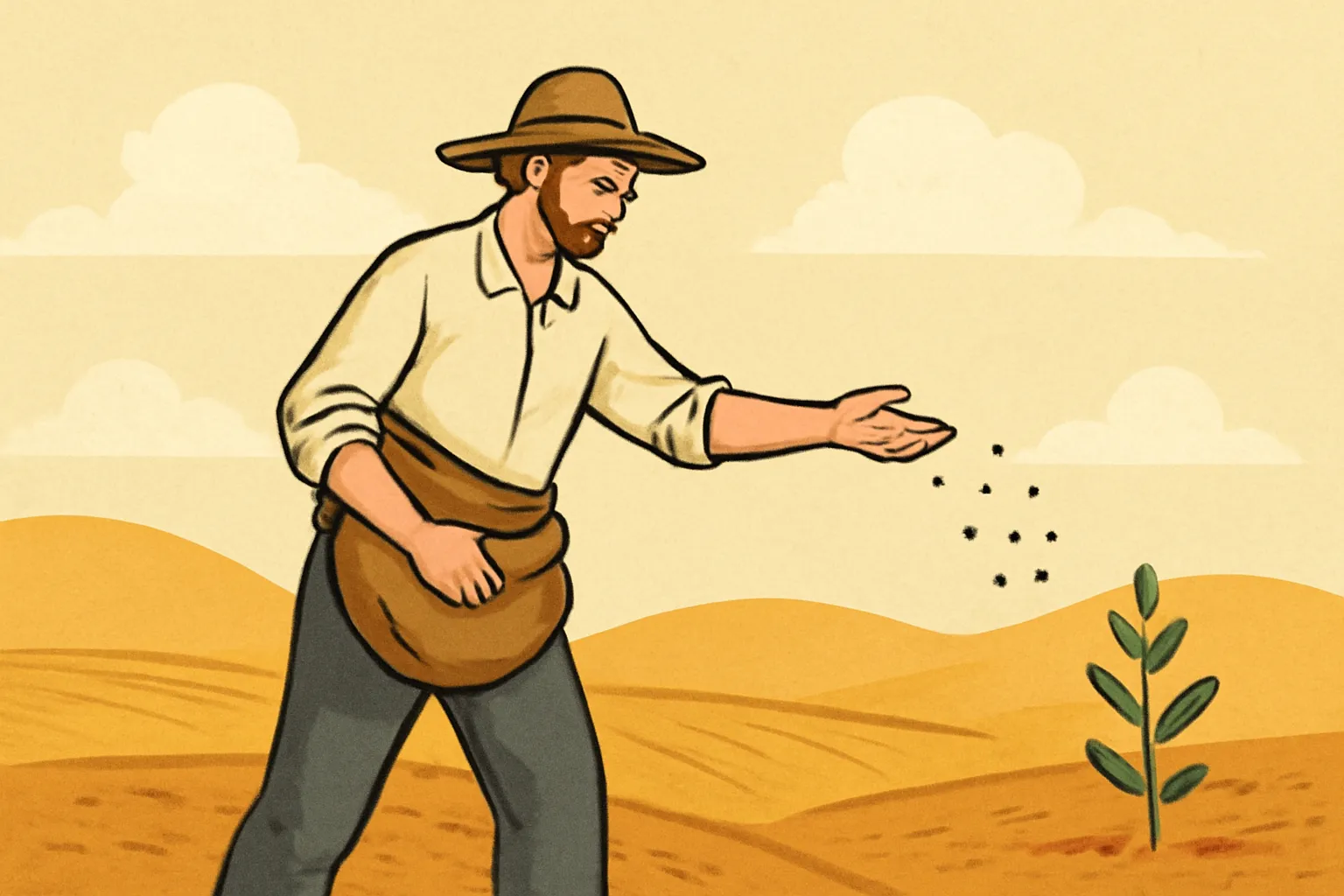
Across generations, cultures, and religious traditions, there is a recurring truth about cause and consequence: what you plant, you will eventually harvest. In biblical language, this is often summarized as «you reap what you sow» or «as you sow, so shall you reap». The idea is not merely about luck or fate, but about a moral and spiritual ecology where actions—good or bad, generous or self-centered—shape future outcomes. This article examines the meaning behind the sowing-and-reaping paradigm, surveys the major biblical verses that speak to it, and offers practical guidance for living in light of this enduring truth. While the concept is simple in outline, its implications are rich and nuanced, demanding careful attention to context, timing, and the character of God who relates to human choices.
Meaning and Core Implications
At its core, the principle of sowing and reaping conveys several interrelated ideas:
Intentional action: Our choices—what we plant in life—serve as seeds that inevitably produce a harvest. This is true in personal virtue, generosity, work, relationships, and spiritual life.
Timely sequencing: Harvests do not appear instantly; they come in due season. There is a rhythm to seedtime and harvest that invites patience, perseverance, and steady faithfulness.
Moral reciprocity: The returns on our actions are often proportional to the care, consistency, and integrity with which we act. Small, steady acts can accumulate into a meaningful harvest over time.
God’s sovereignty and human responsibility: The biblical vision is not a crude causal machine. Rather, God governs the world with wisdom and mercy, yet humans bear responsibility for their choices and their consequences.
Flourishing and guidance: The principle is meant to guide believers toward states of life where righteousness, generosity, and love flourish—where honor, peace, and vitality become part of the harvest.
The language of seedtime, sowing, and harvest often carries agricultural imagery familiar to biblical audiences. It invites readers to reflect on what they are personally sowing in relationships, finances, ethics, and spiritual disciplines. It also reminds us that the divine economy sometimes operates in ways we cannot fully predict, yet it always honors the integrity of our intentions and the consistency of our conduct.
Key Verses and Variations of the Phrase
The Bible frames the sowing-and-reaping dynamic in several passages, each offering a facet of the broader truth. Below are some of the most cited verses and common verbal variations, presented with their context and practical significance.
Galatians 6:7-8 (King James Version) — The Firm Principle
«Be not deceived: God is not mocked: for whatsoever a man soweth, that shall he also reap. For he that soweth to his flesh shall of the flesh reap corruption; but he that soweth to the Spirit shall of the Spirit reap life everlasting.»
This passage anchors the moral seriousness of sowing: divine justice is certain, and the arena is the soul and the life one builds over time. The verse contrasts two opposed directions—sowing to the flesh and sowing to the Spirit—and the corresponding harvests. It also carries a warning against deception: the verse speaks to the reliability of God’s governance when people live as if their actions had no consequences.
Galatians 6:7 (KJV) — A Short Form of the Truth
“Be not deceived; God is not mocked: for whatsoever a man soweth, that shall he also reap.”
In shorter form, this statement has become a mnemonic for accountability. It emphasizes that attempts to invert or trivialize moral causality are futile before God. It invites readers to examine their hearts and choices: your sowing will shape your future experience, whether in personal character, relationships, or spiritual life.
Galatians 6:9 — Courage in Persevering Sowing
“And let us not be weary in well doing: for in due season we shall reap, if we faint not.”
Here the emphasis shifts to perseverance and the right posture in practice. Even when immediate results are unclear or slow, faithful sowing—especially in acts of kindness, justice, and spiritual formation—will yield a harvest at the right time. The verse encourages resilience and confidence in the divine timetable.
“Give, and it shall be given unto you; good measure, pressed down, and shaken together, and running over, shall men give into your bosom. For with the same measure that ye mete, it shall be measured to you again.”
This passage broadens the discussion from a purely moral cause-and-effect to a practical principle of generosity and reciprocity. It presents an experiential dimension of sowing: generosity in acts, time, and resources tends to return in abundant and personalized ways. It also highlights the packaging of the harvest—“good measure, pressed down, shaken together”—which conveys abundance and intentionality.
2 Corinthians 9:6-7 — Giving as a Cheerful, Proportionate Sowing
“But this I say, He which soweth sparingly shall reap also sparingly; and he which soweth bountifully shall reap also bountifully. Every man according as he purposeth in his heart, so let him give; not grudgingly, or of necessity: for God loveth a cheerful giver.”
The apostle Paul connects sowing to the heart’s motive and the posture of the giver. Generosity is not merely a transfer of money; it is a spiritual practice that shapes character and invites God’s blessing in proportion to the heart’s intention and joy. This passage clarifies that the harvest is not just financial return; it also includes spiritual and communal flourishing.
Hosea 10:12 — Sow for Righteousness, Reap Mercy
“Sow to yourselves righteousness; reap in mercy; break up your fallow ground: for it is time to seek the LORD, till he come and rain righteousness upon you.”
Hosea links the sowing of righteousness with the harvest of mercy, situating the concept within a call to repentance and spiritual renewal. Righteousness sows mercy—a moral ecology where living justly creates a climate for divine compassion to break in. The imagery of breaking up fallow ground invites deliberate spiritual preparation, not passive hope.
Genesis 8:22 — The Natural Cadence: Seedtime and Harvest
“While the earth remaineth, seedtime and harvest, and cold and heat, and summer and winter, and day and night shall not cease.”
The biblical writers articulate a fundamental cosmic rhythm that persists through seasons and generations. While this verse speaks in natural terms — seedtime, harvest, seasons — it becomes a metaphor for the broader spiritual order: the world operates with predictable patterns of input and outcome, and human beings participate in that order through their choices.
Variations and Nuanced Phrases
Beyond the explicit verses, the biblical language often uses variations to express the same principle:
“Whatsoever a man soweth,” and “as ye sow, so shall ye reap” (variants of Galatians 6:7) emphasize explicit causality.
There are passages that focus on harvest as a future outcome for present acts (for example, the idea of delayed reward or correction).
Other verses describe divine integrity in the process—God does not overlook or shrug off the moral quality of what is planted in the world.
Context: Historical and Theological Grounding
The sowing-and-reaping motif is deeply rooted in the agricultural reality of the biblical world. To a first-century reader, seedtime and harvest were daily realities—an intimate sign that life is built on repeated patterns of investment and return. Theologically, the motif serves several purposes:
Moral education: People are taught to consider the long arc of their decisions and to cultivate virtue rather than short-term gratification.
Justice and accountability: The principle asserts God’s governance of the world with regard to moral causality, while allowing space for mercy, grace, and divine timing.
Hope and perseverance: Believers are encouraged that steadfast faithfulness and righteousness produce a harvest, even in the face of trial.
Holistic formation: The harvest is not simply material wealth; it encompasses character, relationships, inner peace, and alignment with God’s will.
The biblical writers also emphasize that God’s reaping is not mechanical punishment; rather, it is a governance that invites transformation. In the New Testament, the emphasis shifts toward living by the Spirit, sowing generosity, and trusting God to bring about justice and flourishing. The overall message remains the same: life functions according to the seeds we plant, and the harvest reveals the moral shape of our inner life.
Practical Lessons for Daily Living
If you want to cultivate a life that consistently yields a good harvest, consider the following practical applications drawn from the principle of sowing and reaping.
Practice 1: Be Intentional About Your Sowing
Make a conscious decision about what seeds you plant in key areas of life:
In relationships: sow kindness, patience, honesty, and forgiveness to cultivate mutual trust and resilience.
In finances: practice generosity, wise stewardship, and integrity to build sustainable provision and reduce guilt or fear.
In work and vocation: sow diligence, excellence, and teamwork, which often yield credibility and opportunity.
In spiritual life: invest in prayer, Scripture, worship, and service—“sowing to the Spirit”—to experience lasting renewal.
Practice 2: Cultivate Consistency Over Quick Fixes
The history of harvest in biblical and contemporary life favors consistency. Small, regular acts—like a weekly act of generosity, a daily moment of forgiveness, or a consistent pattern of honest work—accumulate into meaningful futures. The text of Galatians 6:9 reminds us not to grow weary in well doing, for a harvest comes in due season if we do not give up.
Practice 3: Distinguish Cause from Coercion
While the Bible teaches that our actions shape outcomes, it does not present God as a vending machine that guarantees exact returns for every input. The sowing-and-reaping principle operates within God’s sovereignty, grace, and mystery. It invites personal responsibility without reducing divine mercy to a predictable formula.
Practice 4: Diversify the Sowing
Sowing is not limited to material gifts. A robust practice includes emotional generosity, spiritual investments (discipleship, mentorship, prayer), and ethical behavior (transparency, integrity, fairness). Diverse sowing yields a richer, multifaceted harvest—sometimes seen now, often in the age to come.
Practice 5: Embrace the Timetable of God
The concept of due season invites patience. Some harvests arrive quickly, others after a season of drought or discipline. Trust in God’s timing helps believers avoid burnout and cultivate hope even during long delays.
Practice 6: Build in Mercy and Grace
The harvest includes mercy, forgiveness, and restoration. Even when sowing has produced negative outputs, repentance, reconciliation, and acts of mercy can change the trajectory—reflecting the mercy God extends to us.
Sowing Across Life Realms: Practical Scenarios
The principle operates in multiple spheres. Here are some concrete scenarios and suggested approaches to applying the sowing-and-reaping pattern.
In family life: Plant time, listening, and patient love. A patient parent who teaches with gentleness can reap obedient and secure children; a forgiving spouse can cultivate lasting trust.
In friendships: Sowing truth-telling, loyalty, and encouragement can lead to deeper, more resilient relationships and mutual support in difficult times.
In career: Invest in skill development, reliability, and constructive collaboration. The harvest may include promotions, opportunities, and influence used for good.
In community affairs: Generosity toward those in need, advocacy for justice, and service for the common good tend to produce goodwill, social capital, and a sense of shared flourishing.
In personal integrity: Consistently choosing honesty, humility, and accountability creates an inner peace and a reputation that opens doors—while protecting against the ruin that comes from deceit or selfish conduct.
In spiritual growth: Regular practices like Scripture engagement, prayer, worship, and acts of service become seeds that yield deeper relationship with God and greater discernment for life’s decisions.
Examples of Positive and Negative Harvests
Consider how positive seeds—kindness, generosity, patient teaching—often yield positive harvests such as trust, cooperation, and renewed energy. Conversely, seeds of bitterness, selfishness, and deceit can produce a harvest of broken relationships, regret, and spiraling conflict. The biblical text does not pretend that life is static; rather, it invites ongoing choice toward righteousness that yields tangible, enduring fruit.
Like any robust moral framework, the sowing-and-reaping teaching is subject to misinterpretation. Here are some common misunderstandings and how to navigate them:
Misunderstanding: All misfortune is punishment for past sins. While there can be consequences for harmful actions, not every hardship is a direct personal punishment. Some outcomes are the result of living in a fallen world, the actions of others, natural consequences, or the sanctifying work of God in a difficult season.
Misunderstanding: If I sow well, I will always reap well immediately. Timing matters. The harvest may come in the future, or it may be carried by God’s larger redemptive purposes in others’ lives or in eternity.
Misunderstanding: The principle guarantees success in every area. Sowing to the Spirit and sowing for righteousness does not guarantee worldly prosperity but does promise alignment with God’s justice, peace, and life abundant in its truest sense.
Misunderstanding: Mercy invalidates sowing consequences. God’s mercy can redeem, restore, and exceed expectations, but it does not automatically erase the moral order that governs human choices. Mercy often works through transformation and new seeds planted for future harvests.
Questions People Often Ask
Here are concise answers to some frequently asked questions about sowing and reaping in the biblical framework.
Q: Does the Bible teach that every action has a direct, immediate reward?
Not necessarily. The Bible presents sowing and reaping as a general pattern with a moral and spiritual logic, but timing, context, and God’s sovereign plan can modify how and when outcomes appear. Immediate rewards are not guaranteed, and delayed harvests are common. The focus is on the integrity of our actions and the quality of our character, not on predictable transactional outcomes.
Q: How does grace relate to sowing and reaping?
Grace does not cancel the moral order, but it redefines its ultimate aim. God’s mercy can repair brokenness and redirect outcomes in surprising ways. Grace invites humility in failure, courage to begin anew, and responsibility to sow again with wiser, more compassionate intent.
Q: Can negative harvests be reversed or overridden by positive sowing?
Yes, through repentance, reconciliation, and patient, faithful sowing in the present. The biblical pattern often emphasizes renewal: even after harm has been sowed, new seeds of love, truth, and justice can yield a different harvest in the future.
Q: How does one discern what to sow in complex life situations?
Seek wisdom through prayer, Scripture, community counsel, and reflection. Sowing to the Spirit involves choices that align with God’s character—love for God and neighbor, justice, mercy, humility, and truth-telling. When in doubt, consider whether the action would contribute to well-being, peace, and flourishing in the long term.
Conclusion: Living Under the Law of the Harvest
The biblical teaching about you reap what you sow offers a robust framework for discernment, personal growth, and communal health. It calls individuals to responsibility and hope: responsibility to choose wisely, and hope that faithful sowing—done consistently and with heart—cultivates a harvest that sustains life, honors God, and blesses others. By understanding the diverse verses that speak to sowing and reaping, we can apply the principle in multifaceted ways—through acts of charity, steadfastness in trials, integrity in work, and mercy in relationships. The harvest is not merely a reward system; it is a formative process that shapes who we are becoming and how the world experiences the love and justice of God.
As you continue in daily practice, remember that the grain you plant today is the fruit you will eat tomorrow. With perseverance, generosity, and faith, the harvest can be abundant—not only in the material sense but, more importantly, in the transformation of your heart, your communities, and your relationship with the giver of every good gift.









Publicar comentario