Christianity and Judaism: Shared Roots, Beliefs, and Differences
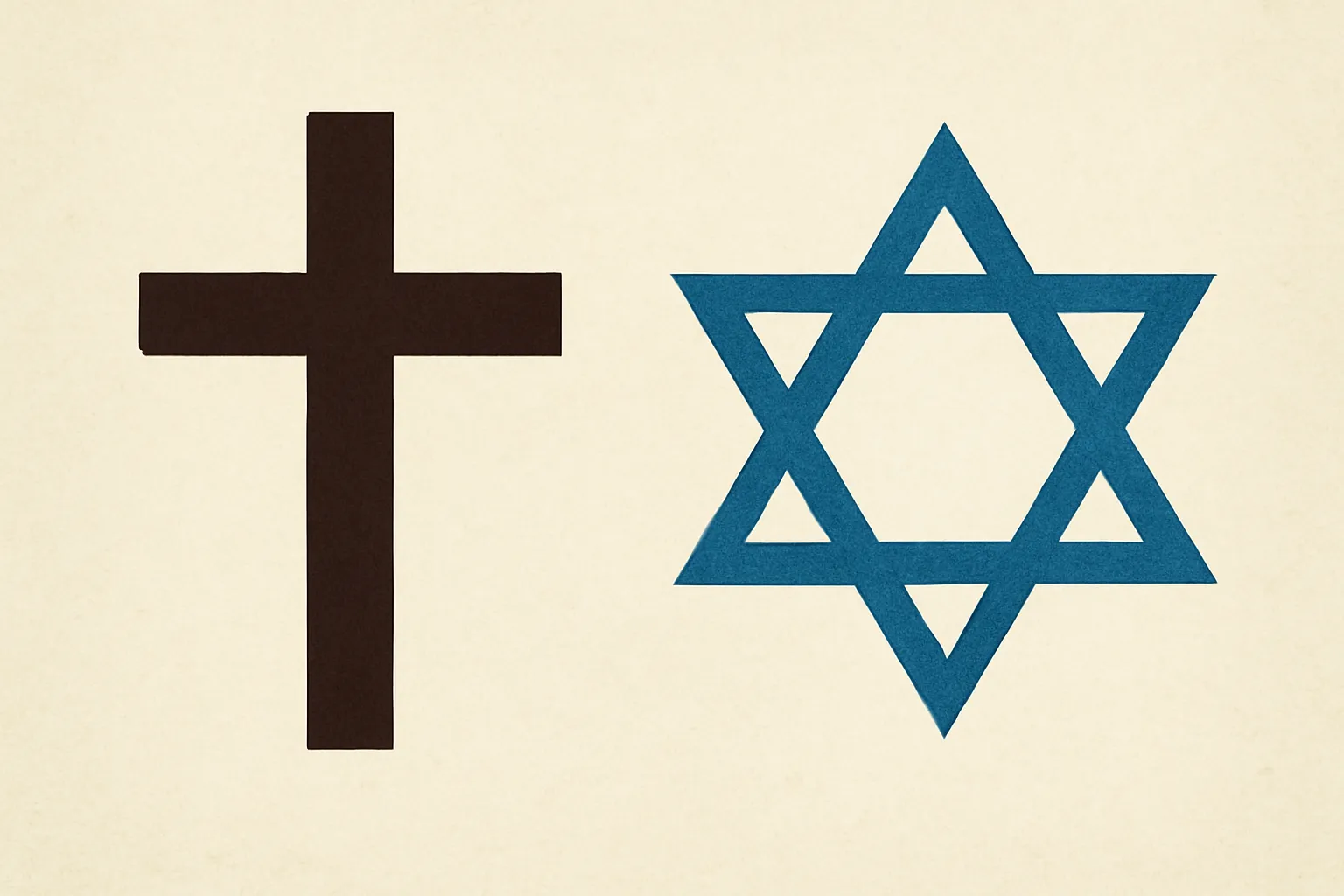
The relationship between Christianity and Judaism is a story of shared origins, evolving identities, and ongoing dialogue. These two faiths are often described as Abrahamic traditions, because they trace their roots to the same ancient narratives and to the covenantal relationship between the God of Israel and the people who would become the Jewish community. In this article, we explore the shared roots, the core beliefs, and the principal differences between the Christian faith and the Jewish faith, while acknowledging their distinct traditions, sacred texts, and religious practices. The aim is to inform, clarify common misunderstandings, and illuminate how both communities have influenced one another across centuries.
Shared Roots: Origins, Covenant, and Common Ground
To understand the connection between Christian denominations and Jewish denominations, it helps to start from a historical and theological vantage point. The two religions emerged in the same ancient milieu and grew through a series of shared experiences-turned-divergent paths.
Foundational Figures and Narrative Arcs
At the center of the shared narrative are figures like Abraham, Isaac, and Jacob, who are revered in both faiths as patriarchs of the biblical family. The Hebrew Bible (also known as the Tanakh in Judaism and functioning as part of the Christian Old Testament in Christianity) presents a story of a people chosen to steward a divine covenant with God.
Core Elements Common to Both Traditions
Monotheism and worship of a single, all‑powerful God.
The concept of a covenant between God and a people, with commitments, blessings, and responsibilities.
A shared reverence for the Torah (the first five books of the Bible) and the broader Hebrew Scriptures in Judaism; and the Old Testament as part of the Christian Bible in Christianity.
A long tradition of prophecy and the expectation that righteous living, justice, and mercy honor God and renew community life.
A moral and ethical framework that emphasizes care for the vulnerable, justice for the marginalized, and the pursuit of peace and integrity in daily life.
Scriptures and Interpretive Traditions
The two faiths share many of the same sacred texts, but they read and interpret them in different ways. In Judaism, the canonical scriptures are the Tanakh (Torah, Nevi’im, Ketuvim). In Christianity, the collection includes the Old Testament (which overlaps with the Tanakh) and the New Testament, a set of writings about the life of Jesus, early Christian communities, and theological reflections on salvation. This overlap creates a rich field of conversation about biblical interpretation, messianic expectations, and the meaning of God’s ongoing work in history.
Beliefs: How Each Tradition Understands God, Revelation, and Destiny
Belief is the heart of any religion, but in Christianity and Judaism, belief takes shape through distinct doctrinal frameworks, liturgical traditions, and modes of salvation. While there is substantial overlap in the basic terms—God, covenant, law, prophets—each tradition emphasizes different aspects of divine revelation and human response.
The Nature of God
In Judaism, God is strictly one: indivisible, transcendent, and the sole creator and ruler of the universe. Jewish theology emphasizes ethical monotheism—the belief that wholehearted worship of God should manifest in just action, charity, and communal responsibility.
In Christianity, there is a belief in one God who exists as a Trinity: Father, Son, and Holy Spirit. This concept, called the Trinity, is a distinguishing feature of most Christian traditions. Some Christian groups emphasize God’s unity in a way that maintains distinct persons within the one divine essence, while other strands may language-shift to express the same idea in different terms. In any case, Christians profess belief in the same God who spoke in the Hebrew Bible, yet they understand God’s self‑revelation through Jesus Christ in ways that differ markedly from Jewish expectations.
For Jews, the primary scriptural authority rests in the Torah and the broad canon of the Tanakh, interpreted through thousands of years of rabbinic scholarship, commentary, and communal practice. The Jewish tradition values written law and oral law, including the later rabbinic texts such as the Talmud.
For Christians, the authority of scripture incorporates the Old Testament (shared with Judaism to varying degrees) and a central set of writings about Jesus in the New Testament. Christians interpret the New Covenant through the life, death, and resurrection of Jesus, and they understand salvation and divine grace through faith in Christ, with varying emphases across denominations.
Belief about the Messiah and the End of Days
A crucial divergence concerns the Messiah. In Judaism, the Messiah is expected as a future anointed leader who will restore the Kingdom of Israel, rebuild the Temple, and usher in an era of peace and justice for all nations. By contrast, Christianity teaches that Jesus of Nazareth fulfills the Messianic role in a Way that inaugurates a new spiritual covenant with humanity, with Christians awaiting the Second Coming and the fullness of God’s Kingdom.
The question of the afterlife and judgment also features different emphases in the two faiths, and they shape attitudes toward ethics, ritual practice, and community life.
Practices and Ritual Life: Worship, Festivals, and Daily Discipline
The everyday life of a believer is shaped by communal worship, ritual acts, and festivals. While there are shared rhythms—scripture study, prayer, acts of charity—each tradition has developed distinctive forms of worship and practice.
Worship Spaces and Rites
In Judaism, communal life centers around the synagogue, where prayer, Torah study, and community gatherings occur. The weekly day of rest, the Sabbath or Shabbat, begins Friday evening and ends Saturday evening, with liturgical readings and songs, and family or communal meals.
In Christianity, worship typically centers on a church or chapel, with sacraments, liturgy, preaching, and communal singing. Sunday is the primary day of gathering for most Christian communities, commemorating the resurrection of Jesus.
Ritual Observances and Law
Kashrut and dietary laws are central in many Jewish communities, guiding what is permissible to eat and how food is prepared. Observance levels vary widely, from strictly observed to culturally influenced.
Christian practice does not generally observe dietary laws as a universal requirement, though some groups follow certain dietary or fasting practices, and there are ritual acts such as baptism and the Eucharist (also called Communion) that symbolize spiritual commitments and communal belonging.
In Judaism, the circumcision of male infants is a fundamental covenantal sign (brit milah) performed on the eighth day after birth for Jewish boys, while in Christianity the practice is not universal and does not carry the same covenantal role in most denominations.
Festivals and Sacred Time
Passover (Pesach) is a cornerstone of Jewish life, commemorating the Exodus from Egypt. While Christians also observe the event—often linked to the Last Supper and the passion narratives—these observances function differently and with distinct theological implications.
Around the year, Temple or synagogue services revolve around weekly Sabbath prayers, seasonal harvest celebrations, and fasts or commemorations in the calendar that reflect each tradition’s memory and moral commitments.
Important Christian holidays such as Christmas and Easter celebrate key events in the life of Jesus and the early church, with rites, liturgy, music, and communal gatherings that differ markedly from Jewish festivals.
Key Differences in Belief and Practice
Although Christianity and Judaism share much in terms of history, ethics, and scripture, there are essential theological and practical differences that have defined each faith’s path. A careful and respectful exploration helps illuminate why these differences matter.
Messiah, Eschatology, and Salvation
Judaism awaits the coming of the Messiah who will fulfill the biblical prophecies of national restoration and a world of peace. The
Christianity teaches that Jesus is the Messiah who brought a new covenant, with salvation through faith and grace. This difference has shaped centuries of religious teaching, ritual life, and interfaith engagement.
The most frequently cited theological divergence concerns the Trinity in mainstream Christianity, which posits one God in three persons. Judaism staunchly maintains a strict, indivisible concept of God, unanimously rejecting the Trinity as incompatible with Jewish monotheism. This doctrinal distinction influences how Jesus is perceived, how scriptures are interpreted, and how worship is conducted within churches compared to synagogues.
Sacred Texts and Authority
In Judaism, the primary revealed text is the Tanakh alongside authoritative rabbinic literature that interprets and applies its laws. In Christianity, the Old Testament forms part of the Bible, but many Christian communities place the New Testament at the center of doctrinal authority. The presence or absence of Jesus as the anticipated Messiah represents a fundamental interpretive difference that has shaped both belief and practice.
Law, Covenant, and Ethical Living
For Jews, the Mosaic Law (the Torah and its rabbinic interpretations) remains a living guide for ritual observance, moral duties, and communal life. For Christians, the emphasis often shifts to the New Covenant in Christ, where grace and personal faith are regarded as the means by which people are reconciled to God, though many Christian groups continue to value and practice moral law as a reflection of biblical ethics.
Ritual Practice and Sacraments
While both religions practice regular prayer, study, and acts of charity, their ritual frameworks differ. Baptism and the Eucharist (or Communion) serve as central sacraments in mainstream Christianity, while Brit Milah (circumcision) and Kashrut (dietary laws) anchor Jewish ritual life. The role of the temple or the synagogue as the focal point of communal worship is another clear distinction: temples once stood in ancient Israel, synagogues became the central place of worship and study in Judaism after the Temple’s destruction, while churches became the centers of Christian worship after the early centuries of the church.
Ethics and Interfaith Engagement: Shared Values in Distinct Traditions
Beyond doctrinal contrasts, Christianity and Judaism share a robust ethical framework that emphasizes human dignity, justice, mercy, and compassion. Across centuries, adherents of both traditions have collaborated to promote social welfare, human rights, and relief for the vulnerable. The dialogue between Christian and Jewish communities has grown as a means of mutual understanding, addressing grievances from history, and building respectful partnerships for the common good.
Shared Moral Imperatives
Care for the poor and the stranger; hospitality to the immigrant; protection of the vulnerable.
Justice, righteousness, and honest conduct in business and personal life.
Respect for life, human dignity, and the inherent worth of every person.
Attention to memory, tradition, and the ethical lessons drawn from sacred narratives.
Approaches to Social Justice
Judaism emphasizes acts of tzedakah (charity) and gemilut hasadim (acts of loving-kindness) as concrete duties. Christianity, in its diverse expressions, often foregrounds principles of service, charity, and advocacy for social justice within the framework of faith and grace. In many communities, faith-based organizations, schools, hospitals, and relief agencies reflect these shared commitments.
History of Relations: From Tension to Dialogue
The relationship between Christianity and Judaism has had its challenges and its moments of cooperation. In the early centuries, Christians and Jews lived within interconnected, sometimes tense communities. The history includes periods of suspicion and persecution, as well as rich cultural exchanges, shared scholarship, and mutual support. In the modern era, efforts toward reconciliation and interfaith dialogue have progressed significantly through official statements, scholarly dialogue, and grassroots initiatives.
Major historical turning points
The emergence of Christianity within the Second Temple milieu and the eventual separation of Christian communities from Jewish communities.
The long history of antisemitism in some Christian contexts and the recognition, in recent decades, of the need to address and repair past harms.
Interfaith councils, memory projects, and mutual learning movements aimed at understanding the roots and differences while honoring shared values.
Contemporary ecumenical and interfaith efforts that emphasize collaboration on social issues, education, and mutual respect for religious freedom.
Contemporary Landscape: Diversity Within Each Faith Tradition
Both Christianity and Judaism are not monoliths. Each tradition comprises diverse communities with distinct theological emphases, liturgical styles, and ways of life. Understanding this internal diversity helps avoid overgeneralization and reveals a more nuanced picture of each faith.
Orthodox Judaism emphasizes strict adherence to traditional halakha (Jewish law) and maintains a robust sense of communal continuity and ritual life.
Conservative Judaism seeks a middle path, balancing respect for traditional legal frameworks with modern understandings and practices.
Reform Judaism emphasizes personal autonomy, modern interpretation of laws, and adaptive practices that respond to contemporary life.
Other expressions include Reconstructionist and Renewal movements that experiment with liturgy and community life while preserving core Jewish identities.
Christianity Today: Denominational Richness
Roman Catholic and Orthodox traditions emphasize sacramental life, apostolic succession, and liturgical continuity.
Protestant traditions vary widely, from evangelical and charismatic movements to mainline churches, with differing emphases on scripture, grace, and church governance.
Other expressions include Anglican, Lutheran, Reformed, and independent Christian communities, each with its own interpretation of the faith and practice.
Practical Guides: How to Explore These Faiths Thoughtfully
If you are curious about Christianity and Judaism, the best approach is informed, respectful study combined with direct engagement with communities. Here are practical steps and resources to consider:
Read primary texts with guidance: the Torah and the Tanakh for Judaism, and the New Testament and the Old Testament for Christianity. Use reputable editions and commentary to aid understanding.
Explore introductory books that compare the two traditions, written by scholars who are knowledgeable about both sides and who present nuanced perspectives.
Attend public lectures or interfaith events hosted by synagogues and churches in your area, to hear firsthand about belief, practice, and communal life.
Engage respectfully with communities—ask questions, listen to personal experiences, and avoid sensational or caricatured portrayals of either tradition.
Use glossaries and timelines to track key terms, holidays, and historical milestones so you can understand the evolution of doctrines and practices over time.
Glossary of Key Terms
Torah – The first five books of the Hebrew Bible; central to Jewish law and tradition.
Tanakh – The Jewish canonical scriptures: Torah, Prophets (Nevi’im), and Writings (Ketuvim).
Old Testament – The portion of the Christian Bible that corresponds largely to the Tanakh.
New Testament – Christian writings about Jesus, the early church, and apostolic teachings.
Trinity – The Christian doctrine of one God in three persons: Father, Son, and Holy Spirit.
Baptism – A Christian rite of initiation symbolizing purification and rebirth in Christ.
Eucharist (or Communion) – A Christian sacrament commemorating Jesus’ last meal with his disciples.
Brit Milah – Jewish ritual circumcision performed on male infants as a sign of the covenant.
Kashrut – Jewish dietary laws governing what is permissible to eat and how food should be prepared.
Sabbath / Shabbat – A day of rest and worship; Friday sunset to Saturday night in Judaism; Sunday in most Christian communities.
Conclusion: Toward Mutual Understanding and Respect
Christianity and Judaism are distinct but deeply interconnected traditions with a long history of shared questions about God, humanity, justice, and meaning. The Christian faith and the Jewish faith both invite adherents to pursue truth with humility, to study and reflect, and to act with compassion toward others. By recognizing the commonalities—whether in the emphasis on a single, moral God, the centrality of sacred scriptures, or the commitment to live out faith through acts of love—we can foster a more informed and respectful dialogue. The differences—such as understandings of the Messiah, the nature of God, and the role of law—are real and meaningful, but they need not close doors to friendship or collaboration. Instead, they can be avenues for learning, conversation, and shared labor for the good of all people.
Whether you identify with the Jewish people, with Christian communities, or with both faith traditions through personal curiosity or scholarly study, the journey toward deeper understanding is a lasting endeavor. By engaging with shared roots, examining beliefs, and acknowledging differences with care, readers can develop a richer appreciation for how the Christian and Jewish genealogies have shaped the religious landscape of the world.








Publicar comentario