Holman Standard Bible: History, Features, and Quick Guide
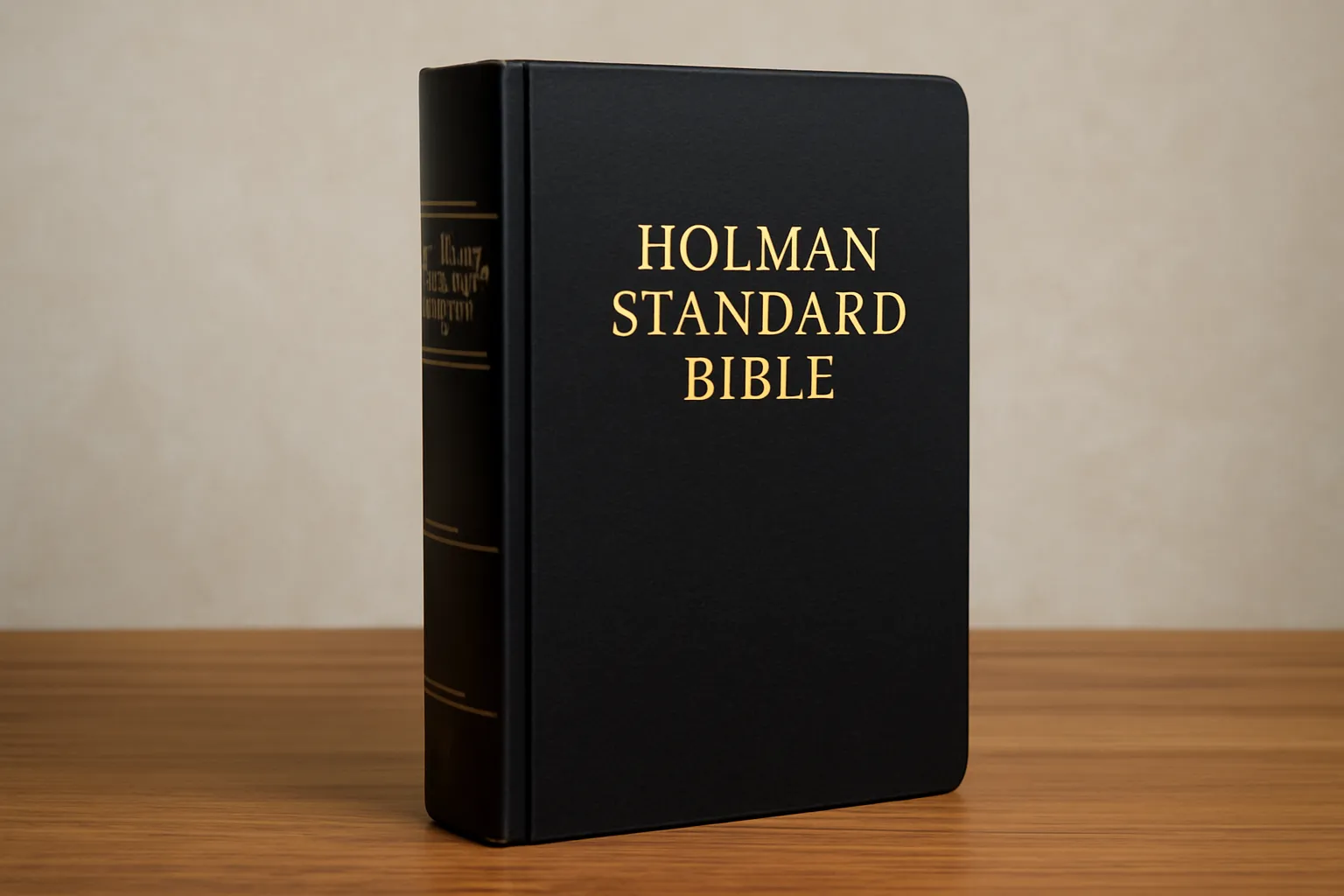
The Holman Standard Bible, more commonly encountered today as the Holman Christian Standard Bible (often abbreviated HCSB), stands as a prominent example of a modern English translation produced for readers seeking a balance between faithfulness to the original languages and readable, contemporary English. While many readers now recognize the updated form known as the Christian Standard Bible (CSB), the history, philosophy, and design principles of the Holman translation family remain essential for understanding how this tradition has shaped Bible study in recent decades.
The history of the Holman Standard Bible family begins in the late 20th century, when Holman Bible Publishers undertook a deliberate effort to create a translation that could serve both scholarly study and personal devotion. This effort was conducted under the umbrella of LifeWay Christian Resources, a major publishing and ministry organization that has for decades influenced Protestant Bible reading in North America. The aim was to produce a text that would be faithful to the original languages while employing clear, modern English that would be accessible to a wide audience without sacrificing accuracy.
In practice, the project brought together translators and scholars from a broad spectrum of evangelical traditions. Rather than being tethered to a single denominational line, the translation team sought to incorporate a range of perspectives, ensuring that the resulting text would be useful in churches, seminaries, and households alike. This collaborative approach helped the translation avoid some of the biases that can arise when a single tradition steers a project from start to finish.
The first full edition of the Holman translation appeared in the early 2000s, with the complete Bible released in 2004. This edition was widely adopted in study Bibles, devotional editions, and classroom settings. Its design was marked by a commitment to clear syntax, precise renderings of key Hebrew and Greek terms, and a consistent approach to gender language that sought to reflect the sense of the original text without introducing unnecessary modern ambiguity.
As with many major Bible projects, the Holman standard language Bible evolved over time. By the mid-2010s, the need for a refined edition that could address modernization needs and advances in biblical scholarship led to a new phase of work. In 2017, the project culminated in a full revision that rebranded the translation under a new name and a refreshed set of features. The resulting edition—widely marketed as the Christian Standard Bible—represented a continuation of the Holman translation tradition, but with updated language, updated manuscript choices, and expanded study helps. Readers today often encounter the CSB as the successor to the Holman Standard Bible lineage, while still appreciating the historical roots associated with the Holman brand.
In common usage, you will encounter several interchangeable names: Holman Standard Bible, Holman Christian Standard Bible, HCSB, and, more recently, CSB. Each designation points to a thread in a single thread of work: a translation tradition built to bridge linguistic precision and readability. When you see references to the Holman Standard Bible family or to Holman Bible translations, you are looking at a foundation that ultimately gave rise to the modern CSB edition you might use today in personal study, church libraries, or academic settings.
Translation philosophy and textual basis
Understanding the translation philosophy behind the Holman Standard Bible helps readers approach the text with a clearer expectation of how decisions were made. The team described their approach as aiming for optimal equivalence—an attempt to strike a balance between literal fidelity to the original Hebrew, Aramaic, and Greek and natural, understandable English for contemporary readers. This method sought to preserve the concrete nuances of the source languages while avoiding syntactic constructions that would be cumbersome or opaque in modern English.
In practice, this means that the translation tends to render nouns, verbs, and syntax in ways that reflect their semantic force, not merely their word-for-word order. Where a phrase in the original language carries an idiomatic or culturally bound meaning, the translators sometimes footnote or offer a rendering that communicates the closest equivalent in English. This approach is often described by publishers as optimal equivalence rather than a strict, formal equivalence or a purely dynamic equivalence model. For readers, this can translate into chapters that read with a contemporary style, while still preserving the flavor of the source texts.
Another important aspect is the use of well-established textual bases. Like many modern translations, the Holman Standard Bible team consulted critical editions of the Hebrew Bible and the Greek New Testament, considering textual variants where they affected translation decisions. The emphasis was on producing a Bible that would perform reliably in preaching, teaching, memorization, and devotional reading, rather than to function as a strictly academic apparatus. For this reason, most readers will find the HCSB and its successor CSB editions navigable without requiring constant consultation of footnotes, though the notes are readily available for those who want deeper insight into how certain passages were rendered.
Key features of the Holman standard Bible family
Whether you are interacting with the historical Holman Standard Bible or its modern iteration as the CSB, several core features consistently define the translation and its related editions. The following overview highlights elements you are likely to encounter across most editions and formats.
Contemporary, readable English designed for broad comprehension without sacrificing accuracy.
Faithful renderings of original terms in Hebrew, Aramaic, and Greek, with careful attention to key words that influence doctrine and interpretation.
Book introductions and outlines that provide context, authorship, audience, purpose, and a structure overview for each biblical book.
Verse-by-verse translation with occasional translation notes that explain difficult choices or textual variants.
Cross-references to help readers connect themes, commandments, prophecies, and fulfillment motifs across testament boundaries.
Concordance or word study helps in study editions, enabling readers to trace recurring terms and theological motifs.
Geographic and cultural notes in some editions to illuminate ancient Near Eastern settings and inter-testamental contexts.
Study Bible features such as maps, timelines, character lists, and quick-focus sections designed for classroom or sermon prep.
Editorial consistency across books, ensuring predictable terminology and phrasing (for example, how divine titles or key theologic terms are rendered).
Different formats—ranging from a straightforward text edition to an elaborate study Bible—provide a spectrum of features. If you want in-depth study aids, you’ll typically select a Holman study Bible edition that pairs the translation with extensive notes, a robust concordance, and documentary materials. If you prefer a portable, less annotated experience, a text-only or a lighter edition may be ideal.
Edition variations worth noting
As a translation that has evolved and given rise to a new standard, the Holman Bible family now increasingly appears under the banner of the CSB—the Christian Standard Bible. Readers should be aware of the transitions that have occurred:
HCSB stands for Holman Christian Standard Bible, the original form released in the 2000s with the 2004 complete Bible.
CSB stands for Christian Standard Bible, the successor edition released in the late 2010s, which updates language, typographic choices, and certain renderings while preserving the core translation philosophy of the Holman tradition.
Some printings still reference Holman in branding or as part of the series name, signaling their origin in the Holman translation program even as the text is the CSB.
In practical terms for readers and students, most editors and publishers will present the CSB as the current, primary edition, with the HCSB designation mainly of historical interest or in the context of older study materials. The continuity lies in the underlying philosophy—striving for a balance between precision and readability—along with the legacy of Holman Bible Publishers in shaping a translation you can trust for both devotional reading and scholarly inquiry.
Using the Holman standard Bible in study and worship
Readers who own or study with a Holman translation or its descendants often report a number of practical advantages for both personal devotion and congregational use. The text is approachable for readers new to Bible study, yet robust enough to support expository preaching and graduate-level coursework. Here are some common use cases and how the translation’s design supports them:
Public reading benefits from clear syntax and natural phrasing, which helps listeners stay engaged during sermons or liturgical readings.
Personal devotion benefits from a trustworthy balance between accessibility and fidelity to the original languages, encouraging thoughtful meditation on the text.
Academic study benefits from thoughtful footnotes and cross-references that illuminate translation decisions and textual variants.
Church teaching and small groups benefit from consistent terminology and helpful book introductions that set the context for discussion.
Different churches and denominations may favor different editions of the Holman standard bible family for their worship literature, study guides, or pew Bibles. The advantage of this translation line is its versatility: you can select a study edition for in-depth analysis or opt for a reference edition with maps and tools that support group discussion and sermon preparation.
Quick guide: how to get the most from a Holman translation
The following short guide is designed to help new readers, students, or pastors maximize their engagement with the Holman Standard Bible lineage, from initial selection through regular use. The steps assume you are working with a edition that combines the translation with helpful study features, though many practices apply to text-only versions as well.
Choosing the right edition
Determine your primary goal: devotional reading, academic study, or sermon preparation.
Choose between a text edition (lighter, portable) and a study Bible (extensive notes, articles, maps, and references).
Consider the level of notes you want: minimal notes for readability versus extensive translation notes for language and textual variant insights.
Decide on format: print, eBook, or mobile app version. The digital editions often offer search, highlighting, and instant cross-references.
Getting started with a reading plan
Begin with a structured reading plan—e.g., a one-year or 90-day plan—so you experience the full arc of biblical narrative and poetry.
Use book introductions to orient yourself to the context, authorial intent, and major themes of each book.
When you encounter a difficult passage, consult the footnotes or translator’s notes to understand the translator’s choices and the textual variants considered.
Employing study tools effectively
Use cross-references to see how themes develop across Testaments, such as covenant language, prophetic fulfillment, or typology.
Leverage word studies and glossaries in study editions to explore recurring terms like righteousness, mercy, salvation, and justice in their original contexts.
Consult maps and timelines for a spatial and historical sense of events, locations, and movements described in the text.
Reading with reverence and scholarly curiosity
Approach the text with a balance of devotional reverence and critical curiosity, recognizing that translation choices reflect carefully weighed decisions.
Take notes on questions you have about translation choices and see if your study Bible’s notes provide clarifications or alternate readings.
Engage in group study or guided devotionals that use the Holman translation as the base text, and compare with other translations to gain a broader understanding of passage nuances.
Holman standard Bible in the digital era
The Holman Bible translation project has adapted to the digital age with electronic formats, apps, and online resources. You will often find the CSB edition available in major Bible apps, with features such as synchronized verse highlighting, note sharing, and audio narration. For readers who study on the go, the Holman translation family offers a flexible platform: quick search capabilities, bookmarking, and the ability to compare multiple translations side by side. These digital tools enhance accessibility for students, teachers, pastors, and lay readers alike.
In addition to standalone Bible apps, you may encounter the CSB in versatile formats for worship planning and sermon preparation. The translation’s legibility in speech makes it a common choice for reading aloud in services, while the study aids support deeper exploration during Bible study groups and seminary courses. Whether you rely on a print edition or a digital edition, the core aim remains the same: to provide a translation that honors the meaning of the original languages while inviting readers into meaningful engagement with the text.
What distinguishes the Holman standard Bible family from other modern translations?
Several factors set the Holman translation lineage apart in the marketplace of modern Bible versions. Here are some points readers often consider when comparing the Holman family to other contemporary translations:
Editorial philosophy: The concept of optimal/adequate equivalence guides the translation decisions, seeking a balance between literal rendering and readability rather than adhering strictly to formal equivalence or dynamic equivalence models alone.
Graceful readability: The English in the Holman edition tends to favor natural sentence flow and contemporary vocabulary, while retaining doctrinal precision where possible.
Editorial consistency: A strong emphasis on consistent terminology and phrasing across books helps readers build a stable understanding of key biblical concepts.
Study-focused features: When you choose a study Bible edition, you receive extensive notes, article sections, and reference materials that support classroom and sermon study.
Historical lineage: As the original Holman translation evolved into the CSB, readers benefit from a translation tradition with decades of scholarship behind it, even as new updates reflect current scholarship and language use.
Common questions about the Holman translation family
It is natural for readers to have questions as they navigate this translation’s history and usage. Here are some frequent inquiries, with concise answers to help you decide how to engage with the Holman Standard Bible tradition in your personal study:
Is the Holman Standard Bible still in use today?
Yes. While the name Holman Standard Bible is often encountered in historical or branding contexts, today most readers will encounter the text as part of the CSB edition. The CSB continues the Holman translation project with updated language and expanded study materials. If you come across older HCSB material, know that it reflects the same translation lineage with an older wording and edition format.
What is the difference between HCSB and CSB?
The HCSB stands for Holman Christian Standard Bible, the original form published in the early 2000s. The CSB stands for Christian Standard Bible, the revised and updated edition released to reflect newer manuscript evidence, improved readability, and expanded study tools. The shift from HCSB to CSB represents both a branding change and a substantive update, but the overarching goal of optimal equivalence and readable accuracy remains central.
Who produced the Holman translation?
The translation was produced by Holman Bible Publishers, a division of LifeWay Christian Resources. The project involved a broad team of scholars and language experts working in collaboration to ensure that the text would be suitable for widespread use in churches, schools, and homes.
What makes the Holman/HCSB/CSB approach useful for preaching?
The translation’s emphasis on readability, combined with careful attention to original language meaning, helps preachers present Scripture in a way that is both clear to listeners and faithful to the text. The availability of translation notes, cross-references, and book introductions in study editions supports sermon preparation, exegesis, and biblical typology exploration.
In sum: the enduring value of the Holman translation tradition
From its origins as the Holman Standard Bible to its modern evolution as the CSB, this translation family has sought to harmonize linguistic clarity with theological fidelity. For readers who want a Bible that reads naturally while still reflecting careful scholarship, the Holman lineage offers a compelling option. The project’s trajectory—from the 2004 Holman Bible to the 2017 CSB revision—illustrates a broader trend in contemporary Bible translation: honoring historical literary forms and phrases while embracing advances in biblical language study and manuscript evidence. If you are shopping for a Bible that you can trust for everyday reading, for sermon prep, or for serious study in a classroom, the Holman/CSB family is a historically rich, academically informed, and practically versatile choice.
As a final note for readers searching for seminal materials you may encounter in libraries or online catalogs, remember to look for the key terms: Holman Standard Bible, HCSB, CSB, and Holman Bible Publishers. Each marker points to a particular stage in a longer translation project that has helped shape modern English Bible reading. Whether you prefer to explore the old HCSB text as part of a historical study or to start with the current CSB edition for everyday use, you are participating in a tradition designed to keep God’s word accessible and accurately conveyed to readers across generations.




Publicar comentario