7 churches in revelation map: Locations and Significance
7 churches in revelation map is a phrase that invites readers to explore a network of early Christian communities documented in the biblical book of Revelation. This article provides an extensive, educational tour of the seven churches mentioned in Revelation 2–3, focusing on their locations, historical contexts, and the significance of their messages within the broader tapestry of early Christian history. By framing these congregations as a map—often called the Revelation map—we gain insight not only into geography but also into the theological themes that the apostle John addressed. The ensuing sections use a structured layout with headings and lists to help readers navigate the geography, the biblical texts, and the lasting impact of these seven communities.
Overview: The seven churches and the Revelation map of Asia Minor
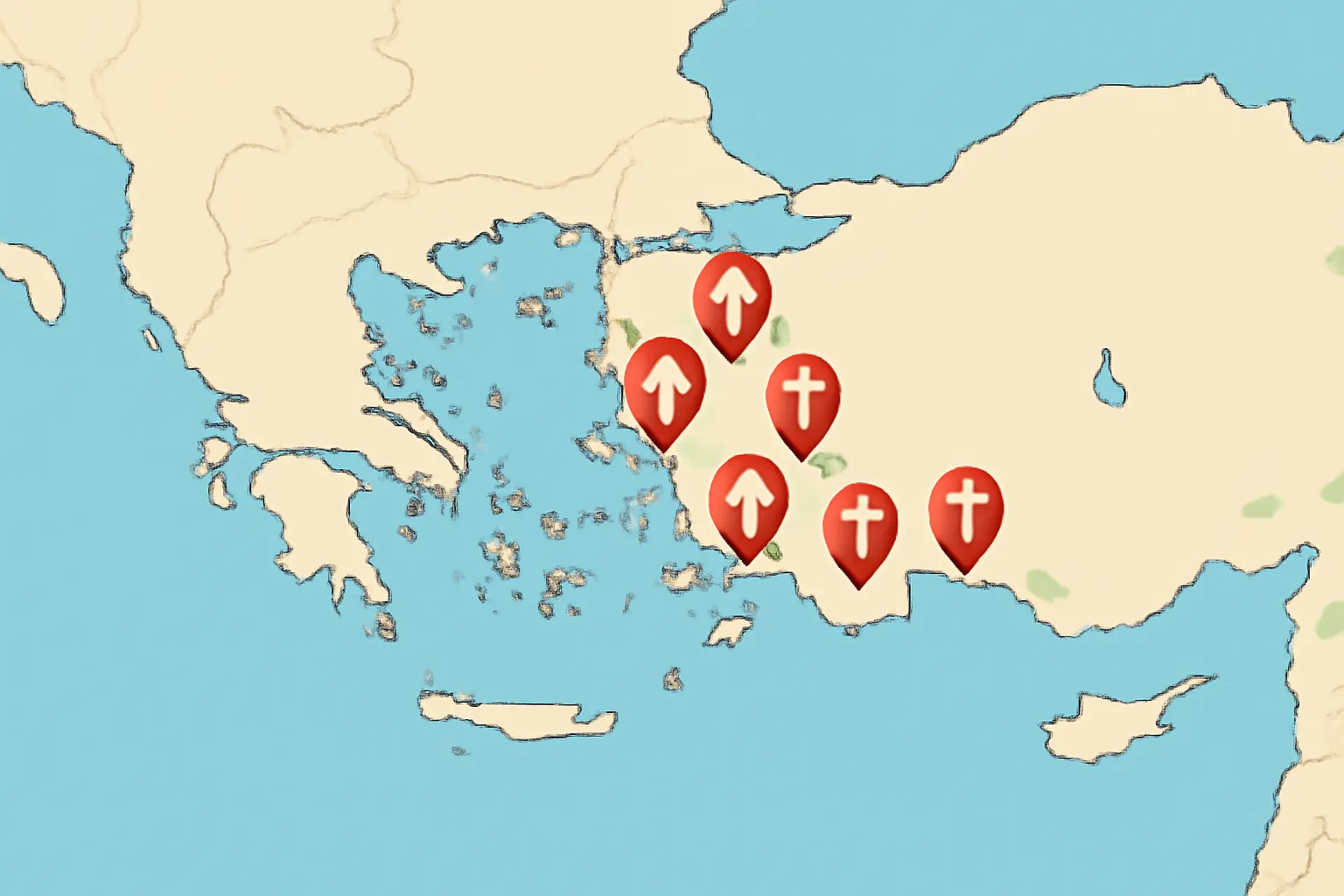
The seven churches addressed in Revelation 2–3 are located in western Asia Minor, in the region known today as part of modern Turkey. The sequence in Revelation follows an order that scholars have studied for its possible geographic and symbolic significance. Some readers picture a route that begins on the western coast near Ephesus and loops inland toward the interior cities such as Pergamum, Thyatira, and Sardis, then returns toward the inland east where Philadelphia and Laodicea lie. Others emphasize thematic connections between the cities rather than a single travel path. Regardless of the exact routing interpretation, the map is valuable for understanding how local contexts shaped church life and how the messages were tailored to address concrete situations in each community.
In this article, the map is treated as both a geographical and a spiritual diagram. The locations are not merely coordinates on a tourist guide; they are backdrops against which the commendations, rebukes, and instructions of Revelation 2–3 play out. Readers will find inside this “Revelation map” a blend of ancient history, ecclesial life, and eschatological reflection—a combination that has interested theologians, historians, and mapmakers for centuries.
The geography of the revelation map: Where are the seven churches?
All seven congregations are set in western Asia Minor, a region that was a crossroads of trade, culture, and political power in the first centuries CE. The following brief geographical sketches offer a sense of each city’s setting and how that setting influenced the concerns of the letters. This section uses concise, location-centered points to help you picture the Revelation map in your mind or on a physical map you might consult while reading the text.
Ephesus: A coastal city in the Ionia region, near the modern town of Selçuk, not far from Izmir. It sat on major land and sea trade routes and hosted the Temple of Artemis, making it a bustling commercial and religious hub. Its strategic harbor and ancient university-like prestige contributed to a strong, organized Christian community early on.
Smyrna (modern Izmir): A prosperous port city also on the Aegean coast. Smyrna was known for its wealth and its intense political life within the Roman Empire. The church there faced pressure and persecution but retained a resilient, albeit embattled, witness.
Pergamum (Pergamon, near modern Bergama): Inland and elevated, perched on a steep hilltop with an imposing acropolis and a famous library and temple culture. Pergamum’s educated elite and imperial cult presence gave the church a context where doctrinal precision and loyalty were tested against pagan and imperial pressures.
Thyatira (near modern Akhisar): A commercial center with skilled trade associations and long-standing artisan networks. Thyatira’s industrial activities, together with religious pluralism, created a milieu where social pressures and moral compromise could arise.
Sardis (near modern Sart): A city with a powerful early history—once a capital and a fortress-like place—situated on a high ridge with water supply that could be exploited or cut off. Sardis’ prestige and wealth shaped the church’s self-image and its need for vigilance.
(near modern Alaşehir): A smaller but formative urban center, often celebrated for its Christian perseverance despite weak civic strength. The city’s name itself, “brotherly love,” is echoed in the church’s call to steadfastly keep the word of Jesus amid pressure.
Laodicea (near Denizli): A flourishing financial and medical trade hub, known for wealth, banking, textiles, and the famous Phrygian waters. Its affluence became a subject of the letter’s rebuke about spiritual lukewarmness.
These summaries show that location matters in the Revelation map. Geography helps explain why some churches faced temptation to compromise with pagan cultures, why others endured persecution, and how each congregation confronted distinct challenges. The map also helps readers appreciate how the letters to the seven churches can be read as a composite portrait of early Christian life in Asia Minor.
Who were these churches? Quick introductions to each city on the revelation map
The following short portraits emphasize the historical identity of each city and the ways its character fed into the biblical text’s message. Each portrait is a doorway into a longer discussion about the concerns addressed in Revelation 2–3 and the later reception of these letters in Christian tradition.
Ephesus: The energetic founder city with a costed balance of love and doctrine
Historical significance: Ephesus housed a major temple complex and served as a major urban center in the Roman world. Its church became a model of organized ministry, with leadership structures and a strong sense of mission in the region.
Revelation focus: The message commends their diligence, perseverance, and refusal to tolerate false teachers, yet it calls them to return to their first love—a call that resonates with themes of devotion and charisma in community life.
Legacy : Ephesus’ blend of evangelistic fervor and doctrinal firmness shaped early church culture and set standards for what a robust, mission-minded church could look like.
Smyrna: Persecution, endurance, and faithful witness under pressure
Historical significance: Smyrna’s imperial status and its loyalty to Rome created real pressure on Christians who refused emperor worship or other loyalty demands.
Revelation focus: The church is not rebuked for heresy but encouraged to remain faithful amid suffering. The promise of the crown of life offers a hopeful horizon for those who endure persecution.
Legacy: Smyrna’s experience has long been a touchstone for discussions about perseverance under trial and how communities can maintain integrity while under threat.
Pergamum: Holding fast in a city of learning and imperial loyalty
Historical significance: Pergamum was renowned for culture, scholarship, and political power. The city’s religious pluralism and the presence of imperial cult practices posed moral and doctrinal tensions for early Christians.
Revelation focus: The letter commends their faith in holding fast to Jesus’ name, while warning against associations with the “teaching of Balaam” and “the Nicolaitans,” phrases that signal compromise with pagan and political pressures.
Legacy: Pergamum’s experience emphasizes the risk of accommodation to power and the need for discerning adherence to core Christian ethics in a complicated public sphere.
Thyatira: A city of trade guilds and a warning about compromise
Historical significance: Thyatira’s prosperity came from industrial and artisanal guilds, which often required participation in local cult practices to secure business and social standing.
Revelation focus: The letter recognizes good works and love but rebukes tolerating Jezebel—a symbol for doctrinal and moral compromise within the community.
Legacy: Thyatira’s narrative raises enduring questions about corporate responsibility and how churches navigate ethics in a marketplace that prizes status, success, and religious syncretism.
Sardis: A city of prestige facing spiritual alertness challenges
Historical significance: Sardis carried the weight of legacy and reputation, yet its waters and fortress-like geography also hinted at underlying vulnerabilities.
Revelation focus: The church receives a stern warning: its deeds are described as dead despite outward fame. It calls for wakefulness, repentance, and renewed zeal.
Legacy: Sardis is often cited in discussions about dead works versus genuine spiritual life, inviting communities to examine whether reputation masks inner vitality.
: The city of brotherly love, with steadfast witness
Historical significance: Though not as economically powerful as some neighbors, Philadelphia stood firm amid external pressure and offered a model of resilient ministry in a challenging climate.
Revelation focus: The letter encourages steadfast endurance, promising the protection of God for those who keep His word.
Legacy: Philadelphia is often celebrated as a case study in steadfast witness and the courage to persist with truth when strength may be limited.
Laodicea: Wealth, complacency, and a stirring call to genuine devotion
Historical significance: Laodicea’s wealth and medical industries made it one of Asia Minor’s most prosperous urban centers, with sophisticated culture and commerce.
Revelation focus: The church’s condition is described as lukewarm, neither hot nor cold, which leads to a stark rebuke and a call to repent and become truly devoted.
Legacy: Laodicea serves as a cautionary tale about affluence without spiritual vitality, and it has shaped conversations about how wealth should relate to faith and service.
Beyond the individual histories of each city, the seven letters in Revelation 2–3 present a constellation of themes that recur across the Revelation map. These themes help readers connect the concrete realities of a city’s economy, politics, and religion with the spiritual expectations Jesus communicates to each church. The major threads include the following:
Perseverance under pressure: Several churches face external pressure—whether through persecution, social expectations, or imperial loyalty laws. The text consistently endorses steadfastness and integrity under hardship.
Love and orthodoxy: Ephesus’ commendation for doctrinal clarity and Smyrna’s endurance are set against the risk of losing love or softening moral commitment. The balance between right belief and lived devotion is a recurrent concern.
Compromise and discernment: Pergamum and Thyatira illustrate the danger of accommodating pagan practices or moral laxity in exchange for social or economic gain, prompting warnings about fidelity to the gospel.
Spiritual vitality versus reputation: Sardis and Laodicea raise questions about external appearances and internal life—how to avoid a hollow reputation or a complacent heart disguised as success.
Promises and judgments: The messages mix exhortation with promises of reward or protection, reflecting a framework in which faithfulness is connected to divine blessing and ultimate victory.
The map of the seven churches has informed several interpretive approaches. Different scholarly traditions view the Revelation map through various lenses:
Historico-literal perspective: Interprets the letters as concrete instructions to real congregations in specific places, with historical events shaping the reception of the messages.
Prophetic or futurist lens: Sees the letters as foreshadowing broader, later events in church history or in eschatological timeline, with the geography symbolizing stages of spiritual development.
Ideal-typical or symbolic reading: Focuses on the universal messages for churches everywhere, treating each city as a literary type representing distinct church experiences (faithfulness, compromise, lukewarmness, etc.).
Historical-critical context: Emphasizes the social, economic, and political realities of late-second-century Asia Minor to understand how the letters addressed concrete problems in daily life.
Each approach enriches our reading of the Revelation map by highlighting different aspects of how geography, culture, and theology intersect in the text. Readers are encouraged to explore multiple lenses to gain a fuller understanding of the seven churches and their significance in early Christian history.
While these letters were written nearly two millennia ago, their themes continue to resonate for modern readers who study the Revelation map for personal, congregational, or ecclesial guidance. Some enduring lessons include:
Vigilance and discernment: Churches today face new forms of pressure—cultural shifts, media narratives, and doctrinal disputes. The calls to discernment and fidelity remain relevant as communities navigate these waters.
Love as the core motive: The exhortation to return to first love reminds readers that doctrine must be animated by heartfelt devotion and relational integrity within the community.
Balance of integrity and mercy: The tension between upholding truth and showing grace is a timeless issue for any faith community striving to live out its convictions in public life.
Humility in prosperity: Laodicea’s caution about wealth and complacency invites modern readers to consider how affluence shapes spiritual life and mission.
Hope amid trial: For persecuted or marginalized communities, Smyrna’s example offers encouragement that fidelity in hardship yields lasting rewards in the divine economy.
If you are a student, pastor, teacher, or curious reader, here are practical steps to engage with the 7 churches revelation map in a structured way. These ideas can be used for personal study, classroom engagement, or sermon planning:
Consult a reliable map: Start with a modern map of western Asia Minor and mark the seven cities. Note distances, topography, and nearby waterways to understand how geography influenced life in each church.
Read Revelation 2–3 in context: Read the two chapters as a single unit, noting the pattern of each letter (address, commendation, rebuke, exhortation, promise).
Create a city-note card for each church: Include location, historical features, what the letter commends, what it rebukes, and the promised reward or exhortation.
Compare thematic strands: Look for repeated motifs (perseverance, faithfulness, love, compromise) across the seven letters and consider how geography informs these themes.
Discuss modern implications: Reflect on how the lessons apply to church life today—practice, doctrine, leadership, and social engagement in a pluralistic world.
For educators, the Revelation map offers a powerful mnemonic and storytelling frame. For clergy, it provides a resource for preaching about perseverance, discernment, and spiritual vitality within a local church context. For lay readers, it opens a window into the early Christian world and invites contemplation of how faith, place, and community intersect in meaningful ways.
Ultimately, the Revelation map of the seven churches is not just an antiquarian curiosity. It is a living document that invites present-day readers to examine where they stand in relation to the central calls of Jesus—to remain faithful, to resist compromising influences, to nurture genuine love, and to pursue integrity in life and ministry. The locations—Ephesus, Smyrna, Pergamum, Thyatira, Sardis, Philadelphia, and Laodicea—offer a layered geography of spiritual formation: an invitation to consider where we are on the map, where we need to grow, and how to encourage others to persevere in the faith. The textual messages, set against real places, become a multidimensional instrument for personal growth, communal accountability, and faithful witness in a complex world.
Whether you read the 7 churches revelation map as a historical document, a prophetic signpost, or a devotional guide, its enduring significance lies in how it challenges communities to pursue authentic discipleship. The ancient cities are not relics alone; they are reminders that authentic faithfulness requires steadfastness, courage, and love in the face of testing—and that such faithfulness, sustained over time, contributes to the broader story of the Christian church across generations.




Publicar comentario