Muslim Faith Facts: Essential Beliefs, History, and Practices Explained
Muslim faith facts illuminate a rich tradition of belief, history, and practice that spans continents and centuries. This article provides an in-depth, educational overview of Islam as a way of life for more than a billion people around the world. We will explore essential beliefs, the practical framework of worship, the grand arc of history, and the diverse ways Muslims live out their faith today. The goal is to present clear, accurate information while highlighting the key terms and ideas that repeatedly appear in discourse about the Muslim faith.
Muslim Faith Facts: Essential Beliefs, History, and Practices Explained
Core beliefs and creed
At the heart of the Muslim faith lies a compact yet profound statement about God, revelation, and human responsibility. Muslims describe their faith in terms of what they believe and how they live. The central creed and the framework of belief unite Muslims across cultures, languages, and traditions.
Six Articles of Faith (Iman) in Islam
Belief in God (Allah): Muslims affirm the oneness of God, a concept known as Tawhid, which emphasizes that there is no deity but Allah and that God is unique, merciful, and just.
Belief in Angels: Angels are created beings who carry out God’s commands, record deeds, and serve as messengers. They are not divine; they are part of the unseen world that complements human experience.
Belief in Divine Books: Muslims honor revealed scriptures such as the Quran, which Muslims regard as the literal word of God revealed to the Prophet Muhammad, as well as other scriptures given to previous prophets.
Belief in the Prophets and Messengers: A long line of prophets, including Adam, Noah, Abraham, Moses, Jesus, and finally Muhammad, conveyed God’s guidance to humanity. Muslims respect all prophets and do not separate them from their message of monotheism.
Belief in the Day of Judgment and the Afterlife: The faithful anticipate a future time when human beings are judged by God for their deeds, with eternal outcomes in paradise or hell.
Belief in Divine Decree (Qadar): This belief emphasizes that God has knowledge of all things and that human beings possess free will within the framework of God’s plan. The idea of divine preordination coexists with human accountability.
These six articles of faith form a coherent worldview that influences how Muslims interpret life, ethics, law, and social responsibility. They are often taught together as a concise summary of essential Islamic belief, but they also invite deeper exploration into each topic—how revelation guides conduct, how the unseen world relates to daily life, and how justice and mercy shape personal decisions.
Core concepts that shape daily Muslim life
Monotheism as the defining attribute of God and the center of worship.
Respect for prophetic guidance and the example of the Prophet Muhammad.
Commitment to humility, compassion, and social responsibility in personal and communal life.
An emphasis on justice and care for the vulnerable, including orphans and the poor.
The Five Pillars: The practical framework of faith
The Five Pillars of Islam describe the core acts of worship that organize a Muslim’s religious life. They provide a practical route for translating belief into action, personal discipline, and community life. The Five Pillars are often described as the foundational duties of a Muslim.
The Shahada is the testimony that expresses belief and commitment: “There is no god but Allah, and Muhammad is the Messenger of Allah.” This concise statement affirms Tawhid and the prophethood of Muhammad. Reciting the Shahada with sincerity is considered the entry point into the Muslim faith for those who embrace it, and it remains a daily reminder for those who are already followers. The Shahada also shapes identity, belonging, and accountability to God.
Salat: Ritual Prayer
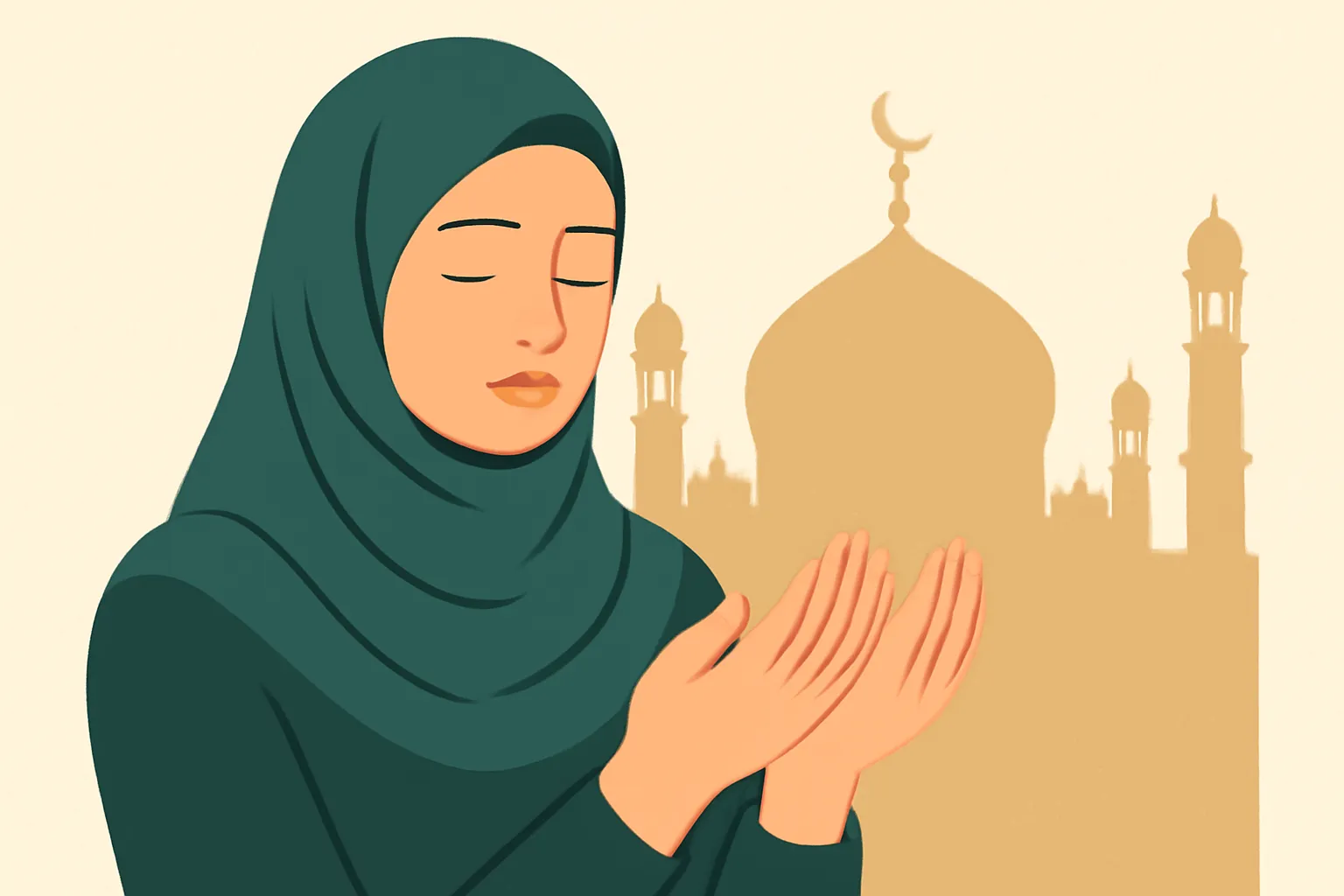
Salat, the ritual prayers performed five times a day, structures a Muslim’s schedule around moments of devotion. The practice involves spiritual hygiene—purification (wudu), facing the direction of the Kaaba in Makkah, and a sequence of postures that express humility before God. The times of the day—dawn, noon, mid-afternoon, sunset, and evening—vary by location and season, but the rhythm of prayer remains a constant reminder of God’s presence in everyday life. In congregational settings, mosques provide spaces for community prayer, especially on Fridays (Jumu’ah).
Zakat: Almsgiving
Zakat is a formal act of charity, often described as a purification of wealth. It requires eligible Muslims to give a fixed portion (typically 2.5%) of their savings to those in need or to designated charitable institutions. Zakat fosters social equity, supports the vulnerable, and strengthens community ties. Beyond the legal obligation, many Muslims practice voluntary charity (sadaqah) out of compassion and social responsibility.
Sawm: Fasting in Ramadan
Sawm refers to fasting during the month of Ramadan, from dawn until sunset. Muslims abstain from food, drink, and other physical needs to cultivate self-discipline, empathy for the less fortunate, and spiritual growth. The fast is broken with a meal called iftar, often accompanied by prayers and communal suppers. The holy month culminates with the festival of Eid al-Fitr, a celebration of renewed faith and gratitude.
Hajj: Pilgrimage to Mecca
Hajj is the annual pilgrimage to Makkah that all physically and financially able Muslims should undertake at least once in their lifetime. Performed during a specific Islamic month, Hajj involves a sequence of rites that symbolize unity, equality, and submission to God. Pilgrims wear simple garments to diminish distinctions of wealth and status, reinforcing the idea that all humans stand before God with shared humanity. The Hajj is a powerful reminder of the global Muslim community, or ummah.
Historical overview: from origins to the modern era
Islam began in the 7th century in the Arabian Peninsula, with Muhammad serving as the final prophet in a long line of messengers who conveyed divine guidance. The early years of the Muslim community were marked by rapid growth, social change, and theological reflection that would influence the development of civilizations across Africa, Asia, Europe, and beyond.
Origins: 7th-century Arabia
The revelation of the Quran to Muhammad in Mecca and Medina established a monotheistic faith rooted in moral exhortation, social justice, and devotion to God. The Prophet’s mission faced resistance, but it laid the foundation for a faith community with a strong sense of purpose and identity. The early Muslims faced persecution, migration (the Hijra) to Medina, and the consolidation of a political and spiritual order guided by the Quranic message and prophetic tradition.
The Emergence of the Caliphates
Following the Prophet’s death, leadership passed to the caliphs, who established political and administrative structures that facilitated the spread of Islam beyond the Arabian Peninsula. The Umayyad and Abbasid caliphates oversaw a period of remarkable cultural, scientific, and intellectual achievement, often referred to as the Islamic Golden Age. Cities like Cordoba, Baghdad, and Damascus became centers of learning, commerce, and artistic innovation, shaping global history in profound ways.
Over centuries, Muslim empires expanded, interacted with diverse civilizations, and contributed to the development of mathematics, astronomy, medicine, philosophy, and literature. The encounter with Europe, the rise of national states, and shifts in trade routes all influenced how Islam adapted to new contexts while preserving core beliefs and practices. The coexistence of diverse communities, flourishing scholarship, and reform movements reflect the flexibility and resilience of the Muslim tradition.
Colonialism, modern nation-states, and the contemporary world
In the modern era, many Muslim-majority regions experienced colonial rule, political upheaval, and state-building after independence. Today, Muslims live in nearly every region of the world, maintaining vibrant religious communities while engaging with global politics, technology, and culture. Contemporary Muslim experiences are diverse, reflecting local histories, languages, jurisprudential schools, and social norms. The globalized world has increased cross-cultural dialogue about faith, ethics, and shared human values.
Practice, culture, and community life
Religious practice in Islam is not limited to ritual observance; it also informs family life, education, art, and public service. Muslims across the world cultivate communities that reflect local traditions while adhering to the core principles of faith. The following facets illustrate how belief translates into everyday living.
Places of worship and communal worship
Mosques serve as houses of prayer, study, and community gathering. While the Friday prayer (Jumu’ah) holds special significance for the community, Muslims can perform the five daily prayers wherever they are or in mosques as a sign of communal solidarity. In addition to worship, mosques often function as centers for education, charitable activities, interfaith dialogue, and youth programs.
Dietary laws: halal, haram, and ethical living
The term halal refers to what is permissible under Islamic law, including certain foods and conduct. Conversely, haram denotes what is forbidden. Dietary rules emphasize humane treatment of animals, clean preparation, and avoidance of substances deemed harmful. Halal practice intersects with global supply chains, labeling standards, and cultural adaptation, illustrating how sacred principles meet modern commerce and consumer awareness.
Family is central in many Muslim communities, with value placed on marriage, childrearing, respect for elders, and mutual support. Education—both religious and secular—is valued as a means of personal growth and societal contribution. Zakat and other charitable efforts reinforce social welfare, while collective rituals and festivals foster communal identity and solidarity.
Ethics in Islam encompasses truth-telling, justice, mercy, generosity, and responsibility toward others. Muslims are encouraged to pursue knowledge, protect the vulnerable, uphold human dignity, and contribute positively to society. The interplay of faith and everyday action is a recurring theme: beliefs are tested and reinforced through acts of worship, service, and ethical decision-making.
Common misconceptions and important clarifications
With any major world faith, misconceptions can cloud understanding. Here are some common questions and respectful clarifications that reflect a broader, factual view of Islam.
Islam is not a monolith: There are diverse traditions, schools of thought, and cultural expressions across the Muslim world. While core beliefs unite Muslims, interpretations of jurisprudence, spirituality, and daily practice vary by region and community.
Muslims are not required to be perfect: Like adherents of any faith, Muslims strive to live ethically and seek spiritual growth, acknowledging human fallibility and the ongoing journey of righteousness.
Islamic practice is diverse: Prayer times, fasting schedules, and community life can vary due to geography, climate, and cultural customs, yet the essential aims of devotion and social responsibility remain constant.
Interfaith engagement is common: Muslims frequently participate in dialogue and cooperation with people of other faiths, sharing humanitarian values and mutual respect.
Scriptures have historical contexts: The Quran is regarded as the final revelation in Islam, while Muslims also respect earlier scriptures as part of a broader monotheistic tradition. Interpretation of texts can differ among traditions and scholars.
The following terms are repeatedly used in discussions of the Muslim faith. This compact glossary can help readers recognize recurring vocabulary while reading more deeply about Islam.
Allah — The Arabic word for God in Islam; God’s oneness, mercy, and sovereignty are central to belief.
Tawhid — The doctrine of the oneness of God; a foundational concept in Islamic theology.
Iman — Faith or belief; often used to refer to the six articles of faith in Islam, though some scholars distinguish it from Islam as inward belief versus outward practice.
Quran — The holy book believed to be the literal word of God revealed to the Prophet Muhammad; primary source of guidance for Muslims.
Hadith — Sayings and actions of the Prophet Muhammad, used to interpret and apply the Quran in daily life and jurisprudence.
Prophet Muhammad — The final prophet in Islam, regarded as the messenger whom God chose to deliver His message in a complete and final form.
Sunna — The practices and traditions of the Prophet Muhammad, which complement the Quran in guiding behavior and worship.
Sharia — Islamic law derived from the Quran, the Sunna, and other sources; it covers personal conduct, family matters, finance, and governance in diverse communities.
Five Pillars — The five key acts of worship that structure Muslim life: Shahada, Salat, Zakat, Sawm, and Hajj.
Ummah — The global community of Muslims; emphasizes brotherhood, solidarity, and shared responsibility across cultures.
Conclusion: Why Muslim faith facts matter in education and dialogue
Understanding Islam through its essential beliefs, historical development, and everyday practices helps illuminate how Muslims articulate meaning, justice, and responsibility. The facts presented here aim to inform readers about the core ideas that have shaped a major world faith for over a millennium and a half. By recognizing the diversity within the tradition while honoring its shared commitments, learners can engage more effectively with Muslim communities, support interfaith understanding, and appreciate the ways faith informs morality, culture, and public life. Whether you are studying theology, history, sociology, or religious studies, the broad contours of Muslim faith facts invite careful study, respectful curiosity, and ongoing dialogue.









Publicar comentario