Church Cleaning: The Ultimate Guide to Safe, Efficient Maintenance
Maintaining a place of worship goes beyond dusting pews and sweeping floors. A clean church supports health, safety, and reverence, ensuring that congregants and guests feel welcomed, comfortable, and protected. This guide covers comprehensive approaches to church cleaning, offering practical strategies for daily care, deep sanitation, and ongoing upkeep across sacred spaces, parish facilities, and community halls. Whether you are part of a small rural church or a large urban cathedral, the goal remains the same: a sanctified space that is clean, orderly, and sustainable.
Throughout this article, you will encounter variations of the phrase church cleaning to reflect the breadth of responsibilities involved: sanctuary maintenance, house of worship cleaning, parish facility housekeeping, and nave and sanctuary care. By embracing these terms, we acknowledge the different spaces and functions that require attention while maintaining a unified standard of care.
Foundations of a Safe Cleaning Program
A well-designed cleaning program for a religious facility rests on clear goals, defined standards, and reliable processes. The foundation includes safety, health, respect for sacred items, and operational efficiency. A robust program also prepares staff and volunteers to respond calmly to emergencies and to adapt to seasonal workloads, such as Advent, Christmas, Holy Week, or major weddings and funerals.
Key principles to anchor your strategy include:
Safety and accessibility as non-negotiable priorities for every area, from the main entrance to the restrooms and classrooms.
Respect for sacred objects and liturgical furnishings, with procedures that protect integrity while enabling cleanliness.
Consistency through a regular schedule, standardized checklists, and trained volunteers or staff.
Infection control and hygiene to reduce disease transmission and protect vulnerable populations.
Environmental stewardship via green cleaning practices, prudent chemical use, and responsible waste management.
Before you operationalize your plan, assemble a small planning team that includes clergy, facility managers, and volunteer coordinators. This cross-functional team can define cleaning standards, approve products, and ensure alignment with the church’s mission and values.
Planning the Cleaning Program
Assessing the Space and Setting Standards
Begin with a comprehensive walk-through of the property. Map out all zones that require maintenance, including:
Nave and aisles, including pews or seating areas
Chancel, altar area, sacristy, and sacrifical spaces
Entryways, vestibules, and ramps for accessibility
Restrooms and drinking fountains
Court yards, sidewalks, and exterior entrances
Fellowship halls, kitchens, classrooms, and offices
HVAC intakes and exhausts, windows, and glass surfaces
From this assessment, establish clear cleanliness standards for each zone. For example, specify acceptable levels of dust in corners, the frequency of stain removal on carpets, or the method for cleaning stained glass, while maintaining reverence for sacred artwork and liturgical vessels.
Creating a Cleaning Schedule
A practical schedule aligns tasks with the use of space and peak activity times. A well-structured schedule typically includes daily, weekly, and monthly tasks, with additional seasonal or event-driven cleans. Consider the following framework:
Daily tasks: quick wipe-downs, trash removal, restroom checks, spot-cleaning of floors and surfaces, sanitizing high-touch areas (doorknobs, railings).
Weekly tasks: detailed dusting, floor care (sweeping, mopping, vacuuming), window cleaning, sanctuary and chancel area dusting, kitchen and dining spaces.
Monthly tasks: deep carpet cleaning or upholstery care, high-reach dusting, HVAC filters inspection, window washing, exterior entrance pressure washing if needed.
Seasonal tasks: candle and altar linen care, sacred vessel cleansing according to tradition, organ and instrument maintenance, pest control inspections, roof and gutter checks.
Assign responsible persons or teams for each task, specifying start times, expected durations, and safety requirements. Use a simple rotation to avoid volunteer fatigue while ensuring consistency across the year.
Staffing, Training, and Roles
A church cleaning program thrives on clear roles and ongoing training. Consider roles such as:
Cleaning supervisor or coordinator who schedules tasks, orders supplies, and conducts quality checks.
Volunteer teams led by a captain who understands cleaning protocols and safety.
Dedicated staff for high-traffic areas, kitchens, and restrooms, especially when events are underway.
Training should cover: proper use of equipment, chemical safety, color-coded towel systems, and procedures for handling sensitive liturgical items. Periodic refreshers help maintain high standards and minimize accidents. Encourage feedback from volunteers to improve the program and address concerns.
Budgeting and Procurement
Effective maintenance requires prudent expenditure. Build a budget that includes:
Cleaning supplies and consumables (detergents, disinfectants, floor care products, paper goods)
Personal protective equipment (PPE) and safety signage
Waste management and recycling programs
Repairs and maintenance for plumbing, HVAC, and electrical systems related to cleaning operations
When selecting suppliers, prioritize reliability, product safety, and environmental impact. Consider establishing a small, rotating fund for accidental breakages or urgent cleaning needs after events. A transparent budget fosters trust with the congregation and ensures continuity of care.
Cleaning Routines: What to Do and How Often
Daily Caring: Keeping the Building Presentable
Daily care is the heartbeat of a clean church. Quick, consistent routines prevent buildup and create a welcoming environment. Focus on:
Entrance areas clear of debris, with doors wiped and floor mats cleaned to reduce slip hazards.
High-touch surfaces such as door handles, railing, light switches, and elevator controls cleaned and sanitized.
Restrooms checked, stocked, and cleaned to prevent odors and maintain hygiene.
Pew and seating areas lightly dusted and tidied to keep rows orderly before services.
Kitchens and break rooms wiped down, sinks cleaned, and surfaces sanitized after use.
Weekly Maintenance: Deep Cleaning and Detail Work
Weekly care targets areas that accumulate dirt more slowly but require more attention. Tasks typically include:
Floor care—mopping in hard-surface areas, vacuuming carpets, and spot-cleaning rugs or runners.
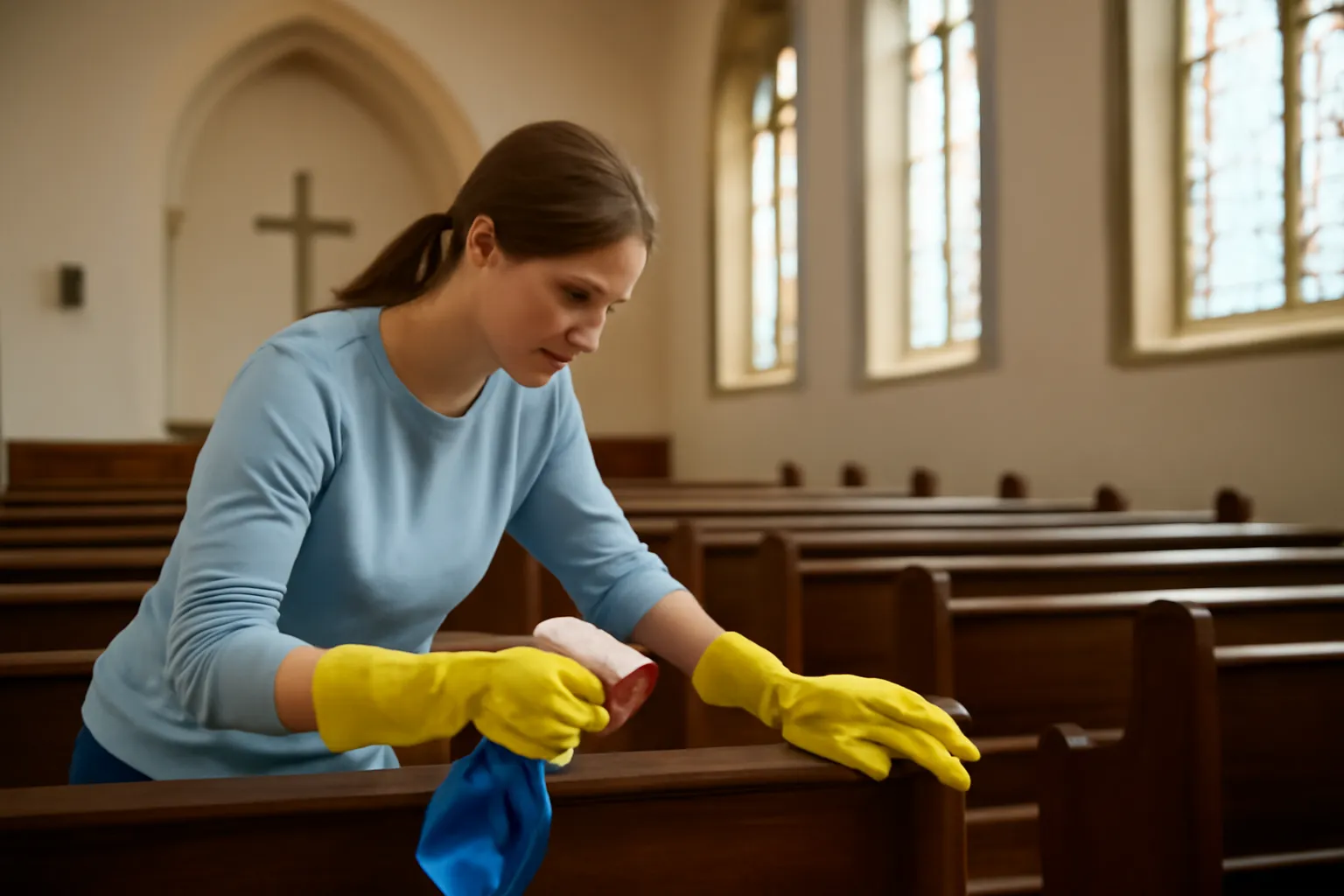
Dusting and wood care of pews, railings, altar furniture, lecterns, and other woodwork with appropriate polishes or cleaners.
Windows and glass—interior glass surfaces cleaned for clarity; exterior windows may require separate scheduling due to weather.
Restroom deep cleaning with disinfection and replenishment of supplies.
Facilities inspection for leaks, wear, or safety hazards in hallways and stairwells.
Monthly Deep-Clean: Intensive Care for the Sacred Space
Monthly tasks address deeper cleaning needs and equipment upkeep:
Carpets and upholstery cleaning or steam care to extend life and remove embedded soils.
Cleaning of sacristy and chancel areas with careful handling of liturgical items.
HVAC hygiene checks, filter replacement, and damp-dusting of supply registers.
Exterior wash of sidewalks, steps, and entryways to maintain curb appeal and safety.
Seasonal and Event-Driven Tasks
During liturgical seasons, weddings, or big community events, adjust the cleaning plan to accommodate higher occupancy and special requirements:
Protect sacred items during all cleaning operations and follow clergy instructions for during-Liturgy care.
Coordinate with event organizers to arrange cleaning schedules that minimize disruption.
Ensure additional waste disposal and restroom readiness for large crowds.
Safety, Health, and Compliance
Safety is integral to every cleaning operation in a church setting. This is not merely about following regulations; it is about protecting people who worship, study, and volunteer in the building. Emphasize risk assessment, proper PPE, and clear communication of hazards to all people in the building.
Personal Protective Equipment and Chemical Safety
Use PPE appropriate to the task. For example, gloves for cleaners, eye protection where splashing could occur, and masks in dusty environments. Maintain an up-to-date inventory of cleaning chemicals and material safety data sheets (SDS) for quick reference. Apply the color-coding system for cloths and tools to prevent cross-contamination between restrooms, kitchens, and sacred areas.
Place visible wet floor signs during mopping or cleaning of any area. Keep walkways clear of cords and equipment. In churches with multiple stairways or inclined ramps, ensure that handrails are secure and well-lit. A clean church is a safe church, and safety reminders should be unobtrusive yet effective.
Ventilation and Air Quality
Ensure good ventilation during cleaning and disinfection to minimize exposure to fumes. When possible, use ventilation fans or open windows in dry weather. For spaces with sensitive acoustics or sacred art, avoid aerosols near paintings or textiles that could suffer from residue buildup.
Special Considerations for Children and Vulnerable Individuals
Church cleaning plans should protect the most vulnerable. When planning cleaning times, schedule heavy-duty tasks when children and adults with sensitivities are away from the space. Encourage a culture where volunteers report new or worsening allergies, and adjust products accordingly.
Green Cleaning and Sustainability in the Parish
Environmental stewardship is often consistent with spiritual stewardship. Green cleaning practices can reduce environmental impact while maintaining effective sanitation. Focus areas include product choice, water use, and waste management.
Choosing Safe, Eco-Friendly Products
Opt for products with low environmental impact and minimal harsh chemicals. Look for green certifications, biodegradable cleaners, and products that are safe for surfaces and fabrics in a religious space. Always verify ingredients that may be sensitive to certain materials or to people with allergies.
Microfiber, Dilution, and Efficiency
Use microfiber cloths and mops to improve cleaning efficiency and reduce chemical usage. Practice dilution control to follow manufacturers’ guidelines, which helps ensure effectiveness while minimizing waste. A well-executed dilution plan can save money and protect surfaces from damage.
Waste Management and Recycling
Establish a simple waste system that cleanly separates recyclables from landfill waste. Consider compostable or recyclable packaging for disposable items and ensure that all waste is removed promptly after services or events.
Handling Sacred Spaces and Liturgical Items During Cleaning
In houses of worship, cleaning the sacred space requires special care. Respect for liturgical objects, altar linens, vessels, artwork, and the chancel is essential. Develop explicit procedures for:
Moving or relocating ritual items only with clergy or designated custodians present
Cleaning altar linens, candlesticks, vestments, or chalices with approved materials that won’t cause staining or damage
Dusting or wiping gilded surfaces and paintings using soft cloths and appropriate cleaners
Protecting organ pipes, choir lofts, and sound equipment from cleaning residue
Between services, plan gentle, non-intrusive cleaning in sacred spaces to prevent disruption of worship. Communicate cleaning plans with clergy to align with liturgical schedules and sacramental preparations.
Cleaning Equipment, Tools, and Storage
Having the right tools and maintaining them well is essential for efficiency and safety. A well-stocked cleaning cart or closet can dramatically improve outcomes.
Essential Tools and Supplies
Vacuum cleaners with appropriate attachments for carpets and hard floors
Dry and wet mops with a color-coded handle system
Microfiber cloths and dusters in multiple colors
Buckets and wringers for traditional cleaning methods
Floor care equipment (brooms, brushes, squeegees, floor machines where appropriate)
Disinfectants and cleaners selected for surface compatibility
PPE including gloves, goggles, and masks as needed
Wet floor signs and safety barriers
Storage and Maintenance
Store chemicals separately from food-related items and in clearly labeled containers. Keep storage areas clean and organized, with shelves that can be easily cleaned and inspected. Schedule regular maintenance on equipment, including battery checks for cordless tools and replacement of worn brushes or pads on floor machines.
Training, Quality Assurance, and Continuous Improvement
Volunteer and Staff Training
Effective training reduces accidents and ensures consistent results. A training program should cover:
Proper use and maintenance of equipment
Safety protocols and PPE usage
Product knowledge and dilution practices
Environmental and allergy considerations
Communication protocols and incident reporting
Quality Checks and Feedback
Implement regular quality checks to ensure standards are met. Use a simple checklist for each area (entry, nave, sanctuary, restrooms, kitchen, hallways) and assign follow-up tasks when issues are found. Create a feedback loop so volunteers can report challenges and suggest improvements without fear of blame.
Audits and Documentation
Document cleaning activities, product usage, and maintenance records. An accessible log helps demonstrate accountability to the congregation and can aid in budgeting and planning for the next year. Digital or paper logs should capture date, area cleaned, tasks performed, and responsible person.
Emergency Cleaning and Incident Response
In the event of water intrusion, smoke, pest issues, or other emergencies, a clear response plan minimizes damage and disruption. Key components include:
Immediate risk assessment and safety measures to protect people
Temporary containment and isolation of affected areas if necessary
Coordination with professional cleaning or restoration services when needed
Communication with clergy, facility managers, and congregants about timelines
For sudden events, keeping a short, well-communicated plan ensures faster recovery while preserving the sanctity of the space.
Implementation Plan: A Practical Approach
Below is a practical framework you can adapt to your church’s size and needs. It outlines a four-week cycle that can serve as the backbone of your routine, with room for adjustments based on events and seasons.
Week 1: Surface Cleaning and Safety — Focus on daily maintenance, restrooms, door handles, and floor surfaces. Check for safety hazards and replenish supplies.
Week 2: Deep-clean and Detail Work — Perform weekly tasks and begin deeper cleaning of sanctuary seating, windows, and entryways. Inspect equipment and replace worn items.
Week 3: Seasonal Preparation — Prepare spaces for upcoming liturgical seasons or events. Clean sacred spaces with care, launder altar linens, and verify lighting and sound equipment.
Week 4: Quality Check and Training — Review cleaning logs, conduct a quality check, and update the plan based on feedback. Schedule training refreshers for volunteers.
Customize this cycle to fit your congregation’s calendar and facilities. The goal is predictable, repeatable cleaning that respects both people and sacred space.
Communicating and Coordinating Cleaning Efforts
Clear communication helps volunteers stay aligned with expectations and minimizes disruption during services. Consider the following practices:
Publish a monthly cleaning calendar visible to volunteers and staff.
Use simple checklists for each area to standardize tasks and provide a record of completion.
Provide a contact point for volunteers to report issues or request additional supplies.
Coordinate with clergy to schedule cleaning around worship times and special ceremonies.
Maintaining a church or parish building is a form of stewardship that honors the space and the people who gather there. A thoughtful cleaning program demonstrates care for the community, promotes health and safety, and preserves the beauty and sanctity of the place of worship. By combining structured planning, practical routines, safety-minded operation, and sustainable practices, any congregation can achieve safe, efficient maintenance that lasts for years to come.
Whether you call it sanctuary maintenance, house of worship cleaning, or simply parish cleaning, the core aims are the same: a welcoming, venerable, and vibrant space that fosters comfort, reverence, and shared hope.












Publicar comentario