Catholic Bibles: A Practical Guide to Editions, Translations, and Study
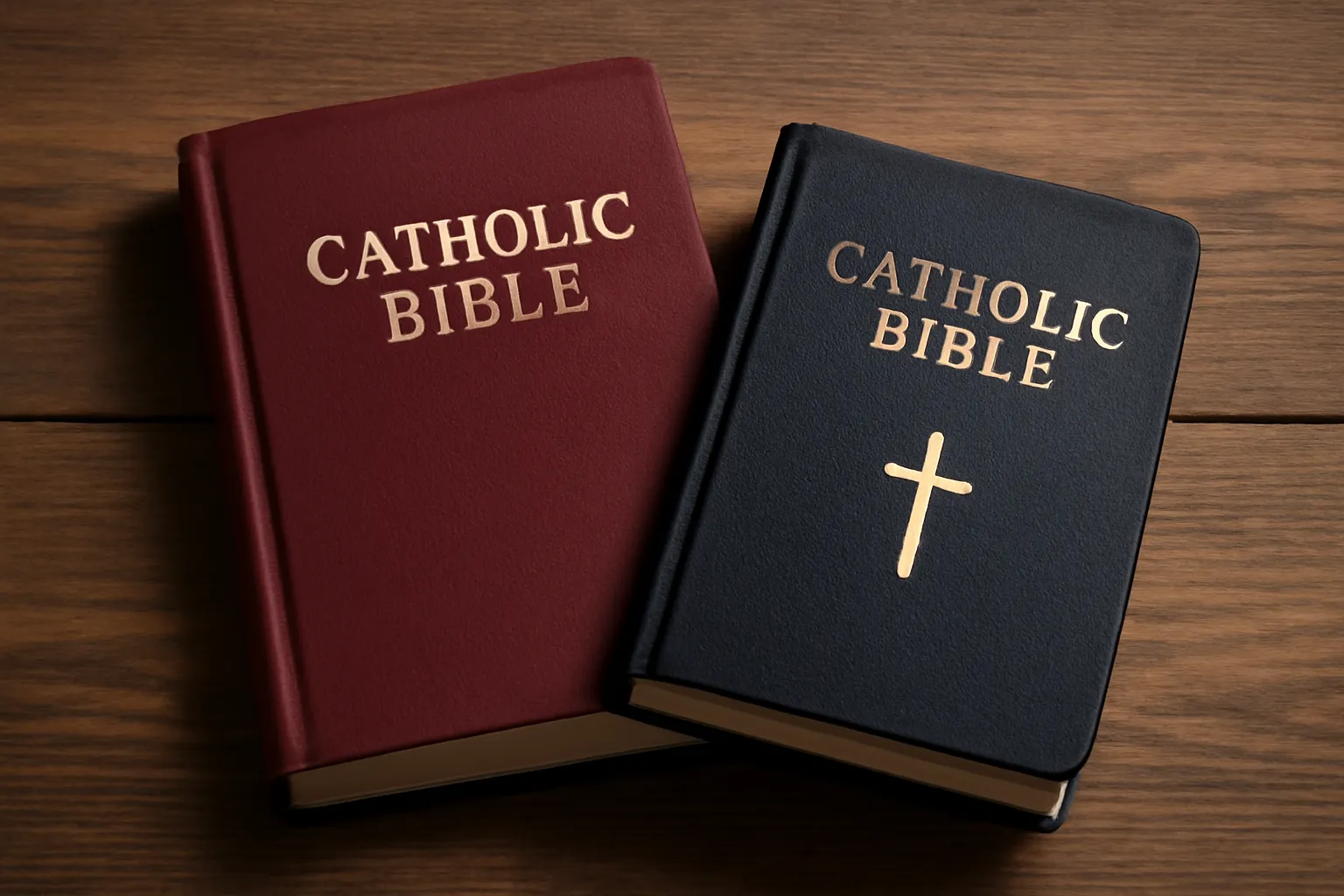
Welcome to a concise, yet comprehensive guide to Catholic Bibles. This article explores what makes a Bible «Catholic,» the major editions and translations available today, and practical advice for readers who want to study, pray, or preach with confidence. Whether you are new to Catholic scripture, returning after a long break, or shopping for a gift, understanding the landscape of Catholic Bibles will help you choose a text that fits your needs.
Understanding the Catholic Canon and Its Implications
At the heart of every Catholic Bible is the canonical collection recognized by the Catholic Church. This includes not only the books of the Hebrew Bible and the New Testament but also the deuterocanonical books (often called the deuterocanon) that many Protestant editions omit. The standard Catholic canon comprises Tobit, Judith, Wisdom, Sirach (Ecclesiasticus), Baruch, 1 & 2 Maccabees, additions to Esther and Daniel, and the conventional Old and New Testament books that are familiar to readers.
Because the Catholic Church affirms this broader canon, Catholic Bibles often present additional study notes, cross-references, and editorial material explaining the theological and liturgical significance of these books. In addition, Catholic Bibles are typically aligned with the official Latin text, the Nova Vulgata, and they bear the imprimatur and nihil obstat or other diocesan permissions that certify doctrinal adequacy for use by the faithful. These ecclesial approvals are not merely ceremonial; they signal that a given edition has been prepared with consideration for Catholic doctrinal teaching and public worship.
Another important distinction is understanding the textual basis of a Bible. Some translations prioritize a direct, word-for-word rendering from the original languages (often described as formal equivalence). Others emphasize readability and clarity for modern readers (often described as dynamic equivalence or functional equivalence). Catholic translations frequently strike a balance between accuracy to the source text and readability in English or other vernacular languages, while preserving the canonical list of books and the Catholic sense of the text.
Major Catholic Bible Editions and Translations
Today’s market features a range of editions and translations designed for different purposes—liturgical use, academic study, personal devotion, or bilingual study. Below is a survey of some of the most widely used Catholic Bibles in English and other languages, along with notes on their distinctive features.
Common English-language Catholic Bibles
New American Bible, Revised Edition (NABRE) — The NABRE is one of the most widely used texts in U.S. parishes. It includes the full deuterocanonical books, extensive explanatory notes, and is often accompanied by a Lectionary or pastoral commentary. It reflects the official translation work of the Catholic Bishops’ Conference and is commonly used in Mass readings and catechetical programs.
NABRE Catholic Edition (NABRE-CE) — A variant often released by publishers with additional study aids, cross-references, and sometimes supplemental material designed for personal study or classroom use. It preserves the canonical books and the distinctive NAB style.
Douay-Rheims Bible — One of the oldest English translations used by English-speaking Catholics. It exists in several revisions (including the Confraternity and Rheims-Douay forms). The Douay-Rheims is renowned for its traditional language and is favored by readers who prefer a classical, sacral tone. It remains a foundational text for many devotional readers and is often found in print editions with updated punctuation and spelling, while preserving its historic flavor.
Jerusalem Bible (and New Jerusalem Bible, NJB) — The Jerusalem Bible (1966) was an influential Catholic text with high-quality scholarship and robust commentary notes. The modern New Jerusalem Bible (1985, with updated revisions later) is widely used in Catholic communities outside the United States and in many prayer resources worldwide. The NJB is appreciated for its readable English, literary quality, and careful attention to the biblical languages.
RSV-CE (Revised Standard Version, Catholic Edition) — This edition is popular in ecumenical circles as well as Catholic settings. It preserves much of the classic RSV style while incorporating deuterocanonical books and Catholic editorial notes. The RSV-CE is favored by readers who want a translation with strong literary qualities and reliable scholarship.
Knox Bible — The English translation by Monsignor Ronald Knox, revised and published in the 20th century, is a Catholic edition known for its elegant, literary English. It is not as widely distributed as NABRE or NJB, but it remains a respected option for readers seeking a distinctly traditional Catholic flavor.
Nova Vulgata (Latin) — The official Latin text of the Catholic Church, often used as the standard for scholarly reference and liturgical preparation. The Nova Vulgata informs many English translations and provides a fixed textual basis for accuracy and doctrinal consistency across languages.
Bilingual editions (Latin-English or other language pairs) are valuable for students and scholars who want to compare the Latin Vulgate with vernacular translations. These editions facilitate study of the Nova Vulgata and the underlying Hebrew and Greek texts.
Study Bibles (often called Catholic study Bibles) combine a primary translation with extensive notes, maps, harmony of the Gospels, doctrinal essays, and historical insights. They are designed for in-depth study, preaching preparation, and classroom use.
Liturgical editions and Mass-printed Bibles include the complete text along with readings, or are formatted to align with the Lectionary for Mass, making them especially practical for clergy and lay ministers active in liturgy.
Beyond English, Catholic readers often explore translations in other languages, including Spanish, French, Italian, Portuguese, and German. The Nova Vulgata serves as the canonical Latin basis, while regional translations are approved for use in local liturgical settings and catechetical programs.
Edition Types and How to Use Them
Different edition types serve different purposes. Understanding the purpose of each type helps ensure you choose a Bible that meets your needs, whether for personal devotion, scholarly study, or public proclamation.
Study Bibles
Offer extensive footnotes that explain translations, cultural context, and theological terms.
Include cross-references, maps, and essays on historical background, textual criticism, and biblical theology.
Often come in hardcover or study bindings with larger type and spacious margins.
Personal or devotional editions
Emphasize readability and comfort for daily prayer and reflection.
May include thicker margins, ribbon markers, and softcover formats for portability.
Still preserve the deuterocanonical books in English-facing or bilingual formats.
Liturgical editions
Structured to align with the Lectionary used during Mass and other liturgical celebrations.
Often include cantillation marks, specialized glossaries, and rubrics for public worship.
Important for priests, deacons, lectors, and catechists who prepare readings for worship.
Textual Basis and Scholarly Considerations
For serious readers, two themes often guide choices: the textual basis (which underlying Greek and Hebrew manuscripts inform the translation) and the editorial approach (how notes and introductions present theological interpretation, textual criticism, and historical context).
Textual basis often relies on critical editions of the Hebrew Bible and the Greek New Testament. Catholic editions sometimes reference the Hebrew Masoretic Text for the Old Testament and the Nestle-Aü̈n text or other critical editions for the New Testament, while staying faithful to the canonical list including the deuterocanon.
Editorial approach includes whether a translation aims for literal accuracy or readability, how to render key doctrines (such as papal infallibility, apostolic authority, or Marian dogmas), and how to present the historical-cultural context of passages.
Many Catholic Bibles include apocryphal/deuterocanonical notes explaining why certain books are present and how they have been understood in Catholic tradition.
When comparing translations, you may notice differences in language like «wisdom» or «sanctify» and in the handling of passages with disputed manuscript support. A practical tip is to use a parallel Bible or a study Bible that brings together multiple translations for side-by-side comparison, along with notes that explain the editorial decisions behind key renderings.
Choosing a Catholic Bible is a personal decision shaped by purpose, preference for language, and how you plan to use the text. Here are practical steps to help you decide:
Define your primary use: Is the Bible for daily prayer, academic study, or liturgical use? A devotional edition with quiet margins may suit daily reading, while a study Bible with notes is ideal for research.
Check the canon: Ensure the edition includes the deuterocanonical books and aligns with Catholic teaching. If you teach or lead a parish program, verify whether the edition is approved for use in liturgy or catechesis.
Evaluate the translation philosophy: Do you prefer formal equivalence (closer to the original languages) or dynamic equivalence (more natural modern English)? Consider your comfort level with archaic language versus contemporary phrasing.
Review notes and introductions: Are the notes helpful, balanced, and theologically sound? Do you want biblical maps, timelines, or essays on church history?
Consider format and accessibility: Do you want a compact edition for travel, a large-print version for easier reading, or a bilingual edition for study? For digital readers, confirm availability on apps or e-readers.
Look for ecclesial marks: An official imprimatur or diocesan approval, or a note about nihil obstat, can provide assurance about doctrinal alignment for Catholic use.
In practice, many readers rotate among several editions depending on the activity: a liturgical NABRE for Mass readings, a study Bible for in-depth study, and a devotional edition for daily prayer. The key is to choose a primary text that you will read regularly and supplementary resources that support your goals without overwhelming you.
Digital Formats, Apps, and Accessibility
In the digital era, Catholic Bibles are readily available through apps, e-books, and online platforms. Digital formats offer search features, cross-references, audio readings, and customizable study tools to support a wide range of learners and settings. Here are common options and tips for getting the most out of digital Catholic scripture resources:
Mobile apps often include multiple translations (such as NABRE, RSV-CE, NJB) and offer features like daily verse, bookmarks, notes, and offline access. Look for apps that provide official translations with imprimatur or notes from Catholic publishers.
Online platforms may provide free or subscription-based access to Catholic Bibles, study guides, and commentaries. Check for editions that preserve the canonical list of books and provide reliable scholarly notes.
Interlinear and parallel texts are valuable for language study, enabling readers to compare the Latin Vulgate with English translations or to examine the underlying Hebrew and Greek words behind a given verse.
Accessibility features such as adjustable font sizes, dyslexia-friendly fonts, and audio narration can make the text more welcoming to a broader audience.
When using digital resources, be mindful of copyright and licensing. Prefer official publisher apps or platforms that clearly indicate Catholic approvals or the canonical status of the translation. If you teach or lead a group, consider a platform that supports collaborative notes and shared study plans.
Practical Study Tips for Reading Catholic Bibles
Reading a Catholic Bible well involves more than simply turning the pages. Here are practical strategies to get the most from your study, reflection, or teaching:
Read with the canon in mind: Remember that Catholic editions include the deuterocanonical books and that the arrangement of the Old Testament may differ from Protestant Bibles. Use notes to understand how these books relate to Catholic teaching.
Use reliable study aids: A good study Bible provides contextual notes, maps, timelines, and introductions that explain authorship, audience, and historical situation.
Cross-reference thoughtfully: Compare parallel passages, especially in the Gospels and prophetic books. Catholic cross-references often illuminate typology, fulfillment, and doctrinal motifs.
Pay attention to liturgical cues: If your edition is liturgically oriented, note how readings relate to feasts, seasons, and the Lectionary. This can deepen your understanding of the text as it is proclaimed in worship.
Engage with the original languages when possible: A basic knowledge of Hebrew for the Old Testament and Greek for the New Testament can enhance interpretation, especially when dealing with key terms that have rich theological meanings.
Pray and reflect: For many readers, a Catholic Bible is primarily a book of prayer, contemplation, and transformation. Take time for quiet reading, journaling, and praying with the text, using brief notes or responses from the text.
The following glossary can help you navigate conversations about Catholic scripture. Terms are bolded to highlight their relevance in discussions about Bibles and translation choices.
Canon — The authoritative list of books recognized as sacred Scripture in the Catholic Church. Includes the deuterocanonical books.
Deuterocanonical books — Books included in the Catholic Old Testament but not in the Hebrew Bible; commonly Tobit, Judith, Wisdom, Sirach, Baruch, 1–2 Maccabees, and additions to Esther and Daniel.
Imprimatur — An official declaration by a Catholic bishop or ecclesiastical authority that a book is free from doctrinal or moral error for Catholic readers.
Nihil obstat — A statement that nothing in the work contradicts faith or morals; typically paired with an imprimatur.
Nova Vulgata — The official Latin edition of the Vulgate, completed in the late 20th century, serving as the standard Latin text for Catholic translation and liturgy.
NABRE — New American Bible, Revised Edition; a widely used English Catholic translation in North America.
NJB or New Jerusalem Bible — A popular English Catholic edition with readable English and strong scholarship.
RSV-CE — Revised Standard Version, Catholic Edition; a translation widely used in ecumenical and Catholic contexts.
Douay-Rheims — An historic English Catholic translation known for its traditional language.
Liturgical edition — A Bible formatted for use in Mass readings and public worship, often aligned with the Lectionary.
Study Bible — An edition that combines Scripture with extensive notes, introductions, and study aids.
Practical Buying Guide: What to Look For
If you are purchasing a Catholic Bible for yourself or another, here are practical criteria to consider, along with common price ranges and sources:
Approval and credibility: Look for an imprimatur or nihil obstat from a Catholic authority, especially if the Bible will be used for teaching or worship within a parish.
Content and canon: Ensure the edition includes the deuterocanonical books and that the order and naming of books align with Catholic practice.
Translation quality: Consider whether you want a more literal rendering or a more readable, contemporary English. Review sample pages to assess readability and voice.
Notes and introductions: Decide how much scholarly material you want. Some readers prefer concise notes; others want in-depth essays on history, language, and theology.
Format: Choose between study Bibles, devotional editions, and compact formats. Consider font size, margins, binding quality, and whether a leather or hardcover binding suits your lifestyle.
Digital accessibility: If you prefer e-books or apps, check compatibility with your devices and the availability of offline reading, search features, and cross-references.
Typical price ranges vary by edition and format. A standard NABRE or NJB study Bible might range from modest to premium pricing depending on binding and added materials. A compact devotional edition can be more affordable, while bilingual or leather-bound study Bibles tend to be at the higher end. Digital subscriptions or apps may have free versions with optional paid features.
Conclusion: Building a Personal Library of Catholic Bibles
A well-rounded Catholic Bible collection typically includes a primary edition for daily reading, one or two study or devotional editions for deeper study, and a bilingual or Latin-focused edition for advanced study or liturgical preparation. The combination helps you enjoy the richness of Catholic biblical tradition—respect for the canonical books, reverence for the Latin heritage, and the accessibility of modern English translations. Remember, the most important factor is not just the edition you own, but how you engage with the text in prayer, study, and teaching.
As you explore the landscape of Catholic Bibles, keep in mind the central goal: to encounter the living Word in a form that honors Catholic faith and invites ongoing conversion. Whether you are preparing a homily, leading a Bible study, or simply praying with Scripture, the right Bible will accompany you on a journey of faith, understanding, and reverence for the sacred text.







Publicar comentario