Manger Scene Christmas: Creative Ideas for a Nativity Display
Welcome to a comprehensive guide on Manger Scene Christmas projects and ideas. Whether you are decorating a living room mantel, a classroom display, or a public storefront, a well-designed nativity display can tell a timeless story with charm, reverence, and creative flare. In this article we explore the history, symbolism, and an expansive range of techniques for building a memorable manger scene that suits your space, your budget, and your audience. From traditional tableaux to modern interpretive takes, this guide offers practical steps, safety tips, and inspiration to help you craft a vivid and meaningful holiday centerpiece.
Understanding the Manger Scene: History, Significance, and Purpose
The manger scene, also widely referred to as a nativity display or a creche arrangement, is a visual retelling of the Christmas story. Its purpose is both devotional and decorative: it invites reflection on the birth of Jesus while also serving as a focal point that can excite imagination and curiosity in observers of all ages. The idea of placing a manger in a stable with the Holy Family has deep historical roots and has evolved into a diverse family of forms—ranging from spare, symbolic setups to elaborate tableaux with multiple figures, animals, and architectural backdrops.
Origins of the Nativity Display
The tradition of depicting the birth of Christ as a miniature scene emerged in the medieval era and gained widespread popularity with the work of St. Francis of Assisi, who popularized living or modeled crèches in the 13th century. Over the centuries, households and communities adapted the idea to their own cultures and materials. The manger scene became a portable, affordable way to tell the story of Bethlehem, the journey to Nazareth, and the humble conditions of Jesus’ birth. Today, you can encounter a spectrum of manger scene Christmas displays—from simple, one-figure representations to expansive tableaux that include landscapes, architectural elements, and ambient soundscapes.
In contemporary settings, a nativity display is often used not only as a religious symbol but also as a cultural artifact. It can reflect regional artistry, seasonal customs, and community values. When designing your own display, consider the audience and the space: a school classroom might emphasize learning and storytelling; a church nave might emphasize reverence and contemplation; a home display might strike a balance between cherished tradition and personal style.
Core Figures and Symbols
Baby Jesus in a manger is the central figure and the anchor of the scene.
Mary and Joseph as the Holy Family, often depicted in humble attire and posture.
Shepherds and a cast of animals (sheep, donkey, ox) symbolize the shepherd’s witness and the shepherd’s field near Bethlehem.
Wise men or Magi may appear, bearing gifts and representing recognition of the Messiah beyond Israel.
Angels frequently announce the birth and add celestial accents to the display.
Common background details—Bethlehem star, a stable or cave, reeds, hay, and rustic architectural elements—help set the scene.
Beyond the core cast, you can weave in motifs such as the star of Bethlehem, the journey motif (a path or road), and symbolic gifts (gold, frankincense, myrrh) to convey deeper layers of meaning. A thoughtful arrangement will guide the viewer’s eye toward the baby at the heart of the story while still inviting exploration of the surrounding characters and settings.
Creative Themes for a Nativity Display
Creativity in a manger scene Christmas can take many forms. Here are several thematic directions, each with practical ideas you can adapt to space, budget, and skill level.
Rustic Bethlehem: Timeless and Textural
Capture the look of a simple, rural stable with natural textures and earthy tones. Use reclaimed wood for the stable frame, burlap or canvas as the backdrop, and dried grasses or moss for ground cover. Figure sets can be rustic-painted to evoke a handmade quality. Lighting with warm amber bulbs adds the glow of a late-night scene. Bold textures—coarse linens, woven baskets, and rough-hewn hay—bring tactile richness to the display.
Modern Minimalist Nativity: Simplicity with Impact
Embrace clean lines, negative space, and a restrained color palette. Choose a few key figures (for example, Mary, Joseph, infant Jesus) and reduce surrounding elements to essential silhouettes or abstract shapes. A monochrome or soft pastel scheme can feel contemporary while preserving the narrative clarity. For emphasis, use a single star light or warm spotlight to frame the baby Jesus, ensuring the scene remains focused at the center.
Story-Driven Displays
Design a narrative arc across a multi-panel or multi-level setup. Begin with the annunciation, move through the journey to Bethlehem, and culminate in the nativity. Each panel or level can introduce a new scene, a new gesture, or a new couple of words that kids can read aloud. Story cards or short captions placed near figures help younger observers follow along and engage with the plot. This approach is especially effective in classrooms or libraries where literacy support is part of the display’s mission.
Cultural Variations and Local Flavor
Many communities adapt the nativity story to reflect local customs, dress, and architecture. You might see shepherds wearing regional garments, camels instead of or in addition to livestock, or a stable that mirrors a local architectural style. In some cultures, the angels or Magi might be depicted with distinctive features or jewelry that reflect heritage. A culturally informed nativity display can be a bridge between tradition and contemporary identity, inviting reflection on the universality of the Christmas story while honoring local artistry.
Environmental and Eco-Friendly Nativity
Focus on sustainability by using natural, renewable, and reusable materials. Opt for wood, cork, or recycled metal for structures; natural fibers for fabrics; and LED lighting to minimize energy use. You can emphasize ecological themes—stewardship of creation, simplicity, and care for the vulnerable—by adding symbolic elements such as a small recycled-paper manger, or by setting the scene in a sunlit meadow with wildflowers, to remind viewers of a living, growing world.
Materials and Setup: From Figures to Scenery
Creating a compelling Manger Scene or nativity display requires careful selection of components and a clear plan for assembly. The following guide breaks down common elements, practical considerations, and sourcing tips.
Figures and Characters
Figures can be traditional ceramic, wooden, resin, fabric, or even handmade clay. Decide on a scale (for example, 1:12 or 1:24) that fits your space and budget.
Consider a mix of posed characters and standing silhouettes to enable flexible layouts.
For children’s displays, opt for durable, less fragile materials and simplified facial features for quick recognition.
Structural Framework: Stable, Safe, and Adaptable
Choose a base—wood, foam board, or sturdy cardboard—that can hold weight and resist tipping.
Build a stable stable or shelter with a roof that allows for lighting and ventilation if you use heat sources (always observe safety guidelines).
Incorporate a back panel or backdrop to create depth; this can be painted scenery, canvas, or photographic prints of a Bethlehem landscape.
Ground Cover and Landscaping Elements
Ground cover can be natural (sawdust, moss, dried grass) or synthetic (flocked flocking, felt) to simulate ground and bedding for animals.
Add small rocks, sand, or gravel to suggest a rugged terrain; consider a shallow ledge or tiered shelves to create height variation.
Use hay, straw, or coarse fibers to evoke the manger’s rustic feel, and avoid materials that shed excessively if the display will be touched by visitors.
Lighting and Atmosphere
Low-wattage LED lights produce a gentle glow without heat; place them to highlight the infant Jesus and the faces of Mary and Joseph.
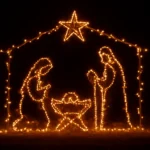
Consider a dedicated “star” element—an LED star atop the stable or a lighted backdrop—to anchor the scene.
Soft shadows can add depth; avoid harsh glare that diminishes the contemplative mood.
Backdrops and Scenic Imagery
Backdrops can be painted, printed, or created with fabric backdrops that imitate a Bethlehem skyline or desert horizon.
Texture adds richness: a layered backdrop with distant hills and a horizon line can give the display a sense of place.
If you include a stable interior, ensure the spacing around figures allows for clear visibility and easy viewing from multiple angles.
Place key figures at eye level for seated viewers and children; consider seating height in public displays.
Use large, legible captions for captions or plaques that explain symbols and figures; consider tactile elements for visually impaired visitors where appropriate, such as braille labels or raised textures.
Keep pathways clear and avoid small, loose pieces that could be a choking hazard in family-friendly spaces.
Lighting, Sound, and Mood: Setting the Scene
The ambience of a manger scene Christmas can significantly influence how viewers experience the narrative. Lighting, sound, and color all contribute to a sense of reverence, wonder, or warmth. Here are practical ideas to craft mood without overpowering the central story.
Warm, dim lighting around the periphery creates an intimate atmosphere while focusing attention on the infant Jesus.
Incorporate star light or a gentle glow above the stable to symbolize the guiding star of Bethlehem.
Use a subtle soundscape—gentle wind, distant camels, soft voices of shepherds—to evoke the surrounding world without distracting from the main figures.
Rotate color temperature across the season: cooler tones in early Advent, warmer tones as Christmas approaches, to reflect the passage of time and anticipation.
Interactivity and Accessibility: Engaging Viewers Across Ages
A nativity display can be more than a static scene. Thoughtful interactivity and inclusive design invite viewers to explore, ask questions, and participate in the storytelling.
Interactive Elements
Create a storytelling card or QR code that explains each figure’s role and symbolism in simple language for children and curious adults alike.
Include movable elements: a removable baby Jesus figure, a shepherd’s staff, or a wind-swept cloth that visitors can rearrange to emphasize different moments in the narrative (under supervision in public spaces).
Offer a “talking points” placard with questions such as “What does the journey to Bethlehem teach us today?” to prompt reflection.
Accessibility and Inclusion
Label figures and objects with large-print captions; provide braille labels where feasible.
Ensure the display is reachable for both standing viewers and seated participants, with no sharp edges at child height.
Provide an adjustable lighting option for viewers with visual impairment to enhance contrast or reduce glare.
Safety, Maintenance, and Longevity
A durable Manger Scene should endure multiple seasons and handling by visitors. The following tips help ensure safety, longevity, and easy maintenance.
Secure all figures to stable bases to prevent tipping, especially in windy or crowded public spaces.
Use flame-retardant materials for fabrics and paper elements if the display is in a public or high-traffic area.
Check electrical components regularly; use certified LED strings with proper insulation and avoid overloading power strips.
Protect delicate pieces by placing the display on a sturdy surface with a lip or guard to prevent accidental knocks.
Plan for seasonal storage: store fragile pieces in cushioned containers, label boxes clearly, and keep out of direct sunlight to prevent fading.
Sustainable and Ethical Considerations
In crafting a manger scene Christmas that aligns with responsible values, you can emphasize sustainability and ethical sourcing. Here are ideas to reduce environmental impact while maintaining beauty and meaning.
Choose materials that are renewable or recycled—wood from reclaimed sources, natural fibers, and biodegradable decorations where possible.
Repurpose figures from previous years, or swap out scenery elements rather than replacing whole sets to minimize waste.
Support local artisans when possible; handcrafted figures or backdrops can add authenticity and community value to the display.
Explain your sustainability choices through signage, inviting viewers to consider stewardship as part of the Christmas story.
Global and Cultural Variations in Nativity Displays
Across cultures, the nativity display adapts to local aesthetics, materials, and storytelling traditions. This global perspective enriches the practice and broadens its educational value.
Latin American creches may feature vibrant textiles, bright colors, and a variety of animals or street vendors that reflect local life.
European-inspired displays often emphasize architectural detail—stone arches, timber framing, and alpine or rural backdrops.
African, Asian, or Middle Eastern-inspired nativity scenes can incorporate regional dress, landscape, and symbolic animals to honor cultural diversity while preserving the core narrative.
In schools or community centers, rotating displays that highlight different cultures can foster dialogue, respect, and shared meaning around the Christmas story.
To help you manage a large Manger Scene Christmas project or a compact home display, here is a practical timeline that you can adapt to your schedule. This plan assumes a start 6–8 weeks before Christmas for a public or semi-public display, with shorter timelines suitable for home decorating.
Week 1–2: Define your concept and space. Measure your display area, decide on scale, choose a theme, and assemble a rough parts list.
Week 3–4: Gather materials. Source figures, backdrops, stabilizers, and lighting; test elements for fit and weight.
Week 5–6: Build the structure. Construct the stable or display base, install backdrops, and arrange figures in prototypes.
Week 6–7: Add landscaping and textures. Apply ground coverings, add hay, moss, rocks, and any small scenic features.
Week 7–8: Focus on lighting and mood. Install lights, test angles, and refine the warm glow that frames the baby Jesus.
Week 8+: Finalize details, labels, accessibility features, and any interactive elements. Do a final safety check and prepare for unveiling.
DIY Projects: Crafting Your Own Figures and Elements
One of the most rewarding paths in building a nativity display is to create your own figures and scenery. DIY projects can be adapted to different skill levels, available materials, and time commitments. Below are several approachable ideas with basic steps.
Crafting figurines from sturdy paper, cardstock, or thin cardboard can yield delightful, lightweight figures perfect for classroom displays or temporary setups. Use patterns or free templates, color with markers or paints, and mount on small stands for stability. This approach is ideal for collaborative projects with children, teaching about each figure’s role while practicing cutting and coloring skills.
Clay or Polymer Figures: Tactile and Durable
Clay or polymer clay allows you to sculpt durable, tactile figures that can be painted after baking. Start with simple shapes (cylinders for bodies, spheres for heads), add arms and robes, and bake according to material instructions. Finish with varnish or sealant to protect colors. This option yields a charming, handmade aesthetic that can endure multiple seasons with gentle handling.
Wooden Figures: Rustic Craftsmanship
Carved or assembled wooden figures can provide a classic, durable look. Use a low-relief carving style for a rustic Charmin or modern minimal design with simplified silhouettes. If you’re not a woodworker, consider pre-cut wooden shapes and plywood bases. Stain or paint the figures to match your chosen theme, and seal them to prevent wear over time.
Textile and Felt Figures: Soft and Safe
Soft figures built from felt, fabric scraps, or fleece are gentle on little hands and create a cozy, approachable mood. Embellish with embroidery or appliqué, and use stuffing for a gentle, squeezable effect. This technique works well for home and school displays and can be a wonderful family craft project.
Conclusion: Personalizing Your Manger Scene Christmas
Whether you lean toward a manger scene that reveres tradition, adopt a nativity display with modern artistry, or embrace a cultural fusion that reflects your community, the core of this display remains the same: a reverent retelling of a story that has touched countless generations. The beauty of a nativity display lies not only in its visual appeal but in its capacity to invite contemplation, conversation, and connection across ages and backgrounds. With thoughtful planning, careful material choices, and a dash of creative experimentation, you can craft a Manger Scene Christmas that is both meaningful and memorable for your space and your audience.
As you embark on your project, remember these key takeaways: plan with a clear story arc, balance tradition with personal style, prioritize safety and accessibility, and consider sustainability as part of your seasonal message. A well-executed manger scene Christmas becomes more than decoration—it becomes a living invitation to reflect on light, hope, and the enduring gift at the heart of the Christmas story.





Publicar comentario