Saint Works: The Ultimate Guide to Sacred Art, History, and Iconography
Across centuries and continents, the
saint works—in all their forms and media—have shaped the way communities imagine holiness, virtue, and divine presence. This guide explores the rich tapestry of sacred art, the history that gave birth to it, and the complex system of iconography through which saints are read, understood, and venerated. Whether you approach from an artistic, theological, or cultural angle, the realm of holy works offers a comprehensive map of how faith has been visualized, celebrated, and transmitted through time.
What are Saint Works? An overview
“Saint works” can be understood as the wide array of artistic or literary productions that depict saints, convey their stories, or embody their spiritual influence. In common usage, the phrase covers:
Sacred art featuring saints as central figures—especially in fresco cycles, panel paintings, sculptures, mosaics, and stained glass.
Iconography—the symbolic language used to identify and understand specific saints, their attributes, and their miracles.
Hagiography—the written lives of saints, which often served as sources for visual commissions and devotional practices.
Liturgy and devotion—how works of art support prayer, procession, feast days, and other rites in religious communities.
Patronage and pedagogy—the way commissions educate the faithful about virtues, martyrdom, and divine intervention.
Throughout the ages, these holy works have acted as bridges between the sacred and the secular, turning churches, chapels, monasteries, universities, and even public squares into spaces where heaven and earth meet. The phrase can also be extended to reference modern permutations—digital icons, contemporary sculpture, and new liturgical art—that continue the tradition of making the unseen visible.
The history of Saint Works: from early Christianity to modern times
The history of sacred art is a story of innovation constrained by doctrine, liturgical needs, and regional aesthetics. It is also a story of how the figure of the saint moves through time, adapting to new media, patrons, and devotional landscapes. Here is a concise timeline highlighting key moments and tendencies in the production of saintly works.
Early Christianity and Late Antiquity
In the earliest centuries, the catacombs, secret chapels, and domestic chapels housed the first visual narratives of saints. In these settings, -iconic symbols—lamb, dove, chi-rho, and shepherd imagery—offered a way to teach the catechism to a largely illiterate population. Over time, as Christian communities grew, artists began creating more explicit depictions of saints, martyrs, and biblical figures. In this period, hagiographic themes often appeared as miniatures in manuscripts, or as symbolic frescoes that conveyed moral exemplars rather than biography in a literal sense.
The High Middle Ages and Gothic Vision
With the rise of monumental churches and universities, saintly imagery expanded into large-scale sculpture and stained glass. The Gothic period in particular advanced the narrative capacity of church spaces: stained glass windows told the life stories of saints in color and light, while sculptural programs on portals and façades invited the faithful to contemplate virtue through form. The growing role of monastic and mendicant orders also promoted distinctive devotional arts—framed scenes of saints’ miracles, pious legends, and relic cults—that shaped local and regional repertoires.
Renaissance and Humanist Reinterpretation
The Renaissance brought renewed interest in human anatomy, perspective, and naturalism to sacred subjects. Artists reimagined saintly figures as real people with inner lives, often integrating classical motifs and landscape settings. Yet the function of these works remained devotional: to inspire contemplation, to instruct, and to sanctify space. Iconographic codes were sometimes updated to reflect contemporary concerns—justice, charity, and scientific curiosity—while preserving the archetypal attributes that permit quick recognition of a saint’s identity.
The Baroque era sharpened the drama of saintly scenes: dynamic composition, theatrical lighting, and emotional immediacy created immersive encounters with the sacred. In Catholic contexts, the Counter-Reformation encouraged art that would instruct the faithful and reaffirm doctrinal truths. Saints became focal points for exhortation—martyred saints, patrons of cities, and advocates of the poor—portrayed to evoke piety and virtue in dramatic, accessible ways.
Modern and Contemporary Developments
From the 19th century onward, artists experimented with new materials and modes of expression while often remaining faithful to traditional themes. In the 20th and 21st centuries, sacred art intersects with secular art movements, digital media, and global perspectives. Yet the core aim persists: to translate holiness into accessible, resonant images that sustain devotion, memory, and moral reflection. Modern saints’ icons can be found in churches, museums, public monuments, and digital galleries alike, testifying to a living tradition that continues to adapt without losing its roots.
Saints in art: iconography and representation
Iconography is the language of religious imagery. The signs, symbols, and attributes attached to a given saint enable viewers to identify and contemplate the figure beyond textual explanations. This visual grammar travels across cultures, with regional variations in style and emphasis. Below is a primer on how to read saintly imagery and what to look for when encountering these works in person or in reproduction.
Visual motifs, halos, and sacred attributes
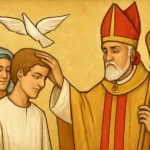
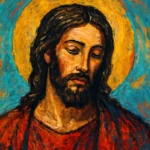
Halos or aureoles signify sanctity. They may be circular, starry, or multi-layered, and they often distinguish saints from angels or biblical heroes.
Auras and mandorlas (the almond-shaped glow around sacred figures) emphasize divinity and transcendence, especially in depictions of Christ, the Virgin Mary, and the Trinity.
Attributes are specific items or symbols that identify a saint. For example, a lily for purity, a book for evangelists, a sword for martyrs, or a key for Saint Peter. These tokens help viewers recognize the saint at a glance and recall associated legends or miracles.
Inscription and scene placement often clarifies which episode of a saint’s life is being depicted—e.g., a miracle, martyrdom, or crowning moment.
Regional styles and their distinctive saints’ imagery
Byzantine icons emphasize frontal, solemn figures with gold backgrounds, designed for contemplation and liturgical use. The Virgin and Child, Christ Pantocrator, and female saints appear with a grave, timeless calm that invites prayer.
Romanesque and Gothic art often locates saints in architectural settings—pilasters, portals, and jamb sculptures—where narrative cycles lead the viewer through moral and spiritual instruction.
Renaissance and Baroque variants bring narrative drama and human emotion to peak, inviting spectators to empathize with the saint’s trials and triumphs.
Modern and contemporary approaches incorporate abstraction, symbolic color, and cross-cultural motifs, expanding the palette of sacral representation while preserving recognizable saintly identities.
Media and formats of saintly imagery
Frescoes and murals decorate walls of churches, monasteries, and reconstructed chapels. They transform spatial architecture into a visual sermon.
Icons—small or portable images with concentrated symbolism, used in prayer corners, processions, and iconostases in Eastern Christian churches.
Mosaics offer tessellated splendor in floors, walls, and domes, merging light with pigment to create luminous saintly portraits.
Panel paintings and altarpieces place the saint within a composed devotional scene, often with other saints, the Virgin Mary, or Christ as focal points.
Sculpture in stone, wood, or metal can be monumental (as in altarpieces) or intimate (as in reliquaries and statuettes).
Stained glass enlivens sacred stories with color and light, turning windows into categories of saints by day and season.
Illuminated manuscripts preserve saintly legends and hagiographies in luxurious letters, miniatures, and marginalia—an education in piety for monks and lay readers alike.
Notable saints and their sacred works
This section highlights how certain saints have shaped the sacred art canon across time. Rather than listing every work—which would be vast—we focus on representative saints and the kinds of holy works associated with them, along with recommended locales to study or experience these images firsthand.
Saint Francis of Assisi and Franciscan iconography
Saint Francis has long been a magnet for visual devotion. His life and ideals—poverty, humility, and love of creation—translate into art that speaks to both charity and contemplation. Key manifestations include:
Fresco cycles in Assisi that narrate episodes from Francis’s life and miracles, often depicting him in humble garments amidst natural landscapes.
Iconographic programs in churches and monasteries that emphasize poverty of spirit, stigmata, and his role as a patron of the environment.
Modern commissions that reinterpret Franciscan ideals for contemporary audiences, employing new materials while preserving core motifs such as the cord, the bread, and the encounter with birds or animals.
Virgin Mary and Marian iconography
The Virgin Mary appears in a nearly infinite array of depictions, from compassionate Madonnas to Queen of Heaven, from intimate pieties to grand coronations. Typical attributes include:
Hodegetria (the “She Who Shows the Way”) with Jesus as a guiding figure for believers.
Our Lady of Sorrows (Mater Dolorosa) emphasizing maternal suffering and empathy with humanity’s pain.
Our Lady of Perpetual Help and similar evocative titles that pair Mary with symbols of intercession and protection.
Iconographic programs in Eastern churches and Western cathedrals alike, where Mary’s gentleness and authority are read through color, gesture, and spatial hierarchy.
Saint Peter, Saint Paul, and the apostolic tradition
As foundational witnesses to Christian faith, the apostles appear in a variety of settings—from solitary portraits to bustling, narrative cycles. Expect:
Attributes such as keys (for Peter) and swords (for certain martyr saints) that anchor their identity in the sacred imagery.
Scenes of preaching, miracles, and martyrdom that connect early Christian memory to medieval and modern devotional culture.
Altarpiece configurations where apostles flank central depictions of Christ, the Virgin, or a patron saint, highlighting the continuity between early faith and local devotion.
Patron saints of cities and professions
Many cities, guilds, and families adopted specific saints as protectors. In medieval and early modern Europe, this practice produced vibrant cycles in churches and public spaces. Examples include:
Saint George, commonly shown as a knightly martyr, with dragons or military attire symbolizing courage and chivalry.
Saint Anthony of Padua or Saint Benedict of Nursia as patrons of learning, monastic reform, and charitable works.
Saint Catherine, Saint Theresa, and Saint Teresa of Avila—figures whose stories have inspired countless paintings, sculptures, and books on mysticism and reform.
The role of Saintly works in liturgy and devotion
Art is never merely ornamental in religious life; it actively participates in prayer, procession, and contemplation. The functional role of saintly works can be summarized in several core areas.
Instruction and catechesis—visuals teach biblical narratives and saintly virtues to communities, often in contexts where literacy rates were limited.
Inspiration for virtue—depicting saints as exemplars of courage, charity, chastity, or perseverance provides adherents with concrete models for daily conduct.
Liturgical architecture—altarpieces, statues, and liturgical objects focus attention during the Eucharist, veneration of relics, and devotion to particular saints on feast days.
Processions and miracles—artworks can accompany relics or become focal points during processions, ritual cycles, and healing services.
Memory and identity—saintly images anchor communal memory, linking past generations (patrons and founders) to present worshippers.
Collecting and conserving Saint Works: curation and preservation
Preserving saintly art is not only an act of conservation but a way of safeguarding cultural memory. Museums, churches, and private collections face ongoing challenges in stewardship, ethics, and interpretation. Key considerations include:
Condition assessment—evaluating pigments, binders, wood, plaster, and stone for stability, while preventing further deterioration.
Ethical provenance—ensuring that artworks’ origins, acquisitions, and relocations are transparent and respectful of communities and religious groups connected to the works.
Restoration philosophy—deciding whether to restore to a particular historical moment or to preserve multiple historical layers, acknowledging the artwork’s evolution over time.
Documentation and interpretation—high-quality cataloging, conservation reports, and accessible interpretive materials help visitors understand the artistic and devotional contexts of the saintly images.
Public access and education—balancing reverence with education, making saintly works meaningful for diverse audiences in museums and houses of worship alike.
Reading the iconography of saintly imagery requires careful attention to detail and context. The following practical steps can help deepen understanding and appreciation while avoiding oversimplified readings.
Identify the saint through attributes and inscriptions. Look for the characteristic items that signal who is depicted—a key, a lily, a palm branch, a martyr’s instrument, or a distinctive headgear.
Note the scene—is the artwork showing a moment from the saint’s life (e.g., a miracle, a vision, a martyrdom) or a posthumous, symbolic representation?
Observe the composition—how are figures arranged? Is there a direct gaze toward the viewer, or is the saint shown in a contemplative pose? Lighting and color can influence the mood and meaning.
Consider the setting—church architecture, altarpieces, and the location within a building all contribute to interpretation. A saint placed near the main altar carries a particular devotional weight.
Read the color language—colors carry symbolic meanings (e.g., gold for divinity, red for martyrdom or love, blue for heavenly grace, green for life and renewal).
Cross-reference with textual sources—lives of saints, breviaries, and liturgical calendars illuminate why a certain saint is honored at a given time and how the image served worshipers.
Be mindful of context—regional styles, historical moment, and patronage shape how a saint is represented. A portrait might emphasize different virtues in different places.
Modern sacred art and the continuation of Saint Works
Today, contemporary artists continue the lineage of holy artworks, expanding the language of sanctity beyond traditional forms. Some notable directions include:
New commissions for churches and parishes that honor contemporary saints or revive older devotional themes with fresh imagery and materials.
Public art and memorials that place saintly figures in civic spaces, inviting reflection on moral virtues like compassion, justice, and mercy.
Digital icons and online devotion—virtual altars, downloadable icons, and multimedia experiences that make spiritual imagery accessible globally.
Ecumenical and interfaith dialogues in which saints from different Christian traditions or even allied spiritual figures are interpreted in ways that emphasize common values and shared human realities.
Sustainability and nature-inspired symbolism where the language of sanctity speaks to creation care and ecological stewardship, often echoing the life of saints who loved the natural world.
Case studies: ways to explore Saint Works in practice
To bring these ideas to life, consider a few practical paths for engaging with sacred imagery and its history.
Visit historic churches and cathedrals to observe intact cycles and programs of saintly art, noting how space, light, and architecture guide devotion.
Study museum collections with dedicated galleries on medieval or Renaissance sacred art, focusing on how saints are represented across media.
Attend guided tours or lectures that explain iconographic symbols and the historical contexts of the works.
Compare regional variations—for example, Byzantine icons versus Western panel paintings—to see how different cultures express the same sacred themes.
Engage with restoration projects if possible, to learn about conservation methods, ethical debates, and the care required to preserve fragile works of devotion.
From the catacombs to contemporary galleries, the saint works offer an enduring record of how communities have sought to see, know, and worship the divine. They are not merely decorative; they are deliberate acts of pedagogy, devotion, and cultural memory. The sacred art of saints invites viewers to enter into a dialogue across time—between Past and Present, between form and faith, and between human longing and the infinite.
Whether you approach this material as an art lover, a student of religious studies, or a curious reader, you will discover a living tradition that continually reinterprets the tools of vision—light, pigment, stone, and ink—to render the transcendent legible. The iconography of the saints remains a powerful portal into virtue, mercy, courage, and sanctity, while the broader landscape of holy works—in all their diverse media and styles—continues to educate, inspire, and connect communities around the world.











Publicar comentario